
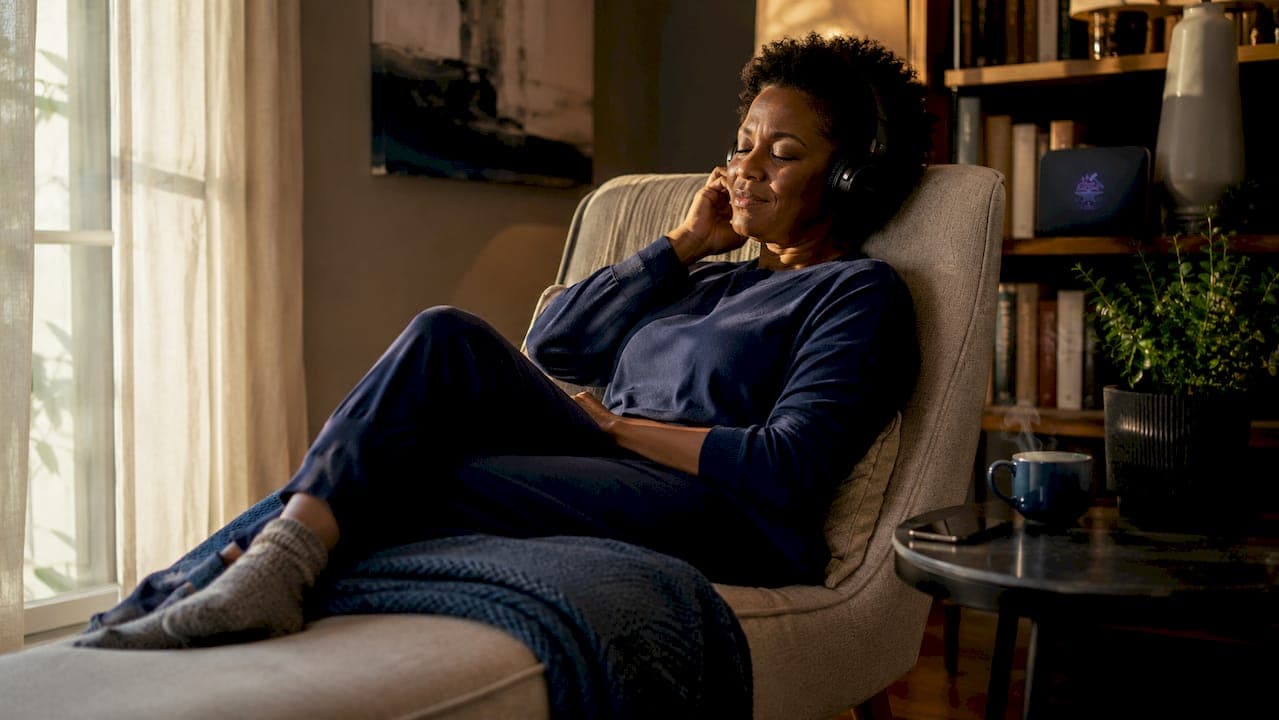
Narrated books are human-voiced audio recordings of written text that deliver stories through emotion, pacing, and character distinction. That definition matters because it separates narrated audiobooks from text-to-speech (TTS) reading apps, which generate synthetic voices from digital text. The gap between the two formats is not cosmetic. For readers with dyslexia, visual impairments, ADHD, or packed schedules, understanding why narrated books beat reading apps is the difference between accessing a story and being locked out of it. Research from MIT and Michigan State University confirms that human narration activates emotional processing in ways robotic voices cannot replicate.
Why narrated books beat reading apps for comprehension and engagement
Human narration improves comprehension through prosody, the natural rise and fall of a speaker's voice that signals emotion, emphasis, and character. MIT research confirms that prosody is vital for focus and character distinction, and that it is simply absent from standard TTS output. A narrator's voice tells you when a character is afraid, sarcastic, or grieving. A synthetic voice reads the same sentence flat every time.
The cognitive overlap between reading and listening is larger than most people expect. Both formats expose the brain to complex language patterns that support cognitive growth, which refutes the persistent myth that audiobooks "don't count" as reading. The brain regions activated by reading and listening overlap significantly. That means the vocabulary, syntax, and narrative logic you absorb from a narrated book are just as real as what you absorb from a page.
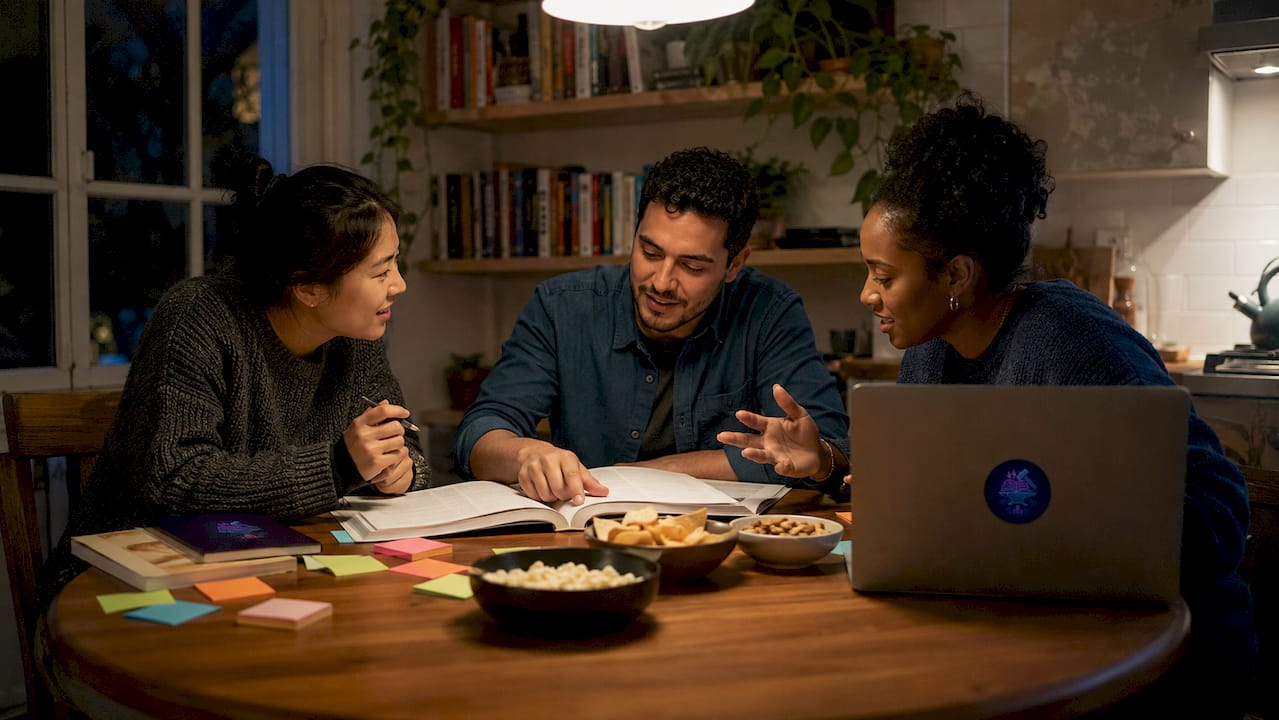
Comprehension differences do exist, and they are worth naming honestly. A 2022 meta-analysis of 46 studies found that literal comprehension is similar across reading and listening, but listeners perform worse on complex tasks because they cannot control pacing or reread a difficult passage. That finding does not disqualify narrated books. It tells you where to apply active listening strategies.
Passive listening is the real risk with any audio format. Neuropsychologist Davide Cappon recommends pausing and summarizing as the primary tools for turning passive listening into active comprehension. Pausing after a chapter to mentally recap what happened encodes information more deeply than continuous playback.
Key advantages of narrated books for comprehension:
- Prosody and pacing signal emotional context that flat TTS voices miss entirely
- Character distinction through voice acting keeps listeners oriented in complex narratives
- Emotional engagement sustains attention across longer listening sessions
- Adjustable playback speed on quality platforms lets listeners slow down for dense material
Pro Tip: Set a chapter-end pause habit. Stop the recording, say aloud what just happened, then resume. This single practice closes most of the comprehension gap between listening and reading.
How narrated books serve readers with dyslexia and visual impairments
Narrated books remove the visual decoding step entirely. For readers with dyslexia, that step is the primary barrier. Decoding printed letters into sounds and words requires significant cognitive effort for dyslexic readers, leaving less mental capacity for comprehension and enjoyment. A human narrator handles decoding completely, freeing the listener to focus on meaning.
MIT McGovern Institute research shows that narrated books provide emotional and auditory cues that help individuals with dyslexia and visual impairments distinguish characters and stay focused. Those cues are not decorative. They are functional. When a narrator shifts tone for a villain versus a hero, a listener with dyslexia does not need to track visual formatting cues like italics or quotation marks to follow the story.
Vocabulary development is another area where narrated books outperform standalone reading apps. A 2026 MIT Developmental Science study found that audiobooks improve vocabulary significantly more when paired with explicit one-on-one instruction than audiobooks alone. That finding points toward a practical model: narrated books work best as part of a supported learning environment, not as a passive replacement for instruction.
Multisensory learning amplifies these benefits further. Listening while following highlighted text boosts retention better than audio or text alone. Platforms that synchronize narration with highlighted text give readers with dyslexia a dual input channel that reinforces word recognition without requiring independent decoding. Coreforgeaudio builds this kind of multisensory learning approach into its accessibility framework.
For readers with visual impairments, the advantages are even more direct:
- No screen dependency. Narrated books function fully without visual engagement, unlike reading apps that require screen navigation.
- Character and scene orientation. A skilled narrator conveys spatial and emotional context through voice alone.
- Reduced eye strain. Extended reading app sessions cause visual fatigue. Narrated books eliminate that entirely.
- Dyslexia-friendly features. Platforms like Coreforgeaudio pair narration with adjustable fonts and multilingual support for broader accessibility.
- Emotional engagement. Human narration maintains focus during longer sessions, which is critical for readers who find visual formats exhausting.
Pro Tip: If you use a narrated book alongside a reading app, sync the chapter positions. Switching between formats mid-chapter disrupts comprehension more than switching between books.
Practical benefits of narrated books for busy readers
Narrated books are the only reading format that works with your hands and eyes occupied. Commuting, exercising, cooking, and doing household tasks all become reading time when the format is audio. Reading apps require visual attention. Narrated books do not.
Sustained attention during multitasking is where human narration earns its advantage over TTS. Narration's emotional performance improves sustained attention compared to monotone synthetic voices, even when the listener is doing something else. A flat TTS voice fades into background noise quickly. A skilled narrator holds your attention the way a podcast host does.
"Choose your reading format based on purpose: print for detailed study, audiobooks for relaxed or multitasking situations." — Harvard Gazette
That guidance from Harvard researchers is practical, not prescriptive. Narrated books are not trying to replace every reading context. They are the best tool for the contexts where reading apps simply cannot function.
Retention does drop when multitasking competes with listening. The honest answer is that narrated books during a gym session will not produce the same comprehension as narrated books during a quiet commute. The solution is format matching: save complex or emotionally demanding books for lower-distraction listening environments, and use lighter material for high-activity multitasking.
Hybrid approaches solve the skimming problem that narrated books cannot. Audiobooks follow a linear path, which makes it hard to jump back to a specific passage quickly. Pairing a narrated book with a synchronized text reading resource gives busy readers the best of both formats: emotional engagement from narration and quick-reference access from text.
Limitations of narrated books compared to reading apps
Narrated books have real constraints, and ignoring them produces bad format choices. The most significant limitation is linear playback. Audiobooks lack the visual navigability of text and present genuine challenges for quick reference or skimming. If you need to locate a specific fact, a reading app wins every time.
Pacing control is the second major limitation. Reading apps let you adjust speed, skip sentences, and reread a paragraph instantly. Narrated books allow speed adjustment on most platforms, but rewinding to a specific line requires more effort than scrolling back in text. For study-focused readers, that friction adds up.
Cost is a practical barrier. Professionally narrated audiobooks cost more to produce than TTS-generated content. That cost passes to readers through subscription fees or per-title pricing. Reading apps with TTS functionality are often cheaper or free.
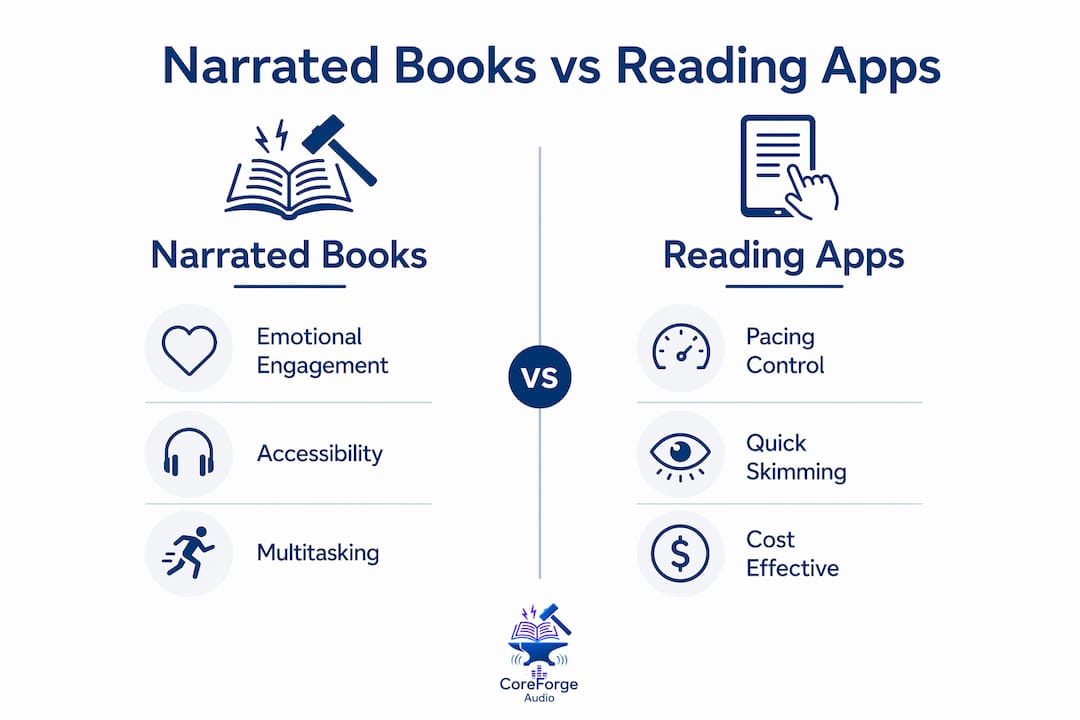
| Format | Strength | Limitation |
|---|---|---|
| Narrated audiobooks | Emotional engagement, accessibility, multitasking | Linear playback, higher cost, limited skimming |
| Reading apps with TTS | Speed control, visual navigation, lower cost | Flat voice, reduced emotional engagement |
| Hybrid (narration + text) | Retention, multisensory input, flexibility | Requires two platforms or a purpose-built solution |
User preference also varies by content type. Narrative fiction and memoir benefit enormously from human narration. Dense technical content or reference material is often better served by a reading app where you can scan and jump. The format should match the content, not the other way around.
Key Takeaways
Narrated books outperform reading apps in emotional engagement, accessibility, and multitasking suitability, but reading apps hold an edge for pacing control and quick reference.
| Point | Details |
|---|---|
| Human prosody drives engagement | Narrators convey emotion and character in ways TTS voices cannot replicate. |
| Accessibility is the clearest win | Readers with dyslexia and visual impairments gain the most from narrated formats. |
| Active listening closes the gap | Pausing and summarizing improves comprehension to near-reading levels. |
| Hybrid formats maximize retention | Synchronized narration and highlighted text outperform either format alone. |
| Match format to purpose | Use narrated books for multitasking and fiction; use reading apps for dense reference material. |
The format debate misses the real question
I have spent years watching readers with dyslexia and visual impairments get handed reading apps as an accessibility solution, and I understand the appeal. Apps are cheap, fast, and easy to deploy. But cheap and accessible are not the same thing.
The real question is not whether narrated books or reading apps are better in the abstract. The question is which format keeps a specific reader engaged long enough to finish a book. For most readers with barriers, the answer is narrated books, because a human voice holds attention in a way that no algorithm has matched yet. Michigan State neurologists note that consistent engagement matters more than format superiority. That is the insight the format debate keeps burying.
My honest recommendation is to treat narrated books and reading apps as tools in the same kit, not competitors. Use narrated books for fiction, memoir, and any content where emotional connection drives comprehension. Use reading apps for reference material, study texts, or situations where you need to jump around quickly. The readers who do best are the ones who stop arguing about formats and start matching tools to tasks.
The emerging technology trend worth watching is synchronized narration with highlighted text. Audiobooks paired with text represent the strongest comprehension outcome across all reader types. Platforms that build this natively, rather than requiring readers to manage two separate apps, will define the next generation of accessible reading.
— Sarmed
Coreforgeaudio brings narrated books to readers who need them most
Coreforgeaudio is a nonprofit-focused platform built specifically for readers who face barriers with traditional text. Every audiobook on the platform is narrated by a human voice actor, not a synthetic voice, because the emotional layer of narration is not optional for readers with dyslexia, ADHD, or visual impairments.
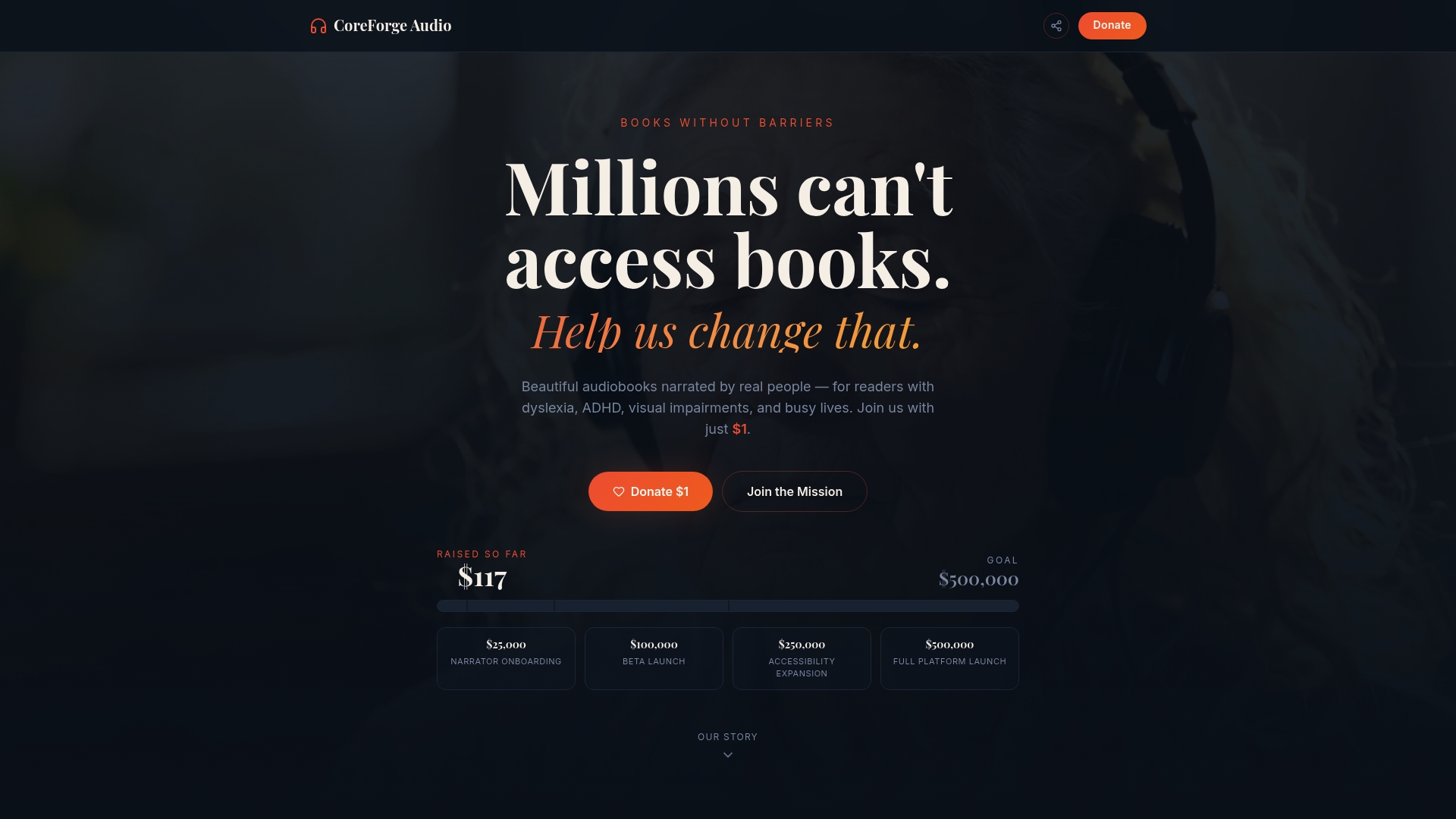
The platform pairs narration with dyslexia-friendly fonts, adjustable playback speeds, and multilingual support, so readers can engage with content in the way that works for them. Coreforgeaudio is currently fundraising to complete its launch, with full transparency about licensing, development, and accessibility costs. If accessible, human-narrated audiobooks are what you have been looking for, Coreforgeaudio is building exactly that.
FAQ
Are narrated books better than reading apps for dyslexia?
Narrated books remove the visual decoding barrier that makes reading difficult for dyslexic readers. MIT research shows that human narration also provides emotional and auditory cues that help dyslexic listeners stay focused and distinguish characters.
Do audiobooks count as real reading?
Yes. Harvard researchers confirm that both reading and listening expose the brain to the same complex language patterns essential for cognitive growth, making audiobooks a legitimate reading format.
Can I improve comprehension while listening to audiobooks?
Pausing after sections and summarizing what you heard significantly improves comprehension. Neuropsychologist Davide Cappon identifies active listening strategies like pausing and summarizing as the most effective tools for deep encoding.
When are reading apps better than narrated books?
Reading apps outperform narrated books for dense reference material, study texts, and any content that requires quick skimming or jumping between sections. Linear playback in audiobooks makes rapid navigation difficult compared to scrollable text.
What is the best format for busy readers who multitask?
Narrated books are the strongest format for multitasking because they require no visual attention. Human narration also holds attention better than TTS during distracted listening, though retention improves when the listening environment has fewer competing demands.