
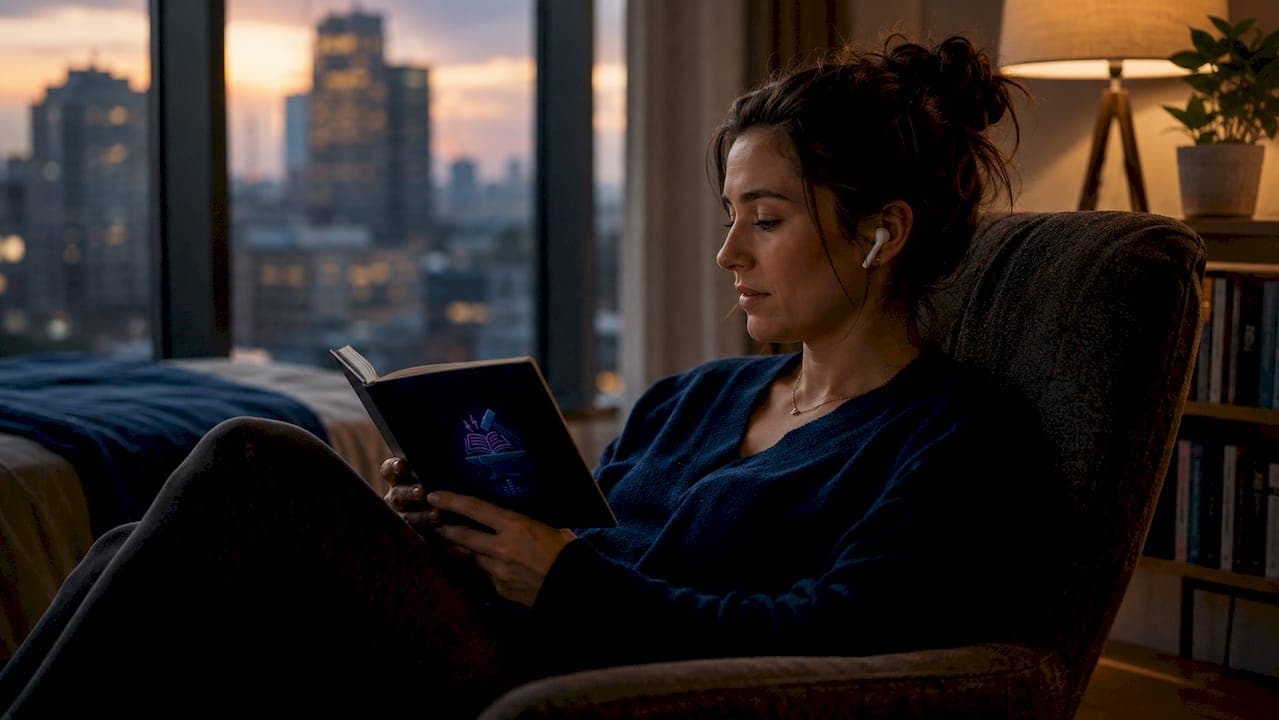
Audiobooks are a proven tool for continuous education, delivering structured learning content through audio formats that fit into the gaps of a busy professional's day. Research from MIT's McGovern Institute confirms that vocabulary gains are significant when audiobooks combine with active instruction, especially for struggling readers. Platforms like Learning Ally have built entire curricula around this principle. For lifelong learners who cannot always sit down with a textbook, audio-based learning offers a second pathway to knowledge that works while you commute, exercise, or cook dinner.
How audiobooks support continuous education through cognitive engagement
Audiobooks engage a distinct cognitive process from reading. When you read silently, your brain decodes text and constructs meaning through an inner voice. When you listen, you engage auditory attention, working memory, and prosodic processing simultaneously. These are not the same skills, and developing both strengthens your overall learning capacity.
Active listening requires sustained vigilance and working memory because you cannot easily backtrack or skim the way you can on a printed page. That constraint forces a different kind of focus. For complex material, this means you need to be mentally present in a way that casual reading sometimes lets you avoid.
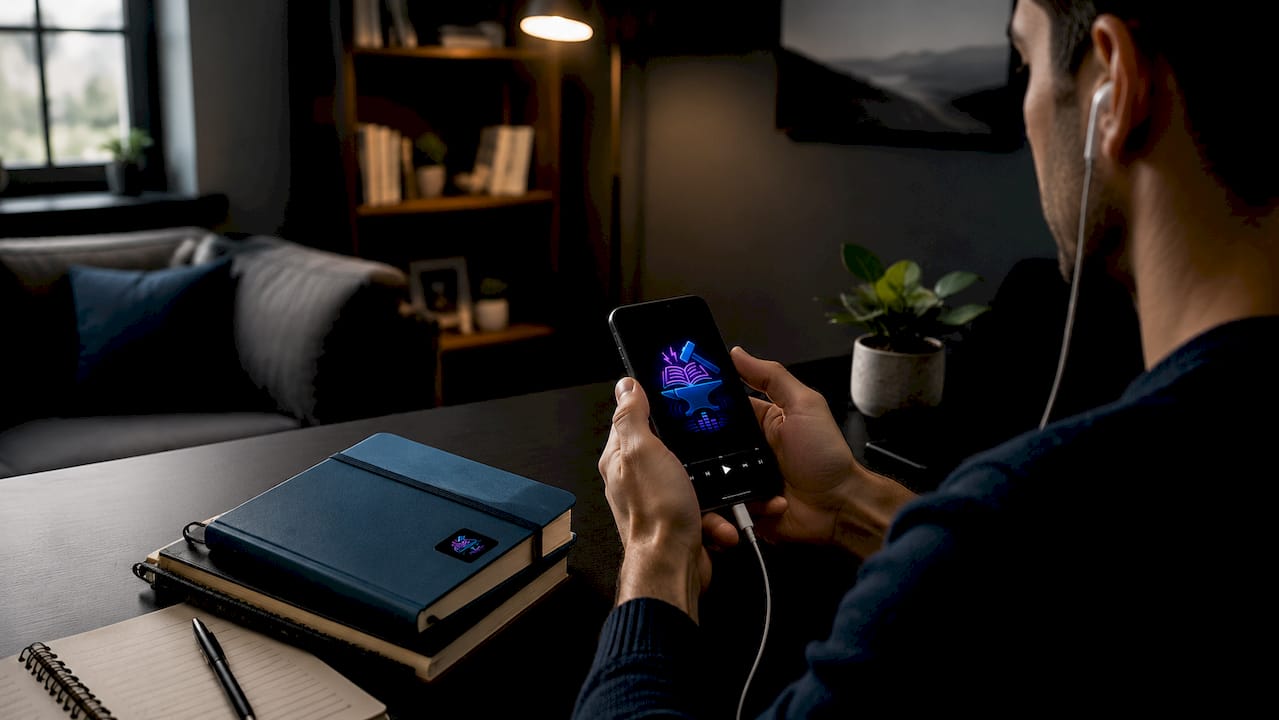
Audiobooks also promote narrative immersion through voice intonation and prosody. A skilled narrator signals emotion, urgency, and emphasis in ways that flat text cannot replicate. This is why audiobook listeners often report stronger emotional connection to nonfiction stories and case studies. That emotional engagement improves memory encoding.
The benefits of audiobooks in education are not automatic, though. MIT research found that in an 8-week study with 90 minutes of weekly audiobook use, only students who received tutoring alongside the audio content made significant vocabulary gains. Passive listening alone did not move the needle. That finding matters for every professional who assumes background listening is enough.
- Pair listening with a task. Take brief notes, pause to summarize aloud, or write one key takeaway after each chapter.
- Use adjustable playback speeds. Start at 1x for dense material and increase only when comprehension stays solid.
- Replay difficult sections. Unlike a lecture, audiobooks let you rewind. Use that feature deliberately.
- Connect content to your work. After listening, ask how one idea applies to a current project or problem.
Pro Tip: Set a 10-minute timer after finishing an audiobook chapter. Use that time to write three sentences summarizing what you just heard. This single habit closes the gap between passive exposure and genuine retention.
Do audiobooks help learners with ADHD, dyslexia, and reading challenges?
Audiobooks are one of the most effective tools available for neurodiverse learners. The reason is structural. Reading requires simultaneous decoding, comprehension, and attention management. For someone with dyslexia or ADHD, that cognitive load can overwhelm the system before meaning is even processed. Audio removes the decoding burden entirely.
A meta-analysis on text-to-speech technology found a moderate positive effect (effect size 0.35) on reading comprehension for students with ADHD. That is a meaningful result. It means assistive audio consistently improves outcomes, not just in isolated cases.
Audiobooks also reduce visual load and support continuity of attention for students with reading difficulties. Listening demands auditory attention that many neurodiverse learners find more sustainable than decoding printed text line by line. The result is longer engagement and better comprehension.
"Audio learning is not a universal solution; structured instruction is key to gaining vocabulary and comprehension benefits from audiobooks." — MIT McGovern Institute
Here is a practical framework for choosing the right audio format based on learning need:
- Dyslexia: Choose human-narrated audiobooks with clear pacing. Multi-voice formats work well for narrative nonfiction. Avoid robotic text-to-speech for long sessions.
- ADHD: Opt for multi-voice discussion formats that shift tone and speaker frequently. These formats sustain attention better than single-voice narration.
- Visual impairments: Full-production audiobooks with chapter markers and consistent structure are the most accessible option.
- Busy professionals with limited reading time: Topic-specific audiobooks aligned to immediate work goals deliver the fastest return on listening time.
Pro Tip: Platforms with adjustable narration speeds and dyslexia-friendly companion text give neurodiverse learners the most control. Look for those features before committing to a subscription.
For educators and support professionals, audiobooks in special education classrooms work best when paired with explicit instruction, not used as a standalone replacement for reading practice.
Audiobooks vs. podcasts, text-to-speech, and traditional reading
Not all audio learning is equal. Understanding the differences helps you choose the right format for the right goal.
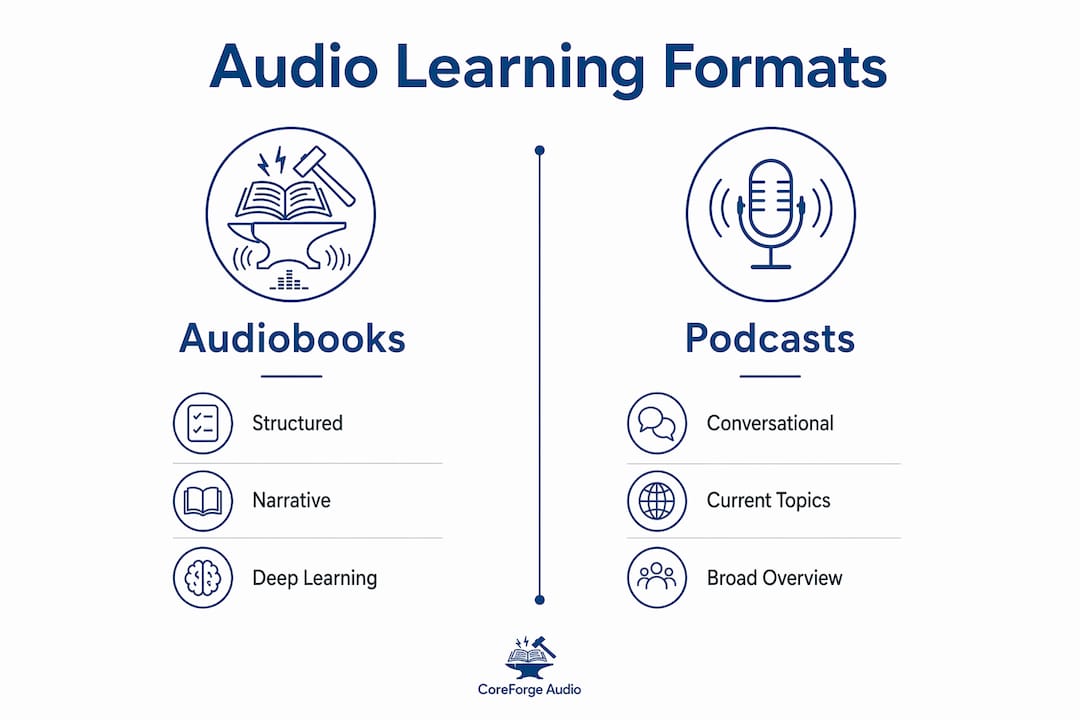
Conversational and debate formats in audio promote active mental dialogue and enhance learning better than monotone text-to-speech or passive exposure. That finding explains why a well-produced audiobook often outperforms a dry podcast on the same topic.
| Format | Structure | Best For | Limitation |
|---|---|---|---|
| Audiobooks | Linear, authored narrative | Deep topic immersion, skill development | Less flexible for browsing |
| Podcasts | Conversational, episodic | Current events, broad awareness | Variable depth and accuracy |
| Text-to-speech (TTS) | Robotic, single-voice | Accessibility, document reading | Low engagement for long sessions |
| Traditional reading | Self-paced, visual | Complex analysis, technical content | Requires dedicated time and focus |
Audiobooks sit between podcasts and textbooks on the depth spectrum. Podcasts are great for staying current in your field. They are informal, fast, and easy to consume. But they rarely go deep enough for genuine skill development. Audiobooks, by contrast, follow the structure of a published work. That structure builds knowledge systematically.
Text-to-speech tools like those built into iOS or Android are useful for accessibility but fall short for learning. A single robotic voice reading a 300-page business book creates listening fatigue fast. Human narration, with its natural pacing and emotional range, holds attention far longer.
Traditional reading still wins for technical material where you need to annotate, cross-reference, or reread dense passages. The key insight is that audiobooks add a second information pathway that complements reading rather than replacing it. Use both, and you cover more ground.
How can busy professionals integrate audiobooks into their learning routines?
The most effective strategy for using audiobooks for lifelong learning is converting dead time into learning time. Experts recommend converting lectures and reports to audio for commutes, exercise, and walking. The average American commutes roughly 27 minutes each way. That is nearly an hour of potential learning time every workday.
Here is how to build a sustainable audiobook learning habit:
- Align content to current goals. If you are developing leadership skills, listen to titles like The Five Dysfunctions of a Team by Patrick Lencioni or Dare to Lead by Brené Brown. Relevance drives retention.
- Use commutes and workouts deliberately. Save lighter, narrative-driven audiobooks for exercise. Reserve denser material for focused listening sessions at your desk.
- Apply the pause-and-reflect method. After every 20–30 minutes of listening, pause and mentally summarize the last section before continuing.
- Keep a listening log. A simple note in Apple Notes or Notion with one insight per session builds a personal knowledge base over time.
- Rotate formats. Alternate audiobooks with reading the same title. Research confirms that metacognition about when to listen versus read maximizes learning outcomes.
Pro Tip: For complex subjects, plan your listening sessions the way you would plan a study session. Set a specific topic, choose a chapter, and have a question you want answered before you press play. That intent transforms casual listening into active learning.
Using audiobooks to enhance learning also means curating your library with intention. A title chosen because it is popular is rarely as useful as one chosen because it directly addresses a skill gap you have identified. Treat your audiobook queue like a professional development plan, not an entertainment list.
For a deeper look at how audio supports differentiated instruction for diverse learners, the research on structured audio formats offers practical classroom and workplace applications.
Key takeaways
Audiobooks support continuous education most effectively when active listening replaces passive exposure and when audio content pairs with structured instruction or reflection.
| Point | Details |
|---|---|
| Active listening is non-negotiable | Passive audiobook exposure alone does not produce significant vocabulary or comprehension gains. |
| Neurodiverse learners benefit most | Multi-voice and human-narrated formats reduce cognitive load and sustain attention for ADHD and dyslexic learners. |
| Format choice shapes outcomes | Audiobooks outperform podcasts for depth and TTS tools for engagement in long-form learning. |
| Dead time is learning time | Commutes, workouts, and routine tasks are the highest-value windows for audiobook learning. |
| Metacognition drives results | Knowing when to listen versus read is the skill that separates effective audio learners from passive consumers. |
The uncomfortable truth about audiobook learning
I have spent years watching people treat audiobooks as a productivity hack, stacking titles like trophies. They finish 40 books a year and struggle to recall three ideas from any of them. That is not learning. That is consumption dressed up as self-improvement.
The research is clear on this. MIT's findings show that explicit instruction amplifies audiobook benefits for struggling readers. The same principle applies to professionals. Without a reflective layer, listening is just background noise with better content.
What actually works is treating audiobooks the way you would treat a mentor conversation. You listen with a specific question in mind. You pause when something challenges your assumptions. You write down what you want to remember. That discipline is rare, and it is exactly what separates people who grow from people who stay comfortable.
The emerging wave of AI-assisted audio formats, including multi-voice discussions and debate-style modules, is genuinely exciting. These formats drive deeper mental engagement than traditional narration. But they still require the same active mindset. The format helps. The habit is what delivers results.
My honest advice: pick one audiobook per month, go deep on it, and apply one idea to your work before you start the next one. That approach will outperform any 40-book-a-year strategy every time.
— Sarmed
Discover accessible audiobooks with Coreforgeaudio
Coreforgeaudio is built for exactly the kind of learner this article describes: someone who wants to learn continuously but faces real barriers, whether that is a busy schedule, dyslexia, ADHD, or limited access to quality content.
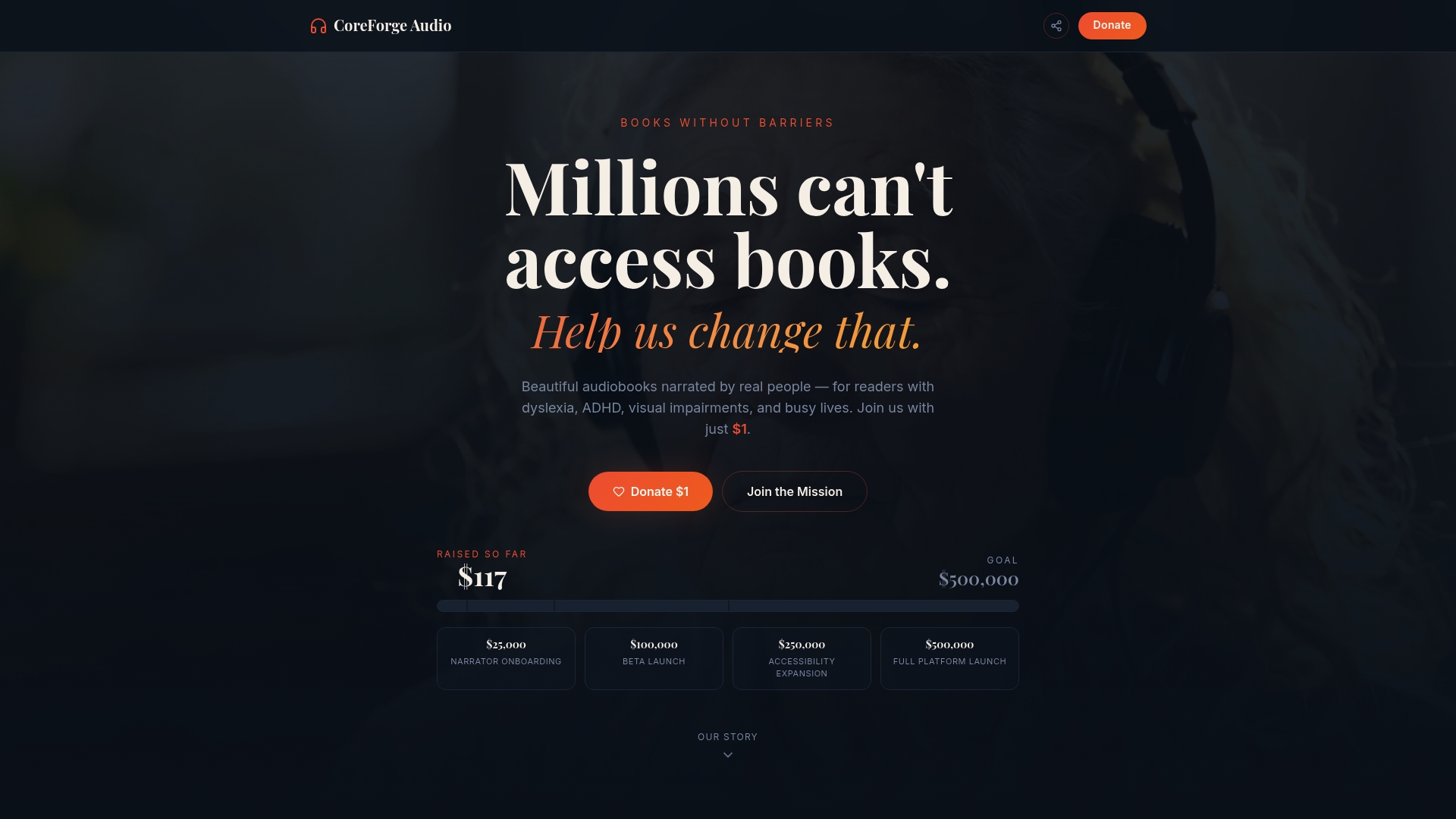
The platform offers human-narrated audiobooks with adjustable speeds, dyslexia-friendly companion text, and multilingual support. Every title is produced with professional voice actors who are paid fairly. That commitment to quality narration is what makes the difference between content you absorb and content you forget. Coreforgeaudio is currently fundraising to expand its library and accessibility features. Visit Coreforgeaudio to support the mission and get early access to a platform designed around your right to learn.
FAQ
Can audiobooks aid in continuous learning for professionals?
Yes. Audiobooks support continuous learning by delivering structured, topic-specific content during routine activities like commuting and exercise. Pairing listening with active reflection, such as note-taking or mental summaries, significantly improves retention.
Are audiobooks effective for learners with dyslexia or ADHD?
Research confirms that assistive audio technologies produce a moderate positive effect on comprehension for ADHD learners. Human-narrated and multi-voice audiobooks reduce decoding demands and help sustain attention for neurodiverse readers.
How do audiobooks compare to podcasts for skill development?
Audiobooks follow the structure of a published work, making them better suited for deep skill development than podcasts. Podcasts are more useful for broad awareness and current events, while audiobooks build knowledge systematically over longer listening sessions.
Do audiobooks replace traditional reading?
Audiobooks complement reading rather than replace it. Traditional reading remains stronger for technical material requiring annotation or close analysis. The most effective learners use both formats and practice metacognition about when each format serves their goal best.
How much listening time is needed to see learning benefits?
MIT research used 90 minutes of weekly audiobook exposure over 8 weeks. Significant gains appeared only when listening combined with active instruction. For professionals, even 30 minutes of focused daily listening with reflection produces measurable results over time.