
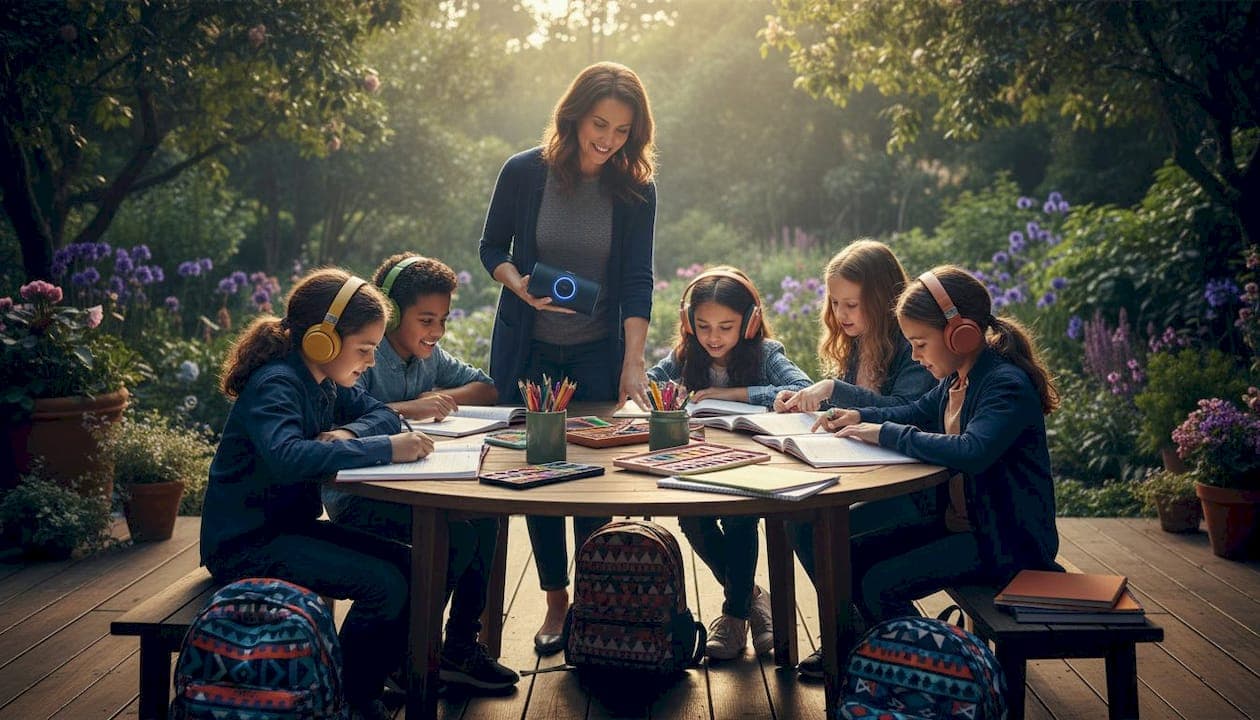
Audio in the classroom is still widely treated as a workaround, something you add after the "real" instruction for students who struggle. That framing undersells what audio actually does. When you use audio purposefully, with intentional pairing, scaffolds, and student choice, it becomes one of the most flexible and evidence-backed tools available for meeting learners where they are. This article lays out the research, the practical steps, and the honest limits so you can use audio as a proactive strategy, not just a fallback plan.
Table of Contents
- Understanding differentiated instruction and the place of audio
- Evidence-based benefits: How audio advances accessibility and literacy
- Choosing and implementing audio tools: What works in diverse classrooms
- Addressing limits and ethical nuance: When audio isn't enough
- What most guides miss: Audio as a catalyst—not a crutch—for truly inclusive learning
- Boost your classroom with purpose-built audio solutions
- Frequently asked questions
Key Takeaways
| Point | Details |
|---|---|
| Audio multiplies access | Paired with print and scaffolds, audio creates more entry points for learning, benefiting students with diverse needs. |
| Evidence favors combination | Combining audio with visual supports and intentional teaching strategies boosts vocabulary and comprehension, especially for struggling readers. |
| No universal effect | Classroom audio benefits are not uniform—specific students and contexts require tailored solutions. |
| Implementation matters | Effective use depends on flexible tools, playback control, and ongoing instructional design, not just adding audio. |
| Student agency is key | Involving students in choosing audio supports increases engagement and real-world learning gains. |
Understanding differentiated instruction and the place of audio
Differentiated instruction (DI) is a teaching approach that adjusts content, process, product, and environment based on each student's readiness, interests, and learning profile. The goal is not to lower expectations but to vary the path students take to reach the same learning goals. A student with dyslexia and a student reading at grade level should arrive at the same understanding of a history concept, even if one gets there through an audiobook and the other through text.
The Universal Design for Learning (UDL) framework builds on this by asking educators to design learning from the start with access in mind, rather than retrofitting it later. UDL's three pillars are representation (how students take in information), action and expression (how they demonstrate what they know), and engagement (what motivates them). Audio sits squarely in the representation pillar.
Here is what that means in practice. When you offer a student an audiobook version of the same chapter their peers are reading, you are not giving them a different assignment. You are opening a different door to the same room. That distinction matters enormously for how you plan instruction and how students experience inclusion.
"Audio supports differentiated instruction primarily as an accessibility option for the 'Representation' pathway (multiple ways to access the same learning goals), not as a separate curriculum." — Edutopia, Practical Strategy: Differentiated Instruction
Practically, this means audio tools should never sit in a separate folder labeled "accommodations." They belong in the general instructional toolkit, available to any student who benefits. Here are the core ways audio fits within DI:
- Content access: Audio allows students with decoding difficulties to access grade-level text without being blocked by the mechanics of reading.
- Process support: Hearing a concept explained auditorily while following along visually doubles the cognitive exposure, which reinforces processing for students with ADHD or working memory challenges.
- Environmental flexibility: Students using personal audio devices can control pacing, volume, and replays in ways that a read-aloud classroom setting simply does not allow.
- Engagement and autonomy: Giving students agency over how they access content increases motivation and reduces the stigma often associated with "special" accommodations.
When teachers understand audio as representation, not remediation, the entire planning process shifts. You stop asking "who needs the audio version?" and start asking "how can audio enrich this lesson for everyone?"
Evidence-based benefits: How audio advances accessibility and literacy
The research on audio-supported instruction has grown significantly over the past decade, and the findings are more nuanced than "audiobooks help struggling readers." The most compelling evidence comes from controlled studies that combine audio with print and structured instructional scaffolds.
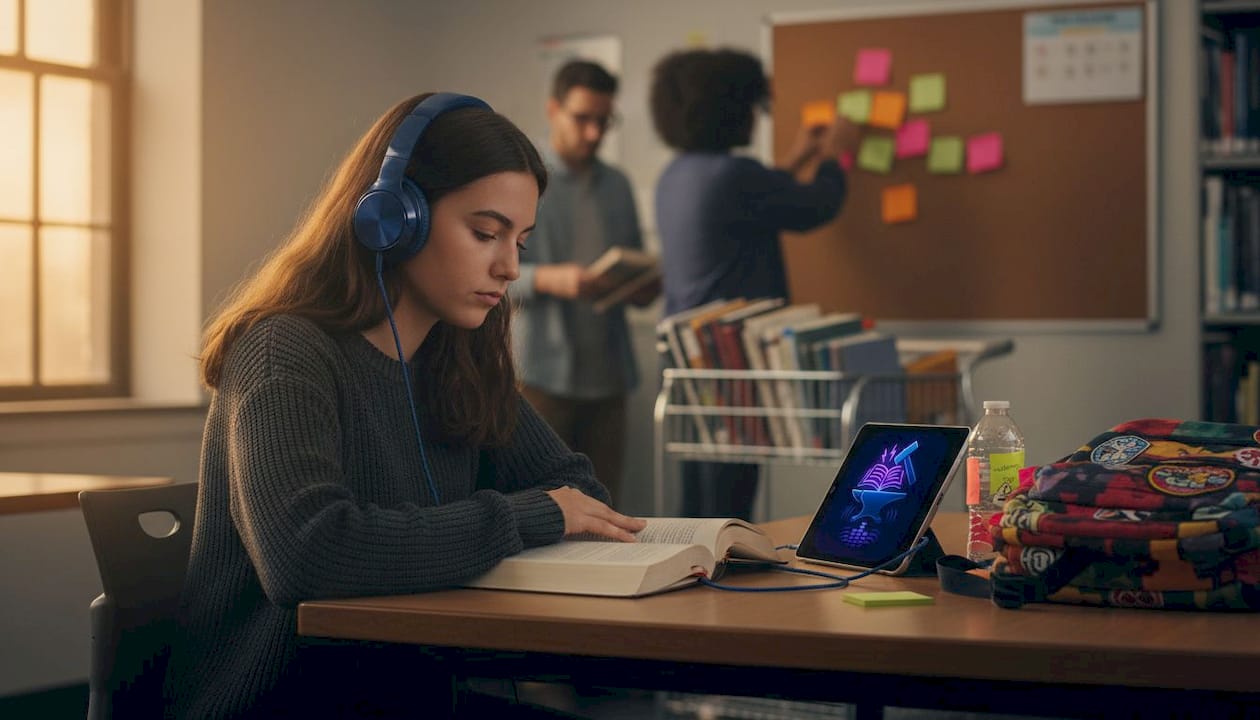
A major study validated by MIT found that audiobook-supported instruction with print materials and scaffolds can meaningfully improve literacy outcomes, including vocabulary acquisition and reading fluency, for struggling readers when implemented with adequate instructional support. That qualifier, "with instructional support," is doing a lot of work. Audio alone is not the variable that drives gains. The pairing and the scaffolding are what produce results.
Here is a summary of reported outcomes across different learner groups based on current research:
| Learner group | Reported benefit | Key condition |
|---|---|---|
| Students with dyslexia | Improved vocabulary and text access | Audio + print pairing required |
| Students with ADHD | Better task completion and engagement | Adjustable pacing and shorter segments |
| English language learners | Pronunciation modeling and comprehension | Multilingual support or L1 narration |
| Students with visual impairments | Full content access | High-quality human narration preferred |
| General education students | Modest gains in listening comprehension | Used as supplement, not replacement |
One of the critical findings from the MIT study on K-12 vocabulary gains is that vocabulary gains were statistically significant even for students who did not have an identified learning disability. This challenges the narrative that audio-supported learning is only for "special ed kids." It also validates using these tools as a universal enrichment option within a DI framework.
Statistic callout: Students who used audiobook-plus-print instruction showed measurable gains in vocabulary compared to peers using print only, according to MIT-validated research on K-12 audiobook solutions.
Pro Tip: Never assign audio as a standalone activity for students with auditory processing disorders or working memory limitations. Always pair it with visual supports, such as highlighted text, graphic organizers, or guided notes, and check in regularly to make sure the student is actively processing, not just listening passively.
The human narration question matters here too. Research consistently shows that natural, expressive human reading conveys prosody, which is the rhythm and tone of language, far more effectively than flat text-to-speech synthesis. For students who are still building phonemic awareness or fluency, hearing how a skilled narrator handles complex sentences models something irreplaceable. Synthetic voices have come a long way, but the gap remains meaningful for early and struggling readers.
Choosing and implementing audio tools: What works in diverse classrooms
Not all audio tools serve the same instructional purpose. Before you invest time or budget, it helps to map the tool to the need. There are three main categories worth understanding: audiobooks, text-to-speech (TTS), and classroom sound-field amplification.
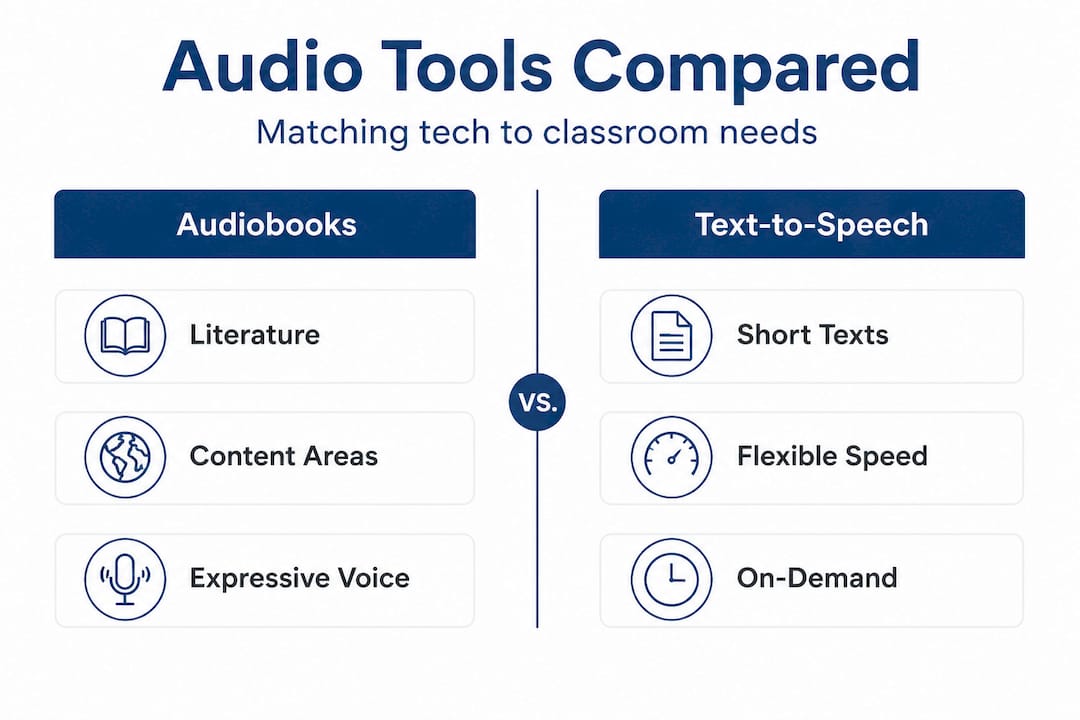
Audiobooks are pre-recorded human narrations of texts. They are best for accessing literature, content-area texts, and longer reading assignments. They preserve the author's original voice and structure.
Text-to-speech (TTS) converts digital text to synthesized speech in real time. It is highly flexible for short passages, websites, and student-written text. Quality varies dramatically by tool and voice.
Classroom sound-field amplification uses microphones and speakers to distribute the teacher's voice evenly across the room. Research shows this improves access to speech in acoustically poor classrooms, though research published in npj Science of Learning found that sound-field amplification effects are not universal. Some students, particularly those with hearing difficulties or lower cognitive ability scores, show more benefit than others.
Here is how to pair tools to specific instructional scenarios:
| Instructional scenario | Best audio tool | Key feature to look for |
|---|---|---|
| Independent reading of a novel | Human-narrated audiobook | Adjustable speed, pause/replay |
| Content-area research assignment | TTS with highlighting | Visual text tracking |
| Whole-class instruction in a noisy room | Sound-field amplification | Even volume distribution |
| ELL student working on pronunciation | Human audiobook or TTS | Multilingual support |
| Student with low vision accessing print | Human-narrated audiobook | Accessible interface, screen-reader compatible |
Step-by-step guidance for implementation in a special education or inclusive classroom:
- Assess the classroom environment first. Check acoustics before investing in amplification systems. If your room has hard floors and minimal soft surfaces, a microphone and speaker system may help, but pay attention to which students actually benefit. Review classroom amplification strategies for practical setup guidance.
- Match the tool to the specific barrier. A student who struggles with decoding needs human-narrated audio. A student who processes written language well but has motor challenges may benefit more from TTS for output tasks.
- Integrate print alongside audio whenever possible. This is the single most important implementation rule. Visual tracking of text while listening is the combination that research ties to gains.
- Teach students to use the controls. Speed adjustment, replay, and bookmarking are not intuitive for every student. A 10-minute orientation session at the start of the year pays dividends for the rest of it.
- Build in structured check-ins. Comprehension questions, brief conferences, or exit tickets help you know whether the audio is functioning as a pathway to learning or as background noise.
Pro Tip: When evaluating audio solutions for education, prioritize tools that give students control over speed, replay, and access format. Passive listening rarely leads to deep processing. Student agency over the experience is what turns audio from a workaround into a learning tool.
Addressing limits and ethical nuance: When audio isn't enough
Audio is a powerful access tool, but it is not a substitute for thoughtful instructional design. Several situations exist where over-reliance on audio can actually widen gaps rather than close them.
Here are the most common scenarios where audio support falls short or backfires:
- Too-fast narration without a print companion: A student following along at a speed they cannot manage loses comprehension quickly. Some platforms default to narration rates optimized for fluent adult listeners, not developing readers.
- Poor classroom acoustics: Even with amplification, rooms with echo, outside noise, or inadequate soundproofing can distort speech enough to reduce access rather than improve it.
- Mismatched technology: A screen-reader-incompatible audiobook platform creates a double barrier for students with visual impairments who rely on assistive technology.
- No instructional follow-through: When audio is assigned without structured tasks, students with ADHD or executive function challenges may listen without retaining anything.
- Equity gaps in access: Not all students have reliable devices or headphones at home. An audio-heavy homework policy can disadvantage students in low-resource environments.
The ethical dimension here is real. Special education law in the United States, under IDEA (Individuals with Disabilities Education Act), requires that accommodations be individualized and appropriate, not just available. Handing a student an audiobook without an IEP (Individualized Education Program) goal attached to its use, or without training on how to use it, does not constitute meaningful accommodation.
Research cautions that when audio is the only access route, such as too-fast narration without print support, noisy environments, or inadequate amplification, gains may shrink or disappear entirely for some learners.
For students with complex medical needs and sensory challenges, audio tools require even more individualized consideration. Hearing anatomy, cochlear function, and auditory processing all interact with how a student receives audio input. A general-use audiobook solution will not address those needs without specialist input.
The takeaway is clear: audio is a bridge, and like any bridge, it only works if it connects to solid ground on both sides. The design of the instruction around the audio tool matters as much as the tool itself.
What most guides miss: Audio as a catalyst—not a crutch—for truly inclusive learning
Most discussions about audio in education swing between two extremes. Either audio is framed as a special accommodation for a small subset of students, or it is sold as a universal fix that solves reading challenges for everyone. Both framings are wrong, and both lead to poor implementation.
Here is the more honest and more useful framing: audio is a catalyst. It does not do the learning for students. It removes a specific kind of friction, the friction of decoding, so that cognitive energy can go toward comprehension, critical thinking, and engagement. When that friction is the thing standing between a student and the content, removing it is transformative. When that friction is not the primary barrier, adding audio may do very little.
This is why the most effective educators we have seen use audio proactively, not reactively. They design units where audio is one of several representation options available to all students from day one. They do not wait for a student to fail before offering audio access. They build it in, normalize it, and let students self-select based on their own understanding of what helps them think best.
The co-design principle is worth emphasizing here. Students, especially secondary students with learning differences, have real insight into how they process information. Inviting them into the conversation about which audio tools, at what speed, with which visual supports, produces dramatically better buy-in than top-down assignment of accommodations. Co-design is not just a feel-good practice. It is an evidence-backed strategy for increasing actual use of accommodations and improving outcomes.
The final shift we would push educators toward is moving away from thinking of audio as something you add and toward thinking of it as something you integrate. That is a design question, not a technology question. The best audio tools in the world will not help a student whose teacher has not thought through when, how, and why audio serves the learning goal at hand.
Boost your classroom with purpose-built audio solutions
The strategies in this article are only as effective as the tools you use to carry them out. Finding audio resources that are truly built with accessibility in mind, not just tacked on as an afterthought, makes a significant difference for students with dyslexia, ADHD, visual impairments, and other learning differences.
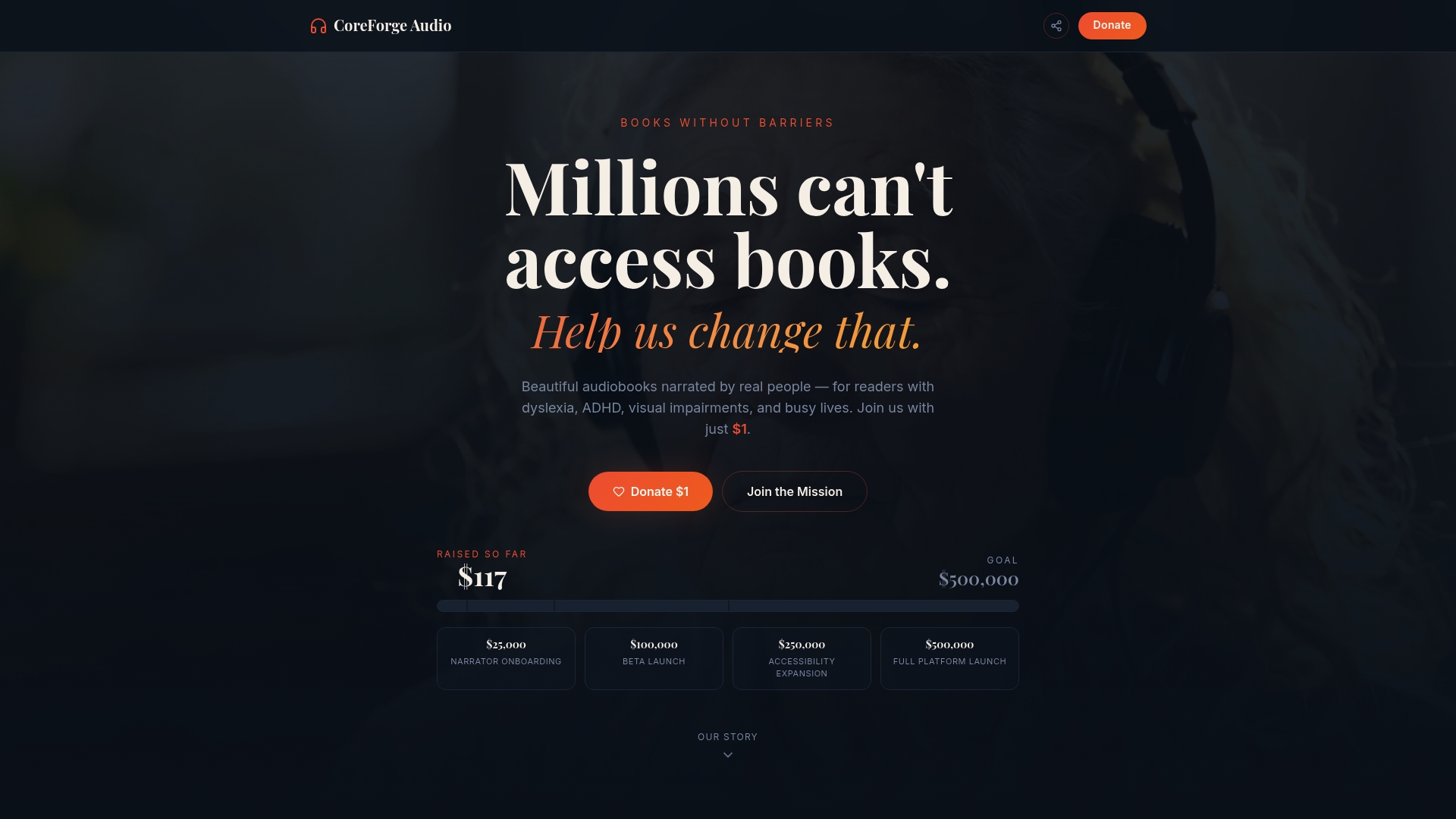
CoreForge Audio is building a platform designed specifically for learners who face barriers to reading. With human-narrated titles, adjustable narration speeds, dyslexia-friendly fonts, and multilingual support, it is designed to work the way your students actually need it to. The platform is currently fundraising to bring these differentiated audio solutions to classrooms and communities that need them most. If you are an educator looking for accessible audio tools that align with the research, this is worth exploring and supporting.
Frequently asked questions
How does audio fit within Universal Design for Learning (UDL)?
Audio offers multiple means of representation, allowing students to access the same learning goals through different formats without requiring a separate curriculum or modified expectations.
Do all students benefit equally from classroom audio technologies?
No. Research shows that benefits vary by subgroup, with students who have hearing difficulties or lower cognitive ability scores often gaining more, and classroom acoustics playing a significant role in whether amplification helps or is neutral.
What's the best way to use audiobooks for struggling readers?
Pair audiobooks with print material and scaffolded instruction. Audio plus print produces better vocabulary and comprehension outcomes than audio alone, particularly when structured tasks are built around the listening experience.
What challenges come with relying solely on audio for instruction?
Audio-only approaches can disadvantage students if narration speed is too fast, if there is no visual or print support to anchor comprehension, or if the listening environment has poor acoustics that distort the sound signal.