
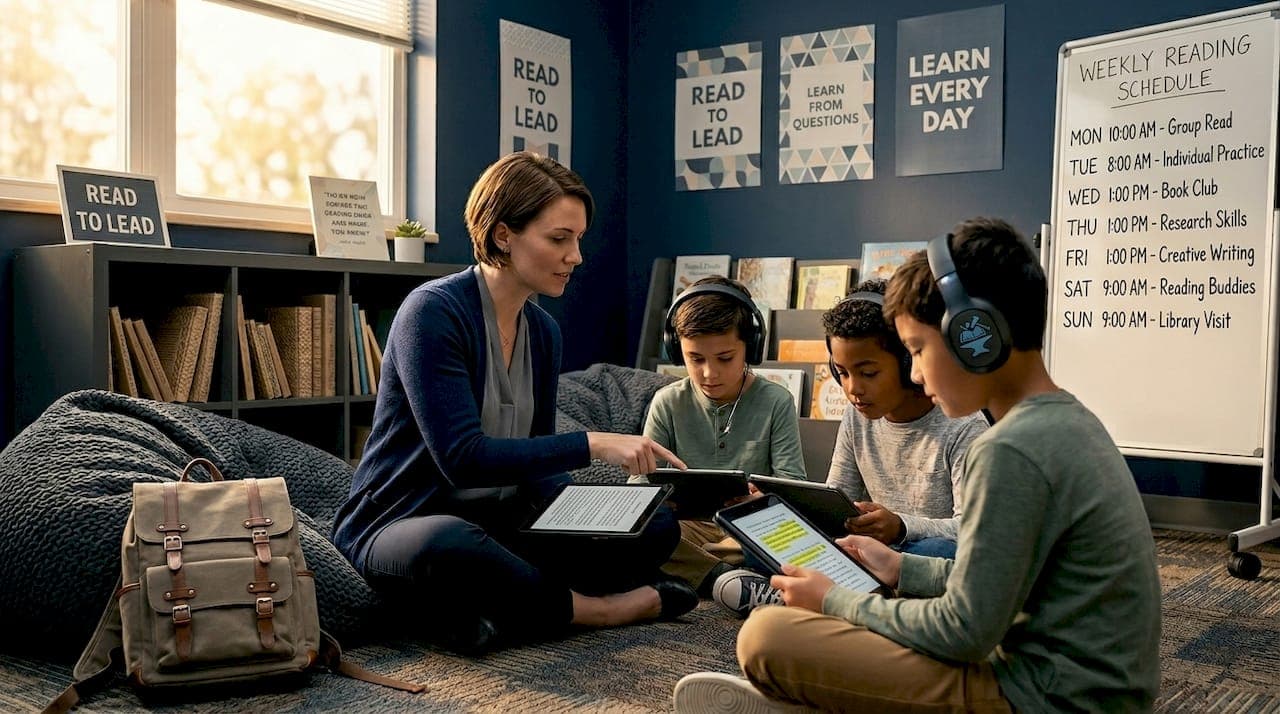
For many students with dyslexia or ADHD, a reading assignment isn't a challenge — it's a wall. Traditional print-based instruction leaves these learners behind despite their intelligence, curiosity, and capability. When you implement audiobooks in special education classrooms, you give those students a direct path to grade-level content, vocabulary, and comprehension without requiring them to decode every word first. This guide walks you through the evidence, the setup, the daily practice, and the measurement so you can make audiobooks work for your students — not just exist on a device somewhere.
Table of Contents
- Understanding the benefits of audiobooks for special education learners
- Preparing your classroom to implement audiobooks successfully
- Step-by-step guide to integrating audiobooks into your special education classroom
- Troubleshooting common challenges when using audiobooks with special education students
- Measuring and verifying the impact of audiobooks on student outcomes
- Rethinking audiobook use: a practical perspective from special education classrooms
- Explore CoreForge Audio's accessible audiobook solutions for your classroom
- Frequently asked questions
Key Takeaways
| Point | Details |
|---|---|
| Audiobooks boost fluency | Digital audiobooks help students with reading disabilities improve fluency faster than silent reading alone. |
| Multisensory approach is key | Combining listening with synchronized text highlighting supports decoding and comprehension. |
| Start small and monitor | Implement audiobooks gradually, starting with challenging units to ensure smooth adoption. |
| Active listening enhances learning | Encourage students to follow text and discuss content to deepen comprehension. |
| Use data to refine methods | Assess fluency and engagement regularly to adjust audiobook strategies effectively. |
Understanding the benefits of audiobooks for special education learners
The case for using audiobooks in special education isn't opinion. It's backed by consistent research, and the results are specific enough to act on.
Reading fluency improves with consistent audio support. When students hear a skilled narrator model pacing, expression, and phrasing, they internalize those patterns. A Butler University study found that assisted reading with audiobooks significantly improves reading fluency for students with reading disabilities. That's not a passive benefit. Repeated exposure to fluent narration rewires how students expect text to sound.
Comprehension rises when decoding pressure drops. Students with dyslexia spend so much working memory on sounding out words that meaning gets lost. Audio narration bypasses decoding struggles, freeing up mental bandwidth for understanding, vocabulary acquisition, and critical thinking. The content enters the brain through a different door, and the result is genuine comprehension — not just word-by-word struggle. For a deeper look at how this process works, explore the science behind audiobook learning.
Here are the core benefits of audiobooks for special education learners at a glance:
- Students access grade-level vocabulary and ideas without being blocked by decoding
- Fluent narration models prosody (the rhythm and expression of language) that students then carry into their own reading
- Motivation and reading enjoyment increase because students finally finish books
- Self-esteem improves when students participate in the same discussions as their peers
- Audiobooks work across subjects — history, science, and literature all become accessible
"Listening to audiobooks isn't cheating. It's a different pathway to the same destination — one that many students need."
For more on how audio specifically supports students with dyslexia, see audiobooks for readers with dyslexia.
Now that you understand why audiobooks can be transformative, let's prepare your classroom for effective implementation.
Preparing your classroom to implement audiobooks successfully
Setup matters more than most teachers expect. A rushed or poorly planned rollout leads to technology headaches, student frustration, and abandoned programs. The good news is that preparation takes one focused planning period, not a curriculum overhaul.
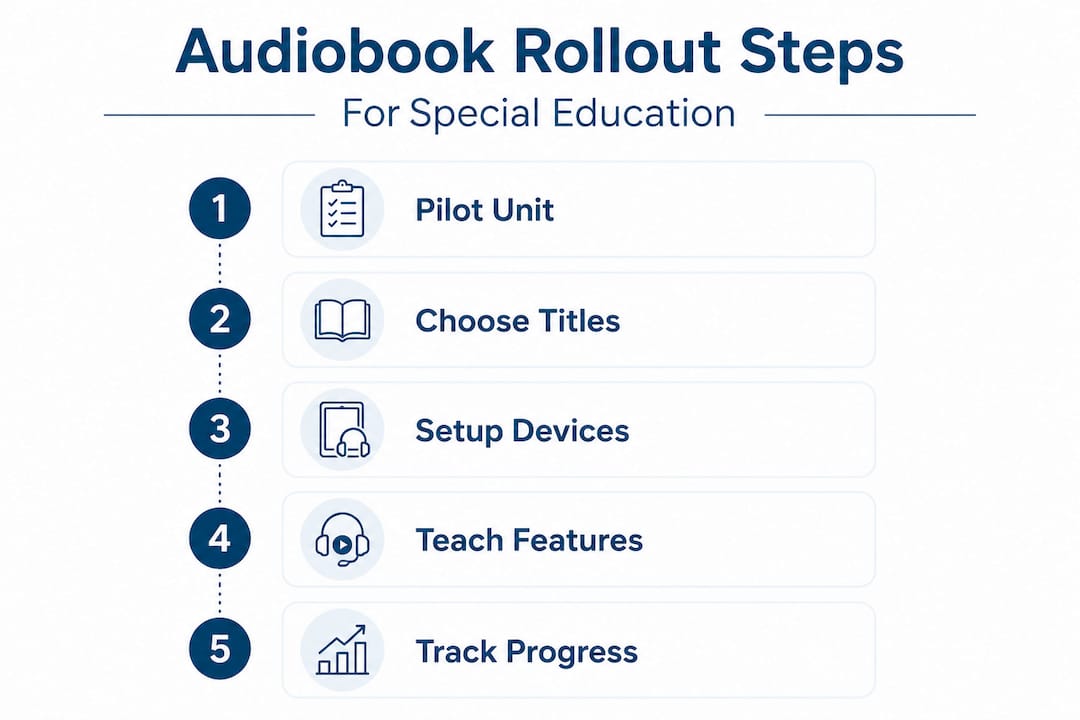
Start with a single unit. Resist the urge to convert your entire reading program to audio at once. Teachers who identify one challenging reading unit and convert it to audio first get much better results because they can monitor impact and adjust before scaling. Choose a text that your students consistently struggle with, whether that's a novel with complex vocabulary or a science chapter with dense terminology.
Choose the right devices. Not all playback options are equal for special education settings. Consider your available resources alongside your students' needs:
| Device | Best for | Key feature |
|---|---|---|
| Tablet with app | Individual students | Synchronized text highlighting |
| Classroom computer | Small group listening | Screen mirroring for group follow-along |
| MP3 player | Students sensitive to screens | Simple playback, fewer distractions |
| Chromebook | Districts using Google tools | Compatible with most audio platforms |
Select audiobooks with synchronized text highlighting. This is not optional for students with dyslexia or ADHD. When words light up as they are spoken, students develop the orthographic mapping (the brain's process of connecting sounds to written letters) they need for long-term reading growth. Tools like Qwixl's SEN features offer useful classroom-level insight for tracking engagement. You can also consult this inclusive content checklist to confirm your materials meet accessibility standards.
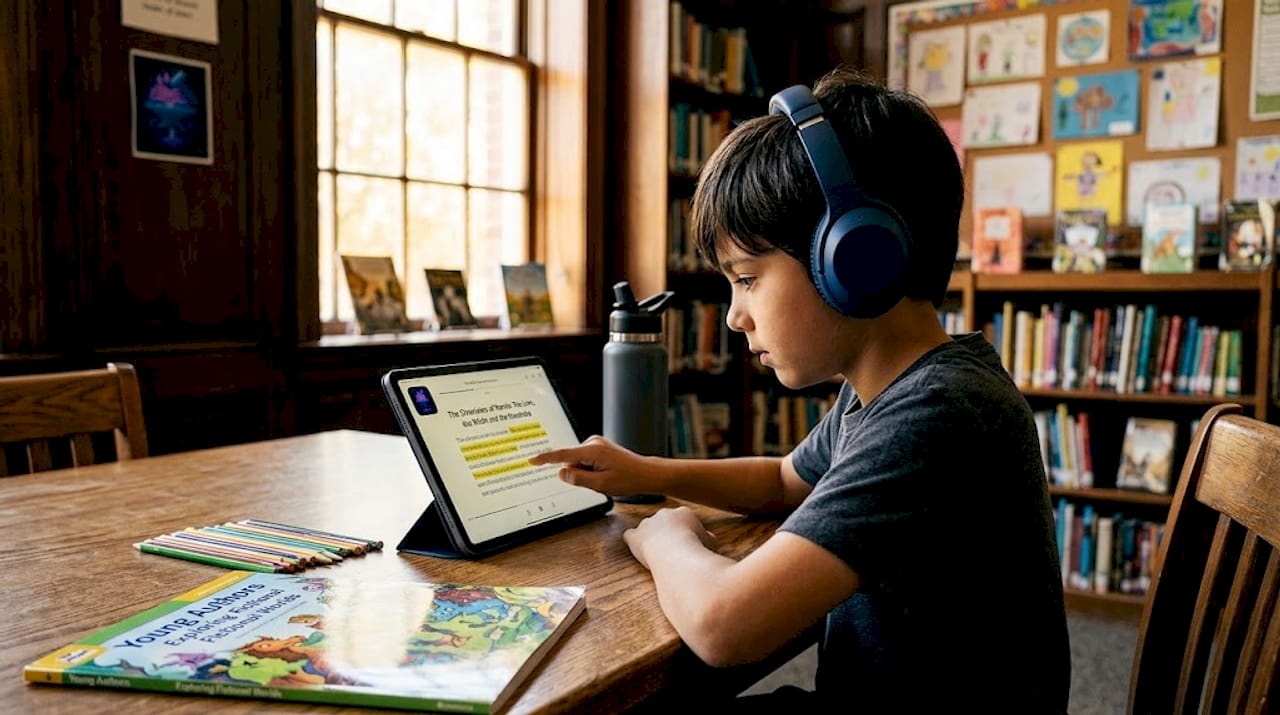
Pro Tip: Before introducing audiobooks to students, do a tech check yourself. Play the audio, test the highlighting feature, and confirm volume levels work in your actual classroom environment. A five-minute check prevents a 20-minute derailment.
Additional preparation steps:
- Create a consistent "listening station" so students associate a physical space with audio learning
- Prepare print copies of all texts being used so students can follow along
- Talk to your class ahead of time to frame audiobooks as a learning tool, not a shortcut
- Review your students' IEPs to confirm how audiobooks meet IEP accommodation requirements for each learner
For broader strategies, review these literacy strategies for every learner to align your audiobook planning with your existing literacy framework.
With your classroom prepared, let's walk through practical steps for integrating audiobooks into daily routines.
Step-by-step guide to integrating audiobooks into your special education classroom
Here is a sequence that works across grade levels and disability categories. Follow it in order and adjust timing based on your students' responses.
- Introduce the audiobook format. Before assigning a listening task, play a short sample with the whole class. Let students hear the narrator's voice, see how text highlighting works, and practice navigating chapters or sections.
- Distribute print copies. Every student should have the physical or digital text in front of them. The goal isn't just listening — it's listening while reading, which is where the literacy gains happen.
- Model multisensory tracking. Show students how to follow along with a finger or a reading guide under each line as the narrator speaks. This simple technique keeps attention focused and reinforces word recognition.
- Schedule short, regular sessions. Fifteen to twenty minutes of audiobook-assisted reading every day beats a 90-minute session twice a week. Consistency builds habit and allows comprehension to compound.
- Check in with brief discussions. After each session, ask two or three questions about what students heard. These don't need to be formal. A quick verbal check tells you immediately whether comprehension is happening.
- Run informal comprehension checks weekly. A short written or verbal summary, a quick sketch of a scene, or a partner retell all confirm whether students are understanding the content.
Active strategies to use during sessions:
- Pause the audio at key moments and ask predictive questions ("What do you think happens next?")
- Have students mark unfamiliar vocabulary words to discuss after the session
- Use sticky notes for character or event tracking during chapter books
- Pair stronger and emerging listeners for partner discussions after sessions
Synchronized word-by-word highlighting supports orthographic mapping and reduces cognitive load for students with dyslexia and ADHD, making it one of the most important structural features to prioritize. For a deeper look at what makes a program work across learning profiles, see these audiobook program best practices.
Pro Tip: For students with ADHD, use a visual timer during listening sessions. Knowing exactly how long the session lasts reduces the anxiety of open-ended tasks and helps students pace their attention.
Once you have integrated audiobooks, you need to be aware of and troubleshoot common challenges that may arise.
Troubleshooting common challenges when using audiobooks with special education students
Every implementation hits friction at some point. Here's what to expect and how to handle it without abandoning the program.
Challenge: Students can't follow the text while listening. This is extremely common at first. The brain isn't used to splitting attention between auditory and visual input simultaneously. Start with a slower narration speed (most platforms allow this) and shorter passages until the dual-processing becomes natural. Students benefit significantly from starting at one unit before expanding the program, giving them time to build the skill.
Challenge: Technology fails mid-session. Always have an offline backup. Download audio files to the device rather than streaming when possible. Keep headphone adapters stocked, and test every device before class starts.
- Have a low-tech backup plan: a read-aloud by you or a peer for the remainder of that session
- Keep a shared folder of downloaded audio files accessible from multiple devices
- Assign a "tech helper" student role to build ownership and reduce teacher burden during setup
Challenge: Students lose focus or treat audiobooks as background noise. Passive listening is the enemy of learning. Build in engagement checkpoints every five minutes: a quick thumbs up or down on comprehension, a finger trace on the text, or a brief pause with a comprehension question. Students who know a check is coming stay engaged.
"The students who seemed least interested in audiobooks were often the ones who needed the most structure around listening — not less exposure to it."
Challenge: A student resists audiobooks because they feel stigmatized. Frame audiobooks as a tool used by athletes, executives, and successful adults who want to consume more content. Normalize it for the whole class, not just designated students. When audiobooks are a classroom practice rather than a pull-out accommodation, resistance drops significantly. For more on connecting students with learning differences to audio formats they trust, see these resources on audiobooks for readers with dyslexia.
After overcoming challenges, let's explore how to verify the effectiveness of audiobooks in your classroom.
Measuring and verifying the impact of audiobooks on student outcomes
You can't advocate for an accommodation you can't document. These measurement strategies give you concrete data to share with parents, administrators, and IEP teams.
- Run pre and post fluency assessments. Before starting audiobook integration, record baseline reading fluency scores (words per minute and accuracy). Reassess after four to six weeks. Digital audiobooks produce greater fluency growth than traditional silent reading, and your data will reflect this.
- Compare comprehension quiz scores across formats. Administer identical comprehension checks after a text read silently and after the same type of text read with audiobook support. Track whether scores improve, stay flat, or differ by student.
- Use student self-reports. Ask students weekly: "Did you understand today's reading?" and "Did you enjoy it?" Motivation is a leading indicator of long-term literacy growth. Drops in motivation signal a need to adjust pacing or content selection.
- Document IEP progress. For each student with an active IEP, track whether audiobook use supports their specific accommodations. Note how audiobooks support IEP accommodations in your progress notes with specific examples.
| Metric | Measurement tool | Frequency |
|---|---|---|
| Reading fluency | Timed oral reading passage | Every 4-6 weeks |
| Comprehension | Short quiz or verbal retell | Weekly |
| Engagement | Teacher observation log | Daily |
| Student attitude | Self-report scale (1-5) | Weekly |
Qualitative indicators to watch:
- Students requesting audiobook formats unprompted
- Increased participation in class discussions about texts
- Improved confidence in reading-related tasks across subjects
- Fewer refusals or avoidance behaviors around reading assignments
Cross-reference your classroom data with broader research at how listening builds literacy to contextualize what you're seeing with your students.
Now that you know how to verify success, let's share a unique perspective on hidden potential and overlooked practices in audiobook use.
Rethinking audiobook use: a practical perspective from special education classrooms
Here's an uncomfortable truth most professional development sessions skip: the majority of teachers who use audiobooks use them passively. The student puts on headphones, the audio plays, and the teacher considers the accommodation fulfilled. That approach produces minimal growth and gives administrators a reason to question whether audiobooks work at all.
The problem isn't the tool — it's the absence of structure around the tool. A human narrator reading a text aloud is not inherently educational. It becomes educational when paired with synchronized text, active comprehension checks, and a classroom culture that treats listening as a legitimate skill to develop. This is how audiobooks support neurodiverse classrooms in a meaningful way — not as a substitute for instruction, but as a different entry point into the same learning objectives.
The second mistake teachers make is rolling out audiobooks across every subject at once. The resulting chaos — different apps, different formats, device management across multiple classrooms — overwhelms both teachers and students. A gradual adoption builds competency in one context before transferring it to another. One unit becomes one subject becomes a full program. That's not slow; that's sustainable.
The teachers who see the strongest results use audiobooks as an active part of instruction. They pause the narration to ask questions. They use the practical audiobook guide to inform their format choices. They track student confidence alongside comprehension scores because they understand that a student who believes they can understand a book is already halfway to becoming a reader. Early and consistent audio exposure doesn't just build literacy skills — it prevents the reading avoidance patterns that follow students from elementary school through adulthood.
Explore CoreForge Audio's accessible audiobook solutions for your classroom
If you're ready to put these strategies into practice, having the right platform behind you makes a real difference. CoreForge Audio is built specifically to remove the barriers that make audiobook implementation harder than it needs to be in special education settings.
CoreForge Audio offers human-narrated audiobooks with accessibility features designed for learners with dyslexia, ADHD, and other reading differences — including adjustable narration speeds, dyslexia-friendly fonts, and synchronized text support. The platform is built on a foundation of inclusion and fair compensation for voice actors, so every title reflects genuine quality. Explore the science behind audiobook learning to deepen your practice, or browse dedicated guidance on audiobooks for readers with dyslexia to find formats your students will actually engage with. With these resources in hand, your classroom is ready for a real shift.
Frequently asked questions
How do audiobooks help students with dyslexia improve reading skills?
Audiobooks provide auditory access to text, removing the decoding barrier while supporting vocabulary and comprehension — especially when paired with synchronized text highlighting, which helps dyslexic students build word recognition without the frustration that typically derails progress.
What technology is best for playing audiobooks in special education classrooms?
Tablets or Chromebooks running apps that support synchronized word highlighting are ideal, since multisensory input drives the most learning. Before scaling, start with one unit to test your chosen device and platform with actual students.
Can audiobooks replace traditional reading for students with ADHD?
Audiobooks are a powerful accommodation but work best as a supplement rather than a replacement, because pairing audio with physical text tracking builds the orthographic mapping skills students need for independent reading growth over time.
How can I measure if audiobooks are helping my students?
Track reading fluency scores, comprehension quiz results, and student self-reported engagement every four to six weeks. Research confirms that digital audiobooks produce greater fluency growth than silent reading, so your data should reflect measurable gains within one to two grading periods.
Recommended
- Audiobooks in the classroom: a teacher's quick checklist — CoreForge Audio Blog
- Audiobooks for readers with dyslexia: a practical guide — CoreForge Audio Blog
- Audiobooks as a lifeline: making literature accessible for the visually impaired — CoreForge Audio Blog
- Blog — CoreForge Audio | Accessible Audiobooks for Every Reader