
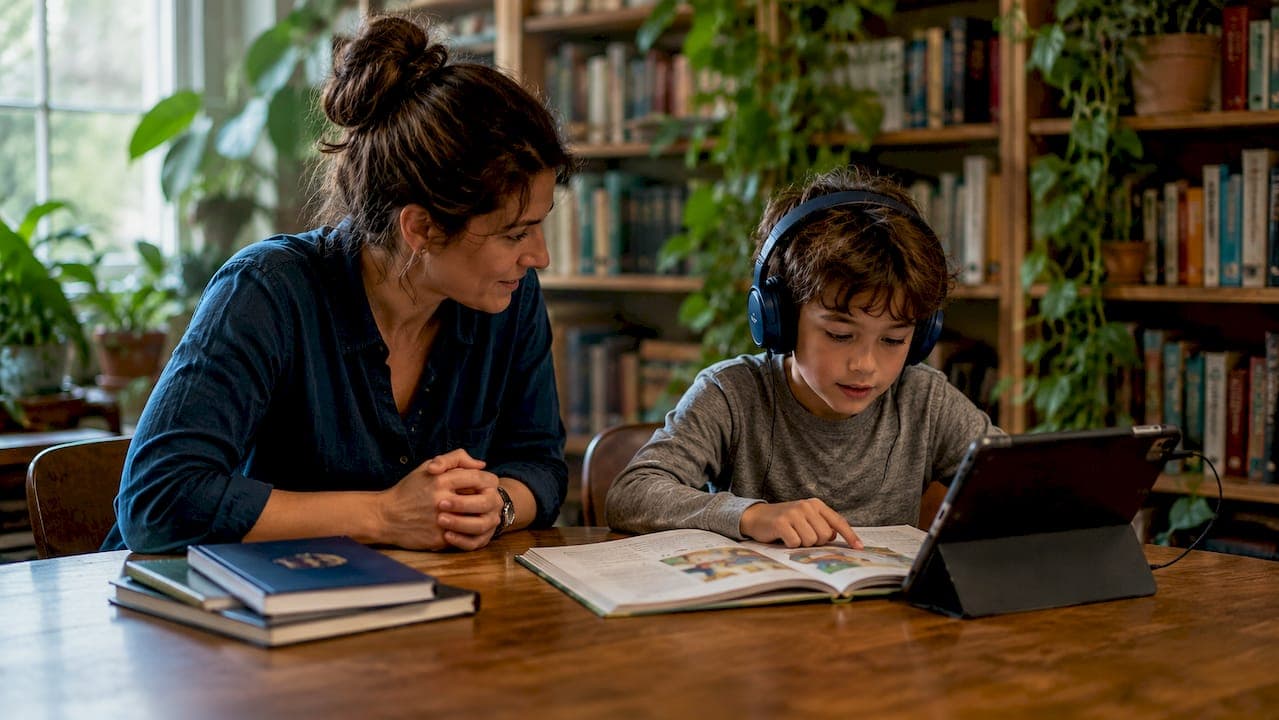
Multisensory learning with audiobooks is defined as the deliberate combination of auditory input from recorded narration with visual, kinesthetic, and tactile activities to deepen comprehension and retention. Educators and researchers now recognize this approach, formally called multimodal instruction in literacy science, as one of the most effective methods for diverse learners. Brain networks processing written and oral language overlap significantly, which means audiobooks are not a shortcut. They are a legitimate learning channel. When paired with structured activities, audiobooks support vocabulary growth, reading fluency, and long-term recall across all ages and ability levels.
Why do audiobooks support multisensory learning effectively?
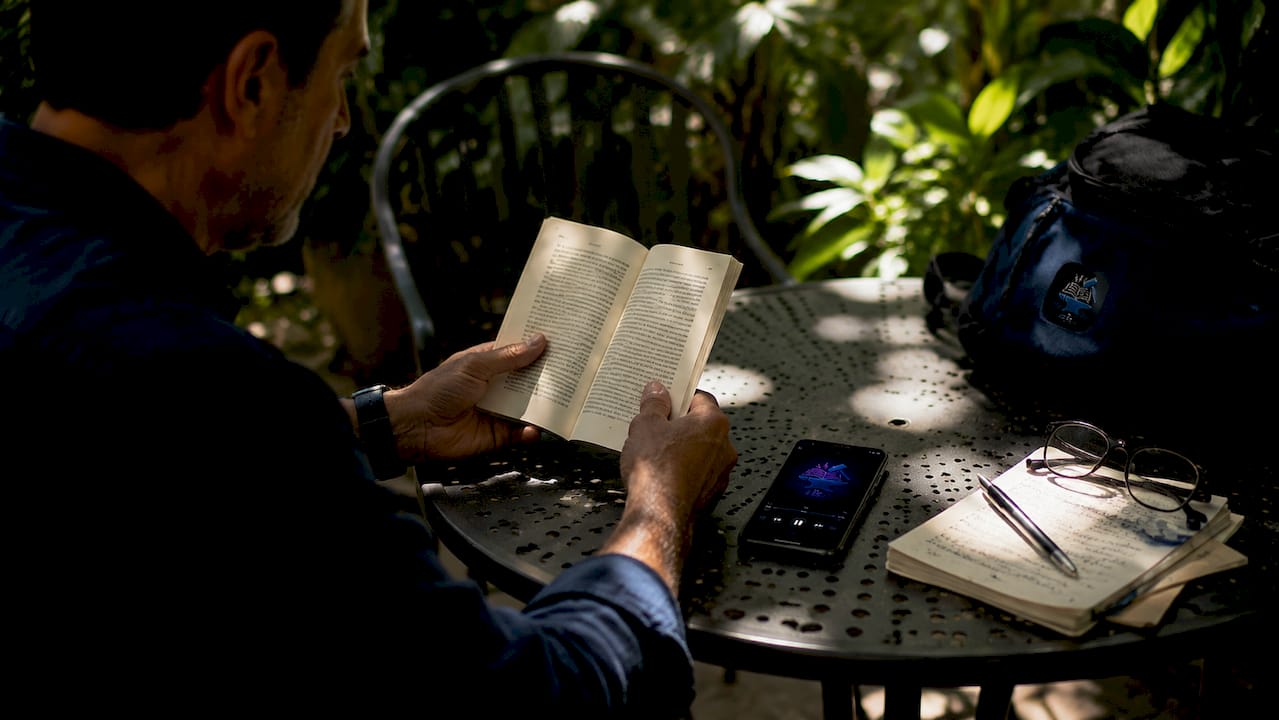
Audiobooks activate the same neural pathways as print reading, which makes them a genuine cognitive tool rather than a passive substitute. The Harvard Gazette reports that overlapping neural activation between listening and reading debunks the persistent myth that audiobooks are "cheating." This matters for educators and parents who may hesitate to introduce audio formats, especially for struggling readers.
Listening to narrated text demands sustained attention and working memory. A narrator sets the pace, which means the listener cannot slow down or reread a confusing sentence the way a print reader can. Research from a meta-analysis of 46 studies confirms that listening supports narrative comprehension but that reading yields stronger results for deeper analytical understanding. This finding does not disqualify audiobooks. It tells educators exactly where to intervene: by reintroducing cognitive control through pausing, replaying, and structured questioning.
"The question is not whether audiobooks count as reading. The question is how to design the listening experience so the brain does the same rigorous work it does with print." This framing shifts the conversation from format debate to instructional design, which is where real learning gains are made.
Combining audio with print or tactile interaction compounds the benefit. When a learner follows along in a physical or digital text while listening, two sensory channels process the same information simultaneously. This dual-coding effect, described in cognitive science, strengthens memory encoding. For learners with dyslexia or ADHD, the auditory channel can carry comprehension while the visual channel tracks words, reducing the cognitive load that decoding alone would create.
How to implement structured multisensory audiobook strategies
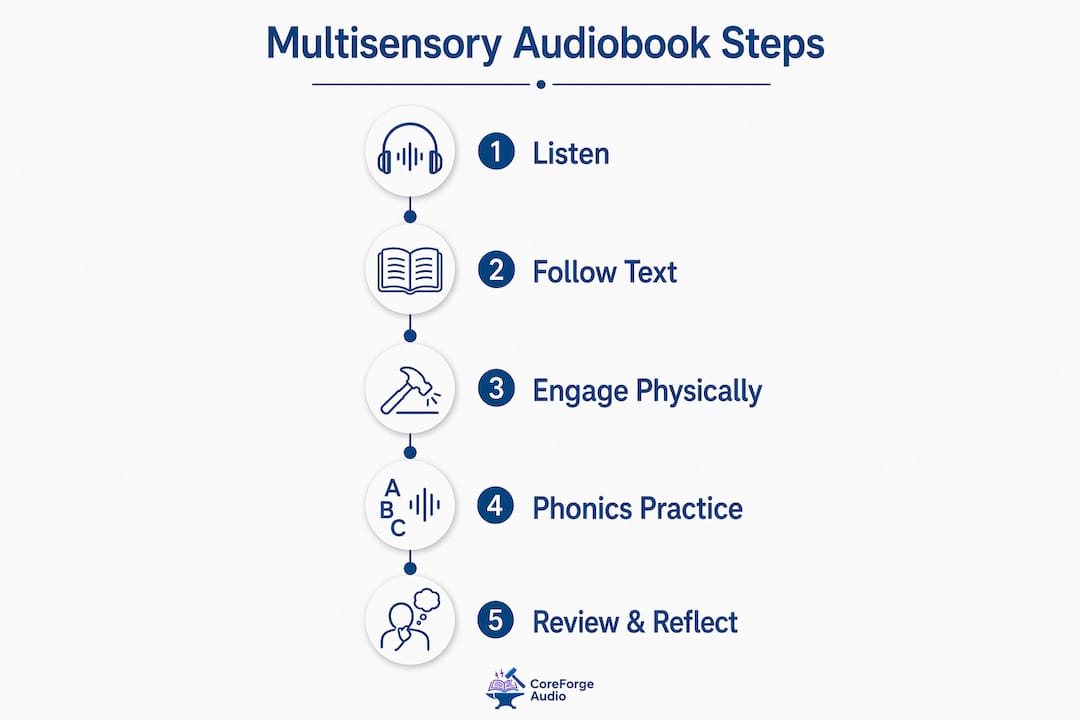
Structured implementation is what separates passive listening from genuine audiobook-based study. The before-during-after model, validated by Dyslexia UK, gives every listening session a clear purpose and prevents the mind from drifting.
- Before listening: Preview three to five vocabulary words from the upcoming passage. Set one specific comprehension goal, such as identifying the main character's motivation or the central argument. This primes the brain to listen with intent rather than simply receive sound.
- During listening: Divide the audio into 5 to 10 minute chunks and pause at each break to ask one focused question. The question can be verbal, written, or answered through a quick sketch. Each pause gives the working memory time to consolidate what it just processed.
- After listening: Ask the learner to retell the passage in their own words, either aloud or in writing. Retelling is one of the most research-supported comprehension strategies available. It forces the brain to reorganize and reconstruct information rather than simply recognize it.
- Pair audio with physical interaction: Have learners annotate a printed or digital copy of the text, underline key phrases, or use sticky notes for reactions. For younger children or kinesthetic learners, manipulatives like letter tiles or story-sequencing cards add a tactile dimension that reinforces the audio.
- Add movement between segments: A brief physical break, such as stretching or walking while recalling one fact from the last segment, activates the body and resets attention. This is especially effective for learners with ADHD or sensory processing differences.
Pro Tip: For struggling readers, explicit instruction must accompany audiobook use. MIT McGovern Institute research shows that vocabulary gains are higher when audiobooks are combined with tutoring twice a week rather than audio alone. Schedule a brief five-minute vocabulary review before each listening session to close this gap.
Explicit phonics instruction alongside audiobooks also strengthens decoding skills. A longitudinal study published in Frontiers in Education found that a structured multisensory phonics program combining visual, auditory, kinesthetic, and tactile methods produced measurable literacy improvements in at-risk children across 28 sessions. Audiobooks fit naturally into this model as the auditory component, while tracing letters, building words with tiles, and reading along supply the other sensory channels.
What tools and resources support multisensory audiobook learning?
The right platform makes a significant difference in how well audiobook learning techniques translate into practice. Below is a comparison of key features educators and parents should look for.
| Tool or resource | Key feature | Best for |
|---|---|---|
| Learning Ally | Text-synchronized audiobooks with human narration | Students with dyslexia and print disabilities |
| Libby by OverDrive | Free public library audiobooks with adjustable speed | Budget-conscious families and classrooms |
| Bookshare | Accessible ebooks with audio and visual display | Learners with visual impairments or reading barriers |
| Audible | Large catalog with Whispersync read-along | Independent learners pairing audio with Kindle text |
| Coreforgeaudio | Human-narrated audiobooks with dyslexia-friendly fonts | Learners needing inclusive, accessible audio formats |
Beyond platforms, several features directly support the multisensory approach:
- Adjustable playback speed: Slowing narration to 0.75x gives struggling readers time to process without losing the thread. Increasing speed challenges advanced listeners and builds auditory processing fluency.
- Bookmarking and note-taking: Apps that allow in-app notes or chapter markers let learners flag confusing moments for later review, restoring some of the cognitive control that print reading naturally provides.
- Read-along highlighting: Synchronized text highlighting, available in tools like Audible's Whispersync, keeps the visual channel engaged while the auditory channel carries the story.
- Dyslexia-friendly fonts and spacing: Platforms that offer OpenDyslexic or adjustable letter spacing reduce visual decoding stress, freeing cognitive resources for comprehension.
Public libraries remain one of the most underused resources for accessible audiobook formats. Libby and Hoopla provide free access to thousands of titles with no subscription required, making them practical starting points for educators building classroom libraries or parents working within tight budgets.
How to troubleshoot challenges in audiobook learning
Even well-designed audiobook sessions run into obstacles. Attention fatigue is the most common. When a learner's mind wanders during a fixed-pace narration, they lose the thread and cannot easily recover without replaying several minutes of audio.
The most effective fix is shorter segments. Breaking audio into short chunks with focused questions between each one prevents working memory overload and keeps attention sustainable. For learners with ADHD, segments as short as three to five minutes with a physical or verbal check-in work better than the standard ten-minute block. The Coreforgeaudio blog covers specific attention strategies for ADHD readers that translate directly into audiobook sessions.
Passive playback is the second major problem. A learner who presses play and lets the audio wash over them without active engagement gains very little. Structured prompts solve this. Before pressing play, give the learner one specific thing to listen for, a character decision, a cause-and-effect relationship, or a new vocabulary word. This single instruction converts passive reception into active listening.
Pro Tip: For neurodivergent learners, consider a fidget tool or stress ball during listening sessions. Occupying the hands with a low-demand physical task can actually improve auditory focus by reducing the urge to seek other stimulation.
Additional adjustments that work across diverse learner profiles:
- Playback speed calibration: Start at normal speed and adjust based on comprehension checks. If a learner misses more than two details per segment, slow the speed by 0.25x.
- Paired print access: Even a partial printed transcript or chapter outline gives visual learners an anchor and reduces anxiety about missing content.
- Scheduled replay: Normalize replaying a segment as a study strategy, not a sign of failure. Treating replay as deliberate review changes the learner's relationship with the material.
- Routine consistency: Using the same before-during-after structure every session builds a predictable scaffold that reduces cognitive overhead, particularly for learners with autism spectrum disorder or anxiety.
For learners with dyslexia specifically, the practical guide to audiobooks from Coreforgeaudio outlines how to combine audio with print tasks and vocabulary notes in a way that builds both comprehension and decoding confidence simultaneously.
Key takeaways
Multisensory audiobook learning works best when structured instruction, active engagement, and multiple sensory inputs are combined rather than relying on audio alone.
| Point | Details |
|---|---|
| Audiobooks are neurologically legitimate | Brain networks for listening and reading overlap, making audio a valid learning channel. |
| Structure drives comprehension gains | The before-during-after model with chunked listening and retelling outperforms passive playback. |
| Explicit instruction closes the gap | Vocabulary tutoring alongside audiobooks produces stronger gains than audio alone, especially for struggling readers. |
| Tool features matter | Adjustable speed, read-along sync, and dyslexia-friendly fonts directly support multisensory engagement. |
| Customization is non-negotiable | Shorter segments, movement breaks, and structured prompts must be tailored to each learner's profile. |
What I've learned from watching audiobooks transform reluctant readers
I've spent years watching educators introduce audiobooks with the best intentions and then abandon them after a few weeks because "the kids just zone out." The problem is never the audiobook. The problem is treating it like a television program rather than a teaching tool.
The research from MIT McGovern Institute confirmed what I had already observed in practice: audiobooks alone do not move the needle for the learners who need the most help. The gains come from the conversation around the audio, the vocabulary preview before pressing play, the retell afterward, the moment a child says "wait, go back" and actually listens again with a purpose. That is where literacy is built.
What surprises most parents and educators is how quickly motivation shifts when a struggling reader realizes they can access a complex book through audio. The content becomes available before the decoding skill catches up. That access builds confidence, and confidence builds the willingness to try harder texts. I have seen this pattern repeat across learners with dyslexia, ADHD, and visual impairments. The modality is not the lesson. The engagement is.
My strongest recommendation: do not wait until a learner is "ready" for audiobooks. Start with a high-interest title, keep the first session under ten minutes, and ask one good question afterward. The structure can grow from there. The science on how listening builds literacy is clear enough to act on today.
— Sarmed
Accessible audiobooks for every kind of learner
Coreforgeaudio is a nonprofit-focused platform built specifically for learners who face barriers to traditional reading, including dyslexia, ADHD, visual impairments, and demanding schedules. Every title on the platform is narrated by a human voice actor, because the quality and warmth of human narration matters for engagement and comprehension in ways that synthetic audio cannot replicate. The platform includes dyslexia-friendly fonts, adjustable narration speeds, and multilingual support, making it a practical fit for the multisensory strategies covered in this article. Whether you are an educator building a classroom resource library or a parent looking for an accessible starting point, explore Coreforgeaudio to find titles and tools designed around real learning needs.
FAQ
What is multisensory learning with audiobooks?
Multisensory learning with audiobooks is the practice of combining auditory narration with visual, kinesthetic, and tactile activities to improve comprehension and retention. It is formally called multimodal instruction in literacy science and is supported by neuroscience research showing overlapping brain networks for listening and reading.
Are audiobooks as effective as reading for learning?
Audiobooks support narrative comprehension effectively but yield stronger results when paired with explicit instruction and structured activities. A meta-analysis of 46 studies found that reading produces better outcomes for deep analytical understanding, while listening excels for engagement and vocabulary access when combined with guided tasks.
How do I stop a learner from zoning out during audiobooks?
Divide listening into 5 to 10 minute segments and assign one specific listening goal before each segment begins. Structured prompts, paired print access, and brief movement breaks between segments are the most reliable methods for maintaining active attention.
What audiobook features best support multisensory education strategies?
Adjustable playback speed, read-along text highlighting, in-app bookmarking, and dyslexia-friendly fonts are the features that most directly support multimodal engagement. Platforms like Learning Ally and Coreforgeaudio include several of these features specifically for learners with reading barriers.
Do audiobooks help learners with dyslexia?
Audiobooks are particularly effective for learners with dyslexia because the auditory channel carries comprehension while decoding skills are still developing. Research from Dyslexia UK confirms that pairing audio with print tasks and vocabulary notes produces stronger literacy outcomes than audio alone.