
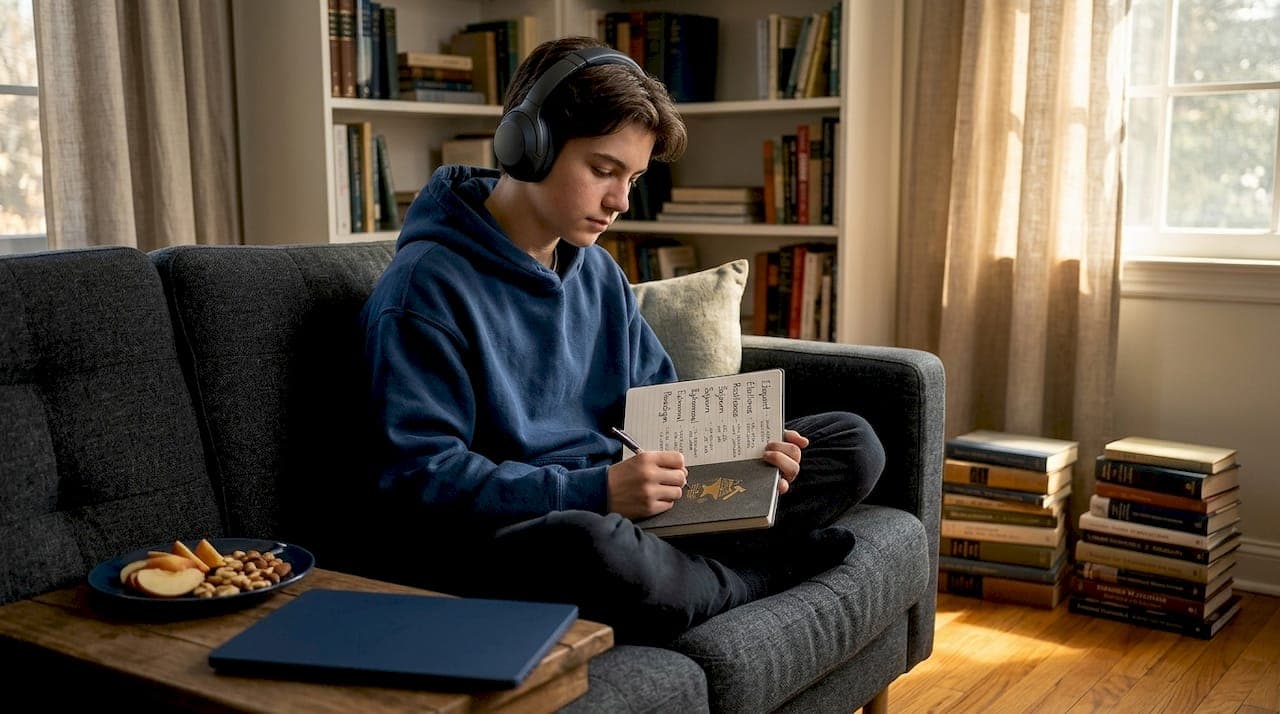
Comprehension is not just about decoding words on a page. It's about holding meaning together, tracking ideas across paragraphs, and building a mental model of what you've read. For many students, that process breaks down somewhere between the text and the brain. The good news: the ways audiobooks improve comprehension skills are increasingly well-documented, and 2026 research is adding real specificity to what used to be guesswork. Whether you're a student struggling to retain what you read, an educator designing instruction, or a lifelong learner looking for better tools, this article gives you the evidence and the methods.
Table of Contents
- Key takeaways
- 1. Ways audiobooks improve comprehension skills through vocabulary exposure
- 2. Brain science: why listening comprehension counts as real learning
- 3. Active listening techniques that deepen understanding
- 4. Audiobooks for learners with dyslexia and ADHD
- 5. Pairing audio with print for maximum comprehension gains
- 6. Using audiobook features strategically
- 7. Building consistent listening habits for long-term gains
- 8. Knowing when audiobooks work best and when to use print instead
- My take: audiobooks are not a shortcut. They're a scaffold.
- Coreforgeaudio: built for learners who need more than a standard audiobook app
- FAQ
Key takeaways
| Point | Details |
|---|---|
| Vocabulary grows with support | Audiobook-driven vocabulary gains are strongest when paired with direct instruction or tutoring, not passive listening alone. |
| Brain processes audio and text similarly | Overlapping neural networks mean listening to audiobooks engages the same comprehension pathways as reading print. |
| Learner type changes the outcome | TTS helps ADHD learners' comprehension directly; for dyslexic learners, it reduces cognitive strain and improves efficiency instead. |
| Active listening beats passive listening | Structured before-during-after routines with questions and retelling turn audiobooks into genuine comprehension practice. |
| Pairing audio with print deepens learning | Listening while following along in text strengthens inference skills and vocabulary retention beyond either method alone. |
1. Ways audiobooks improve comprehension skills through vocabulary exposure
Vocabulary is the single strongest predictor of reading comprehension, and audiobooks create one of the most natural environments for encountering new words in context. Unlike vocabulary lists or flashcards, audio delivers unfamiliar words inside living sentences, with tone and emphasis that signal meaning.
A 2026 MIT McGovern study involving hundreds of 3rd- and 4th-graders found that audiobooks help children learn new vocabulary, but the gains were most significant when students received explicit one-on-one instruction alongside the listening experience. Passive listening alone moved the needle less. That's a critical distinction most people miss when they recommend audiobooks for improving reading skills.
Here's what actually works for building vocabulary through audio:
- Listen first without stopping to notice unfamiliar words naturally in context.
- Rewind and replay sections where a new word appears more than once.
- Discuss the word with a teacher, tutor, or study partner immediately after the session.
- Write one sentence using the new word before the next listening session.
Pro Tip: Set a simple goal before each listening session: identify three words you haven't heard before. Write them down afterward. This single habit, practiced consistently, creates a vocabulary log that compounds over weeks.
Exposure to more advanced language structures also matters. Audiobooks narrated by skilled voice actors model sentence rhythm, complex syntax, and register shifts in ways that pure text cannot replicate. That's building literacy through the ear as much as the eye.
2. Brain science: why listening comprehension counts as real learning
One of the most persistent misconceptions in education is that audiobooks are somehow a lesser form of reading. Research says otherwise. A Harvard study found that brain networks for listening and print reading overlap significantly, meaning the comprehension processing happening in your head is largely the same regardless of input mode.
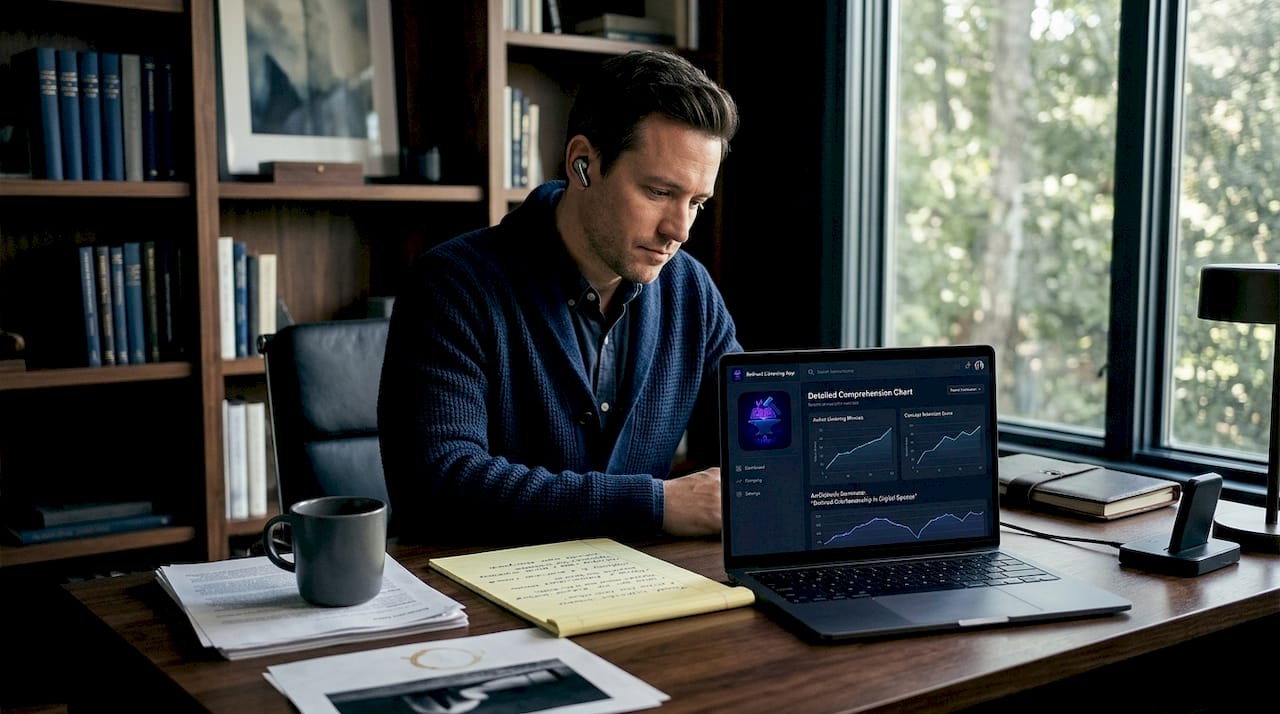
This also dismantles the old learning styles theory. The idea that some people are exclusively "visual learners" and others are "auditory learners" has been repeatedly debunked. What matters far more is the type of task and the depth of engagement. Audiobooks are not a workaround. They are a legitimate pathway to meaning-making.
For students who have been told they're "not readers," this reframing alone can shift motivation. You are doing the same cognitive work, through a different entry point.
3. Active listening techniques that deepen understanding
The difference between someone who listens to a chapter and forgets it by morning and someone who retains it for weeks is not talent. It's method. Passive audiobook listening does not guarantee comprehension gains; active engagement is what drives real understanding.
Dyslexia UK recommends a structured chunked listening approach with comprehension checkpoints and retelling. Here's how to apply it in practice:
- Before listening: Preview the chapter title, any section headings, or back cover summary. Form one or two questions you want answered.
- During listening: Pause every 10 to 15 minutes. Summarize out loud or in writing what just happened.
- After listening: Retell the key ideas to someone else without looking at notes. If you stumble, return to the section.
- Review: Write two sentences: what you understood and what still feels unclear.
This before-during-after structure transforms a passive experience into active learning. It forces the brain to process, organize, and store information rather than let it wash through.
Pro Tip: Retelling is more powerful than rereading or re-listening for long-term retention. Even a 60-second verbal summary to yourself right after a listening session significantly increases how much you remember the next day.
4. Audiobooks for learners with dyslexia and ADHD
Not all learners benefit from audio in the same way, and getting this wrong wastes time. Research using eye-tracking technology found that TTS improves comprehension for students with ADHD-related reading difficulties but produces a different result for students with dyslexia. For dyslexic learners, TTS mainly reduces cognitive effort rather than directly increasing comprehension scores.
Here's what that looks like in practice:
| Learner profile | Primary benefit from audio | Recommended approach |
|---|---|---|
| ADHD | Direct comprehension improvement | Use audio to follow narrative; pair with movement breaks |
| Dyslexia | Reduced decoding load, efficiency gain | Combine audio with print; use adjustable narration speed |
| Visual impairment | Full text access | Human narration with clear pacing |
| Second-language learner | Pronunciation and fluency modeling | Parallel text plus audio at slower speeds |
For students with dyslexia specifically, audiobooks reduce decoding load and free working memory, which means the brain's limited processing capacity shifts from sounding out letters to tracking plot, building inferences, and engaging with ideas. That shift is real and measurable.
Educators implementing audiobooks in special education settings should match the tool to the specific barrier, not apply a one-size approach. The same audio format that transforms a session for a student with ADHD may need different scaffolding for a student whose primary difficulty is decoding.
5. Pairing audio with print for maximum comprehension gains
Listening while following along in the printed text is one of the most underused methods in both classrooms and independent study. The combination engages two processing channels at once, reinforcing recognition and meaning simultaneously.
This approach is particularly strong for building inference skills. When a reader can hear the narrator's tone shift on a word while also seeing it on the page, the meaning of figurative language or subtext becomes much clearer. It also strengthens sight word recognition over time, which is a direct benefit for students working on improving reading skills.
Research supports this dual-mode approach for vocabulary too. Seeing an unfamiliar word in print while hearing it spoken in context creates a stronger memory trace than encountering it through either channel alone. For second-language learners, this pairing is especially effective at modeling pronunciation and sentence rhythm.
Practical implementation tips for educators and self-directed learners:
- Use a text version of the audiobook when available (eBook or physical copy).
- Highlight or annotate the text as you listen, noting words or passages that stand out.
- After the session, return to your annotations and connect them to the larger narrative.
- Use bookmarks in the audio to flag moments that require a second look in print.
Pro Tip: If a full parallel text isn't available, even reading a chapter summary before listening accomplishes something similar. The brain recognizes more when it has a scaffold to attach new information to.
6. Using audiobook features strategically
Modern audiobook platforms offer features that most users never fully use. The ones that matter most for comprehension are narration speed adjustment, bookmarks, and sleep timer control.
Listening has an imposed rhythm that makes it harder to re-read or backtrack the way you would in print. This is one of the genuine limitations of audio for tasks requiring close reading or multi-pass analysis. But adjustable playback speed largely solves this.
Slowing narration to 0.9x or 0.75x on dense or unfamiliar material gives your working memory more time to process. Speeding up on review material keeps engagement high. Bookmarking a section to return to is the audio equivalent of dog-earing a page, but far more precise.
| Feature | Best use case | Comprehension benefit |
|---|---|---|
| Slow narration speed | Dense academic texts | More processing time per sentence |
| Bookmarks | Complex arguments or plot points | Easy backtracking, mimics re-reading |
| Sleep timer | Consistent daily listening sessions | Prevents fatigue-driven passive listening |
| Variable chapters | Long books or textbooks | Chunking for better retention |
These features turn a fixed-rhythm audio experience into a learner-controlled one. That control matters because pace control and comprehension are closely linked. The more agency you have over the pace of information, the more you can process in real time.
7. Building consistent listening habits for long-term gains
Comprehension improvement does not come from a single listening session. It comes from consistent practice over time. A student who listens to audiobooks for 20 minutes daily, using active methods, will develop stronger listening comprehension than one who listens sporadically for longer stretches.
Habit formation matters here. Attaching audiobook sessions to existing routines, such as a morning commute, lunch break, or pre-sleep wind-down, removes the friction of starting. Once the habit is in place, the cognitive benefits accumulate. Tracking what you've listened to, even in a simple log, also creates accountability and surfaces patterns in your comprehension strengths and gaps.
Educators can apply the same logic by building structured audiobook programs into weekly classroom schedules rather than treating audio as an occasional supplement.
8. Knowing when audiobooks work best and when to use print instead
Audiobooks and print reading are tools with different strengths. Understanding when to use each one is as important as knowing how to use either well.
A meta-analysis of 46 studies involving over 4,600 participants found that comprehension levels are similar between reading and listening when the texts and conditions are comparable. The key exception: tasks that require backtracking, close analysis, or working across multiple sections of text favor print.
Audiobooks are the better choice when decoding is itself a barrier to meaning, when a learner needs to engage with content during activities that preclude reading, or when motivation to engage with a text is low and a skilled narrator can re-ignite it. A teacher's checklist can help educators make this decision systematically.
Print remains stronger for deep inferential tasks, writing-based comprehension checks, and any situation requiring precise retrieval of specific text. The most effective learners use both. The goal is not to replace one with the other but to know which tool fits the task.
My take: audiobooks are not a shortcut. They're a scaffold.
I've spent years working with students and educators who arrive at audiobooks out of desperation rather than strategy. A student can't get through the assigned reading. A teacher needs an accommodation. A lifelong learner runs out of time. So they turn to audio, hope for the best, and wonder why it doesn't always work.
What I've learned is that the failure usually isn't the medium. It's the absence of scaffolding. Every piece of research I've read on this, including the 2026 MIT data, points to the same conclusion: audiobooks serve as access tools that need support structures around them to yield real comprehension gains.
I've also seen educators underestimate the power of human narration specifically. There's something qualitatively different about a skilled voice actor who understands the text versus a synthetic voice reading it back. Tone, rhythm, and character differentiation carry meaning that text alone sometimes doesn't. That's not a small thing for a student who has struggled to connect with books.
My advice: stop asking whether audiobooks are as good as reading, and start asking how to build the conditions that make audio-based learning work. That question has much better answers.
— Sarmed
Coreforgeaudio: built for learners who need more than a standard audiobook app
At Coreforgeaudio, the mission goes beyond providing audio files. The platform is built around the idea that access to literature should not depend on whether you can decode text fluently, see a printed page, or afford a premium subscription. Every audiobook on the platform is narrated by a human voice actor, fairly compensated, because performance quality directly affects how well listeners engage and comprehend.
For students, educators, and lifelong learners who want to put the methods in this article into real practice, Coreforgeaudio offers adjustable narration speeds, dyslexia-friendly reading interfaces, and multilingual support. Explore what Coreforgeaudio is building at coreforgeaudio.com. If you believe accessible audiobooks should be a right rather than a luxury, the platform's micro-donation campaign is a direct way to make that happen.
FAQ
Do audiobooks actually improve reading comprehension?
Yes. A meta-analysis of 46 studies found that listening comprehension is broadly similar to reading comprehension when conditions are aligned. Gains are strongest when listening is paired with active engagement strategies rather than passive listening.
Are audiobooks helpful for students with dyslexia?
Audiobooks reduce the decoding effort that consumes working memory for dyslexic learners, freeing cognitive resources for meaning-making. The primary benefit is reduced cognitive strain and improved reading efficiency, rather than direct comprehension score gains.
How is TTS different for ADHD vs. dyslexia learners?
Research using eye-tracking found that text-to-speech directly improves comprehension for students with ADHD-related reading difficulties, while for dyslexic learners it mainly reduces effort and improves processing efficiency.
What's the best way to use audiobooks for comprehension?
The most effective method combines a before-during-after active listening routine with periodic pausing, verbal or written retelling, and pairing audio with a print version of the text when possible.
Can audiobooks replace traditional reading for students?
Audiobooks work best as a complementary tool, not a full replacement. Print remains stronger for tasks requiring close analysis or precise text retrieval. Using both formats according to the task and learner profile produces the best comprehension outcomes.