
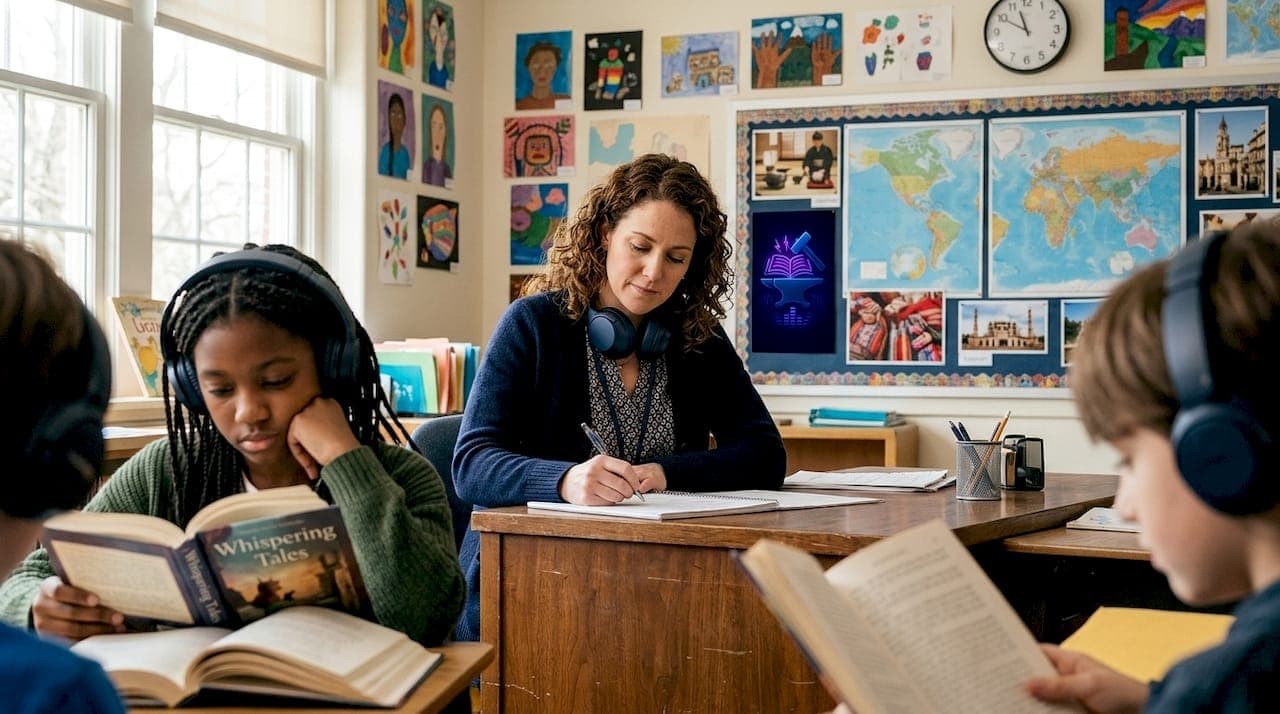
Classrooms today hold more language diversity than any curriculum guide fully anticipates. A student who reads fluently in Spanish may struggle to decode the same story in English. A bilingual child might understand spoken words perfectly but freeze when faced with print. These gaps are real, and they widen when instruction stays locked to a single format. Multilingual audiobooks for diverse student populations offer a direct answer: high-quality audio content that meets learners where their language skills actually are, rather than where a grade-level standard assumes they should be.
Table of Contents
- Key takeaways
- Multilingual audiobooks for diverse student populations: what to know first
- How to implement multilingual audiobooks step by step
- Comparing audiobook formats and approaches
- Troubleshooting common implementation problems
- Measuring the impact on diverse learners
- My take on what actually moves the needle
- How Coreforgeaudio supports multilingual audiobook access
- FAQ
Key takeaways
| Point | Details |
|---|---|
| Match format to learner needs | Choose human-narrated audiobooks with adjustable speed and print support for the strongest comprehension outcomes. |
| Structure beats passive listening | Audiobooks work best with active prompts, chunked segments, and comprehension checks built into every session. |
| Multilingual pedagogy requires planning | Designating which language supports which learning goal produces better results than simply offering bilingual audio. |
| Measure what matters | Track vocabulary growth, engagement, and caregiver feedback to confirm audiobooks are producing real gains. |
| Representation drives motivation | Culturally inclusive content and diverse narrator voices increase sustained listening and student connection to text. |
Multilingual audiobooks for diverse student populations: what to know first
The benefits of multilingual educational audiobooks extend well beyond convenience. When a learner hears a story narrated in their home language or in the language they are actively acquiring, they receive modeled pronunciation, natural sentence rhythm, and expressive vocabulary all at once. That combination is difficult to replicate through print alone, especially for students whose decoding skills are still developing.
Before you select a single title, it helps to understand the range of needs in your group. Bilingual students often have strong oral comprehension in one language and limited literacy in another. English learners may have advanced academic vocabulary in their first language but minimal sight-word recognition in English. Students with dyslexia face decoding challenges that have nothing to do with intelligence or language background. Audiobooks for bilingual students and those with reading difficulties serve very different purposes, yet both groups benefit from the same core feature: removing the decoding barrier so comprehension can happen freely.
Several features separate a genuinely useful audiobook from one that just fills time. Human narration matters more than many people expect. A skilled narrator conveys tone, pacing, and character in ways that synthetic text-to-speech cannot. Adjustable playback speed lets a student slow down a complex passage without losing the thread of the story. Synchronized text, where the printed word highlights as the audio plays, builds the print-to-sound connection that strengthens reading over time.
Here are the most common misconceptions that lead educators and parents astray when selecting audiobooks for multicultural classrooms:
- "Any audiobook counts as reading practice." Passive listening without interaction does not consistently improve literacy. Structured listening does.
- "Bilingual students just need the English version." Students who access content in their stronger language first transfer comprehension skills more reliably to a second language.
- "Text-to-speech is equivalent to human narration." Research and classroom experience consistently favor expressive human narration for engagement and comprehension.
- "Audiobooks are only for struggling readers." Diverse language audiobooks support on-level and advanced learners who are expanding vocabulary and cultural knowledge.
Pro Tip: Before finalizing any audiobook for classroom use, listen to the first two minutes yourself. Check for clear diction, appropriate pacing, and expressive delivery. Poor narration quality will lose your students within a session, regardless of the title's relevance.
How to implement multilingual audiobooks step by step
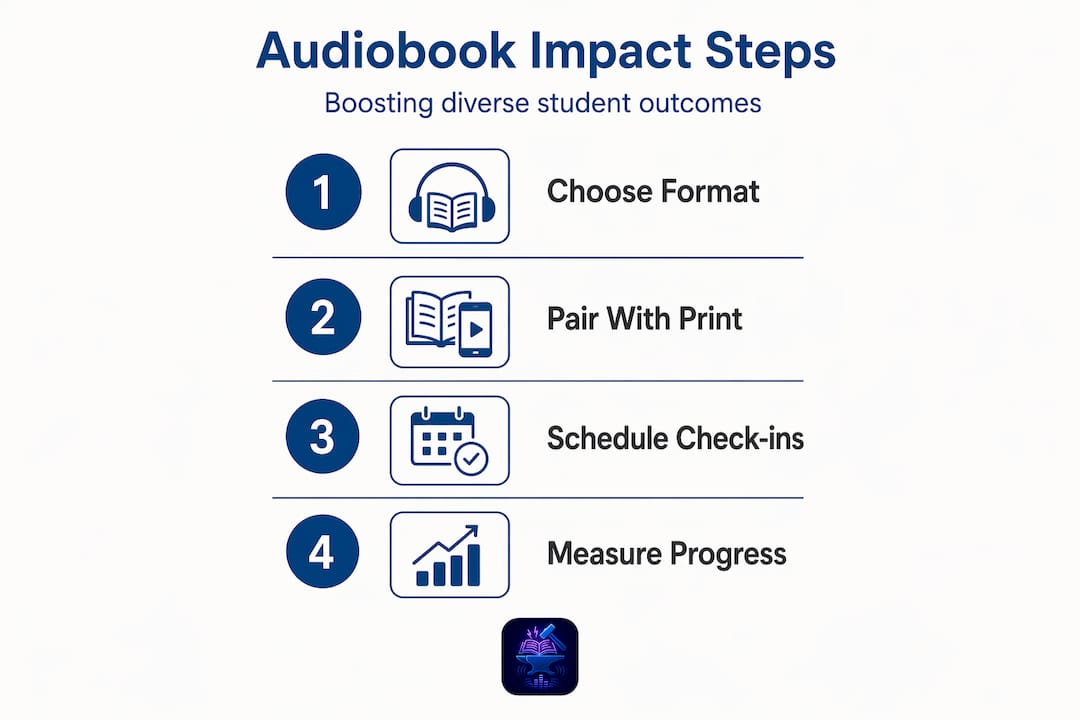
Effective implementation does not require elaborate technology. What it requires is intentionality. Structured language use and planned instructional scripts consistently outperform ad-hoc listening, which is why a clear routine matters more than the specific platform you use.
-
Set a specific learning goal for each session. Before pressing play, tell students what they are listening for. Are they tracking new vocabulary? Identifying a character's motivation? Listening for a sequence of events? Goal-setting converts passive listening into active comprehension work.
-
Chunk the audio into short segments. Listening to an entire chapter without stopping is rarely productive for multilingual learners. Pause every five to eight minutes and ask students to retell, sketch, or discuss what they heard. Short listening sections with active prompts significantly improve comprehension over sustained passive listening.
-
Pair audio with print when possible. Listening is cognitively distinct from reading. A meta-analysis of 46 studies found that listening engages different cognitive processes than reading and benefits most from scaffolding. Providing a printed page or highlighted e-text alongside the audio allows students to re-check details they missed.
-
Use peer listening pairs for discussion. After a segment, pair a student with stronger oral comprehension with one who has stronger print skills. Each brings something the other needs, and the discussion reinforces both. This works especially well for second-language learners who have content knowledge but limited English vocabulary.
-
Adapt for students with dyslexia or attention challenges. Reduce segment length to three to five minutes. Allow students to use fidget tools during listening. Let them draw or annotate rather than write responses. The goal is comprehension, not compliance.
-
Anchor audiobook use in a broader multilingual pedagogy plan. Designate which language is used for which purpose during the session. A student might listen in Spanish, discuss comprehension in English, and write a response in their choice of language. This kind of planned home language use is what the British Council and University of Cambridge MultiEd research identifies as the differentiating factor in multilingual learning outcomes.
Pro Tip: Build a two-week "listening routine" before introducing any comprehension tasks. Students need time to adjust to a narrator's voice and the rhythm of audio learning before they can simultaneously process and respond.
Comparing audiobook formats and approaches
Not all audiobook formats serve the same purpose, and choosing the wrong one for your context is a common reason implementations stall. The table below outlines the key differences to guide your decision.
| Format or approach | Best suited for | Key strength | Key limitation |
|---|---|---|---|
| Human-narrated single language | On-level readers building fluency and vocabulary | Expressive, engaging delivery | No home language support |
| Human-narrated bilingual audio | English learners with strong L1 literacy | Comprehension access in both languages | Fewer titles available |
| Text-to-speech generated audio | High-volume content needs, budget constraints | Scalable and fast to produce | Flat delivery reduces engagement |
| Synchronized audio with text | Students with dyslexia or emerging print skills | Builds print-to-sound connection | Requires compatible device or app |
| Standalone listening, no print | Oral language building, story exposure | Low barrier to entry | Misses decoding skill development |
| Structured listening with instructional support | Diverse learners across proficiency levels | Human narration plus print produces best gains | Requires teacher preparation time |
The clearest finding from research is that combining human narration with print materials and scheduled comprehension checks leads to better literacy outcomes than any single format used alone. For educators building an audiobooks for multicultural classrooms program, the hybrid approach in the final row of this table is worth the extra planning effort.
Troubleshooting common implementation problems
Even well-designed audiobook programs hit friction. Knowing what to watch for prevents small problems from becoming reasons to abandon the approach entirely.
-
Attention drops after the first few minutes. This is the most reported challenge. The fix is not a better audiobook. It is shorter segments, a clearer listening goal, and a response task that feels engaging rather than evaluative. Students who know they will draw one scene from what they heard stay more focused than students asked to write a summary.
-
Students treat audiobooks as background noise. If a student can listen and scroll, fidget without accountability, or zone out without consequence, they will. Create a light engagement ritual: a quick thumbs-up/thumbs-down mid-segment check, or a one-word share after pausing. The ritual signals that listening is an active act.
-
Over-reliance on translation without learning structure. Offering an audiobook in a student's home language without a plan for transferring that understanding to the instruction language is a missed opportunity. The MultiEd research is clear: structured, goal-oriented translanguaging outperforms informal or ad-hoc translation approaches.
-
Content does not reflect students' lives or cultures. Students disengage from stories that feel foreign to their experience, even when the narration is technically excellent. Prioritize diverse language audiobooks that feature characters, settings, and situations your students recognize. Representation is not a bonus feature. It is a comprehension and motivation factor.
-
Technical barriers and access gaps. Not every family has a reliable device or internet connection. For home use, downloadable audio files work better than streaming-dependent platforms. Schools with limited devices can schedule dedicated listening stations rather than expecting individual access.
Measuring the impact on diverse learners
Knowing whether audiobooks are working requires more than a gut feeling that students seem more engaged. Structured evaluation does not need to be elaborate, but it does need to be consistent.
| What to measure | How to measure it | What success looks like |
|---|---|---|
| Vocabulary growth | Pre/post vocabulary checks on audiobook-specific words | Students correctly use 4 to 6 new words per title in writing or discussion |
| Reading comprehension | Informal retelling or question response after sessions | Retells include main idea, key details, and sequence without prompting |
| Engagement and motivation | Student self-report survey or simple rating scale | 80% of students rate listening sessions as enjoyable or very enjoyable |
| Caregiver feedback | Brief monthly questionnaire or conversation | Families report children choosing audio independently at home |
| Decoding and fluency | Running records or oral reading checks at intervals | Students who listen regularly show measurable fluency gains over 8 weeks |
An eight-week audiobook intervention with scaffolded instructional supports produced significant vocabulary score improvements in K-12 students. That is a realistic timeframe for any educator or parent to use as a baseline for their own program evaluation. Set a start date, collect a quick pre-measure, and check again at the eight-week mark.
My take on what actually moves the needle
I have seen audiobook programs in multilingual classrooms that genuinely transformed struggling readers into confident, curious learners. I have also watched well-intentioned programs fizzle because someone assumed that pressing play was enough.
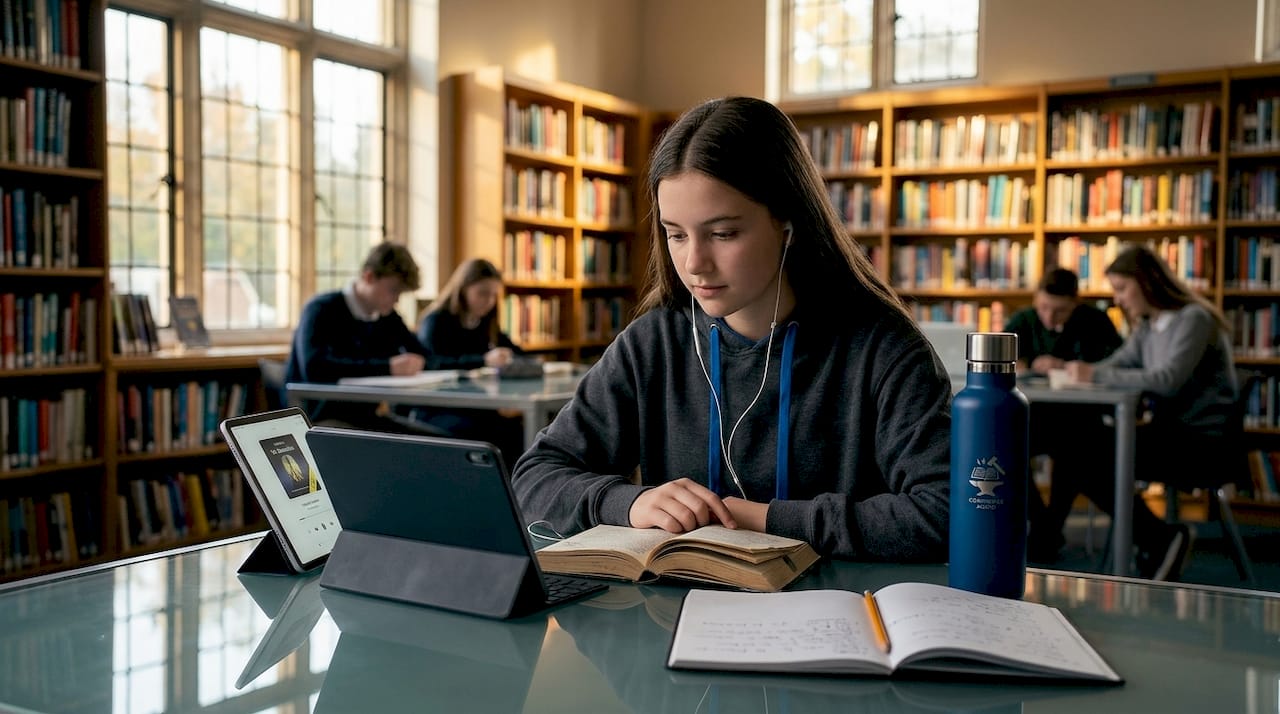
The honest truth is that most failures I have observed come from one specific mistake: treating audiobooks as a passive accommodation rather than an active instructional tool. A student with three home languages who listens to a story in English without any structured support is not experiencing the benefits of audio resources in education. They are just hearing words.
What I have found actually works is the combination of human narration, print access, and a teacher or parent who asks real questions. Not quiz questions. Genuine curiosity questions. "What did that character's voice sound like when she was scared? Why do you think the author chose that word?" That kind of interaction is what turns listening into literacy. It is also what makes multilingual learners feel that their full language repertoire is an asset, not a problem to fix.
The cultural representation piece matters more than most selection guides acknowledge. Students notice when every audiobook features characters who sound, live, and think like people they have never met. A student who hears a narrator who shares their accent, or a story set in a place they know, will stay engaged far longer. That engagement is not a soft outcome. It drives comprehension, vocabulary retention, and the willingness to listen again tomorrow.
— Sarmed
How Coreforgeaudio supports multilingual audiobook access
Coreforgeaudio was built specifically to remove the barriers that keep diverse learners from accessing quality audio content. The platform prioritizes human-narrated audiobooks with adjustable narration speeds, dyslexia-friendly reading interfaces, and multilingual support features, everything educators and parents need to implement audio learning with real depth. For curriculum developers looking to build a principled, accessible audiobook program, Coreforgeaudio's audiobook accessibility resources bring together the tools, the quality narration, and the pedagogical thinking that makes multilingual implementation work. You can also explore practical classroom guidance at implementing audiobooks in special education and deepen your approach with research-grounded strategies for readers with dyslexia in multilingual settings.
FAQ
What makes audiobooks effective for multilingual learners?
Audiobooks reduce the decoding load so students can focus on meaning. When paired with print materials and comprehension prompts, they produce measurable gains in vocabulary and reading confidence across language proficiency levels.
Should I choose human narration or text-to-speech for diverse classrooms?
Human narration consistently outperforms text-to-speech for engagement and comprehension, particularly for multilingual and neurodiverse learners. Expressive delivery helps students process tone, pacing, and meaning in ways that flat synthetic audio cannot replicate.
How do multilingual audiobooks support bilingual students specifically?
Bilingual students benefit from hearing content in their stronger language first, which builds comprehension they can then transfer to their second language. Audiobooks for bilingual students that include dual-language narration or allow language switching give students the scaffolding to access grade-level content without losing meaning.
How long does it take to see results from audiobook programs?
Research points to eight weeks of structured use as a reliable window for measurable vocabulary and comprehension gains. Consistency, active listening strategies, and comprehension checks during that period are what produce the results.
What should I do if students are not staying engaged during audiobook sessions?
Shorten the listening segments to five minutes or less, assign a specific listening task before pressing play, and build in a low-stakes response activity immediately after. Engagement improves when students know why they are listening and what they will do with what they hear.
Recommended
- How audio boosts differentiated instruction for diverse learners
- Audiobooks and second-language learners: a quietly powerful tool — CoreForge Audio Blog
- How to implement audiobooks in special education classrooms
- Audiobooks as a lifeline: making literature accessible for the visually impaired — CoreForge Audio Blog