

Audiobooks have gone mainstream, but narration quality separates a forgettable listen from one you recommend to everyone you know. The real debate in 2026 is no longer whether to use audiobooks. It is whether the voice delivering those words is human or synthetic. Many assume AI narration is close enough. The benefits of human narrated audiobooks tell a very different story. From how your brain processes emotion to how long you stay engaged, the voice behind the words shapes the entire experience in ways most listeners never consciously register but absolutely feel.
Table of Contents
- Key takeaways
- 1. The core benefits of human narrated audiobooks start with emotional connection
- 2. What neuroscience says about listening versus reading
- 3. What professional human narrators do that AI genuinely cannot
- 4. The financial and engagement case for human narration
- 5. When and why to choose human narration for your listening context
- My honest take on why human narration still wins in 2026
- Explore human-narrated audiobooks through Coreforgeaudio
- FAQ
Key takeaways
| Point | Details |
|---|---|
| Human narration drives completion | Listeners are 2.1 times more likely to finish a human-narrated audiobook than an AI-narrated one. |
| Emotional authenticity boosts retention | Human pacing, breath, and tone reduce cognitive load and improve memory encoding during listening. |
| Learning outcomes improve with human voices | Vocabulary, pronunciation, and fluency gains are stronger when learners hear skilled human narration. |
| Human narration is a premium market signal | Human narration as a competitive moat is recognized across the audiobook industry as a trust and quality marker. |
| Hybrid listening strategies work best | Neurologists recommend reading for deep comprehension and listening to human narration for engagement and multitasking. |
1. The core benefits of human narrated audiobooks start with emotional connection
No algorithm schedules a pause the way a seasoned narrator does. Human narrators carry emotional weight through choices that happen in real time: the slight catch in the voice before a character delivers devastating news, the warm slowdown before a punchline lands, the tension built through silence. These are not stylistic flourishes. They are the mechanism through which your brain decides whether to stay invested.
Human narration remains essential for high-drama storytelling precisely because emotional authenticity drives audience preference. When a narrator's voice carries genuine feeling, listeners' brains mirror that emotional state. The result is deeper focus and stronger memory formation around the content.
This matters especially for:
- Immersive fiction where character psychology depends on vocal subtext
- Memoir and personal narrative where the author's or narrator's humanity is the product
- Educational content for children where warmth and encouragement shape how learning feels
Pro Tip: If you are choosing an audiobook for a topic that challenges you emotionally or intellectually, always prioritize a human-narrated version. The emotional cues in the narration will help your brain organize the information more effectively.
2. What neuroscience says about listening versus reading
The debate between reading and listening often gets framed as a competition. Neuroscience says it is more nuanced. Semantic processing is similarly effective whether you read or listen. Your brain constructs meaning from both modes with comparable accuracy.
Where they diverge is in effort and application. Active reading demands more cognitive resources and typically produces stronger explicit memory. Listening, by contrast, is less demanding. When that listening is paired with skilled human narration, you get an additional layer: emotional immediacy that silent text simply cannot deliver.
Here is how the cognitive advantages of audiobooks play out across different use cases:
- Multitasking without comprehension loss. You can follow a well-narrated audiobook while cooking, commuting, or exercising. Try doing that while reading.
- Pronunciation and language acquisition. Hearing a skilled narrator model how words sound in context accelerates vocabulary uptake, especially for learners and children.
- Reduced reading fatigue. For people with dyslexia, ADHD, or visual impairments, listening to audiobooks strengthens speech perception and comprehension brain areas while removing the physical strain of decoding text.
- Fluency modeling. Listeners naturally absorb sentence rhythm, stress patterns, and cadence from human narration, which improves their own speaking and writing.
- Sustained engagement over long content. A novel that would take three weeks to read in print can be consumed in days when a narrator makes every chapter worth staying for.
Pro Tip: Use the hybrid approach recommended by neurologists: read complex nonfiction actively for deep comprehension, then revisit chapters as a human-narrated audiobook to consolidate ideas during low-focus time like your commute.
3. What professional human narrators do that AI genuinely cannot
A professional narrator is not a person reading words aloud. They are an actor, a sound engineer, and a storyteller operating simultaneously. The professional narrator as storyteller combines technical skill and performance instinct to produce an experience that transcends the written page.
Here is what that looks like in practice:
- Character differentiation. A skilled narrator maintains distinctly different voices for a cast of twenty characters across thirty hours of audio without losing consistency. Listeners learn to identify characters by voice alone, deepening immersion.
- Subtext and implication. When a character says one thing but means another, a human narrator communicates both layers simultaneously. AI reads the words. Humans read the scene.
- Natural breath and micro-variation. AI voices lack natural breathing and pitch micro-variations, which increases the cognitive load on listeners. Your brain works harder to decode synthetic speech without realizing it, and that effort subtracts from comprehension and retention.
- Narrator loyalty. When listeners fall in love with a narrator's performance of one book, they seek out everything that narrator has recorded. Narrators become brand assets, building loyalty for authors across entire series.
| Feature | Human narrator | AI narration |
|---|---|---|
| Emotional range | Full, context-sensitive | Flat or formulaic |
| Character consistency | Maintained across full series | Inconsistent across sessions |
| Natural breath patterns | Present, varies organically | Absent or artificially inserted |
| Listener retention | Higher, due to engagement | Lower, due to cognitive effort |
| Brand and loyalty value | High | Minimal |
4. The financial and engagement case for human narration
This is where the numbers speak without ambiguity. Human-narrated audiobooks generate 7.5 times more royalties and have 2.1 times higher listener completion rates than AI-narrated titles. Completion rate is the metric that tells you whether listeners actually valued the experience enough to finish it.
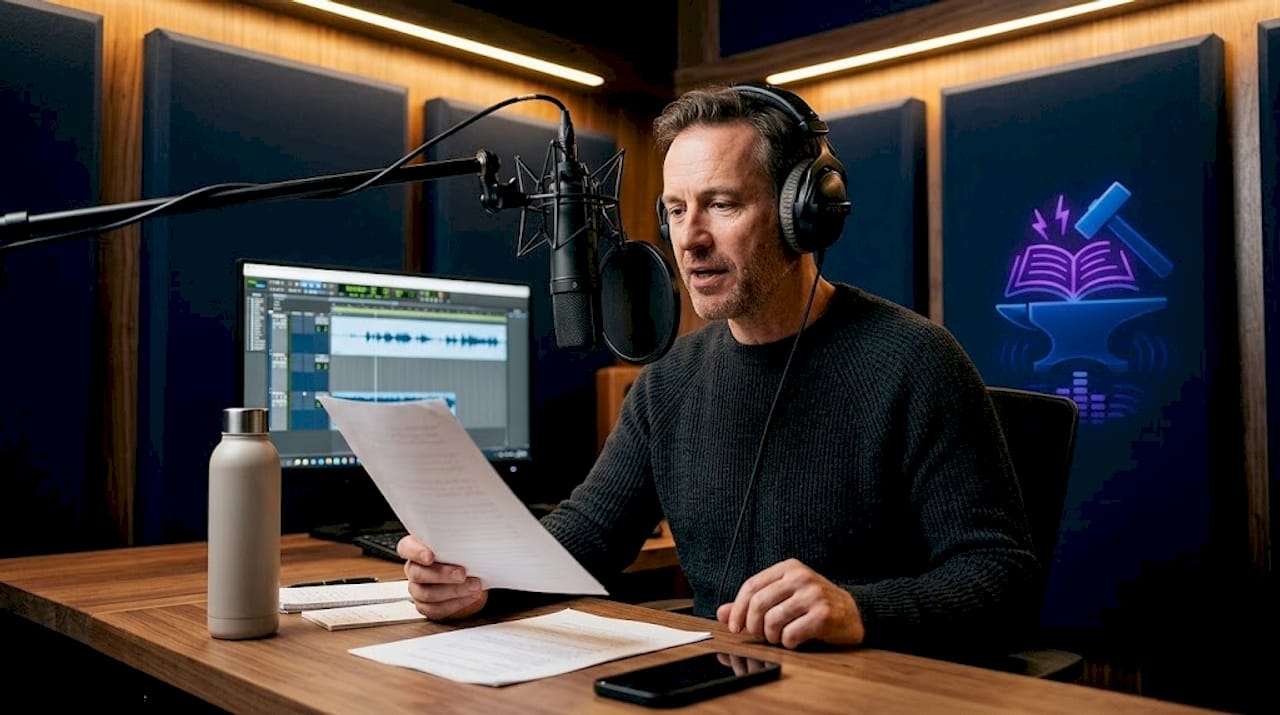
For creators, this is not a minor preference gap. It is the difference between a book that gets recommended and one that gets abandoned at chapter three. Listeners who finish are the ones who leave reviews, buy the next book, and share the title with their networks.
| Metric | Human narration | AI narration |
|---|---|---|
| Average royalty multiplier | 7.5x higher | Baseline |
| Listener completion rate | 2.1x higher | Baseline |
| Audience trust signal | Strong | Weak for premium content |
| Best fit content type | Fiction, memoir, education | FAQs, technical docs, low-stakes guides |
AI narration has a legitimate place in low-stakes, informational content where emotional engagement is not the goal. User manuals, FAQ documents, and brief instructional guides work fine with synthetic voices. The moment the content requires trust, empathy, or sustained engagement, that approach begins to cost you audience loyalty and revenue.
Human narration as a boutique strategy is the industry's recognition that authenticity itself has become a differentiator. Premium audiobook brands lean into it deliberately.
5. When and why to choose human narration for your listening context
Knowing the advantages of audiobooks narrated by humans is one thing. Knowing when to prioritize them for your own goals is more practical.
Choose human narration when:
- You want immersive fiction. Mystery, fantasy, literary fiction, and thriller all depend on emotional tension that only a human voice can sustain.
- You are learning a language or building vocabulary. Hearing correct pronunciation, natural rhythm, and contextual stress in a real human voice accelerates acquisition in ways text cannot.
- The subject is emotionally significant. Grief memoirs, social justice narratives, trauma-informed content. These require the weight of a real human presence.
- You need sustained motivation. Long nonfiction titles on dense subjects stay accessible when a skilled narrator makes the material feel like a conversation rather than a lecture.
- Accessibility is the priority. For listeners with reading barriers, the audiobook benefits for learning are maximized by human narration because the emotional and tonal cues compensate for the absence of visual text formatting.
For tighter budgets or short-form projects, a hybrid approach can work. Hire a human narrator for your opening chapter and key emotional moments while using quality AI for supporting material. Listeners notice the difference at the points that matter most.
My honest take on why human narration still wins in 2026
By Sarmed
I have spent years watching the audiobook space evolve, and I want to be direct about something the broader conversation tends to soften. AI narration is not closing the gap with human narration for content that actually matters to people. It is getting better at sounding passable. That is not the same thing.
What I have seen consistently is that listeners form relationships with narrators. Not with titles, not with authors, but with the specific voice that guided them through a story. That loyalty is real and it transfers. When a narrator you love records a new title in a genre you would not normally pick up, you give it a chance. No AI voice generates that behavior.
The argument I keep hearing is that AI is good enough for most content. Maybe. But I have never met a reader who said their favorite audiobook was "good enough." The titles people remember, recommend, and return to are the ones where the narration felt like it came from a person who genuinely cared about the story. You can feel that soul and spontaneity in every chapter, even if you cannot name exactly what you are responding to.
My advice: do not let budget or convenience set the ceiling on what your listening experience can be. Especially for content that is meant to teach, move, or stay with you. The human voice is not a feature. It is the whole point.
— Sarmed
Explore human-narrated audiobooks through Coreforgeaudio
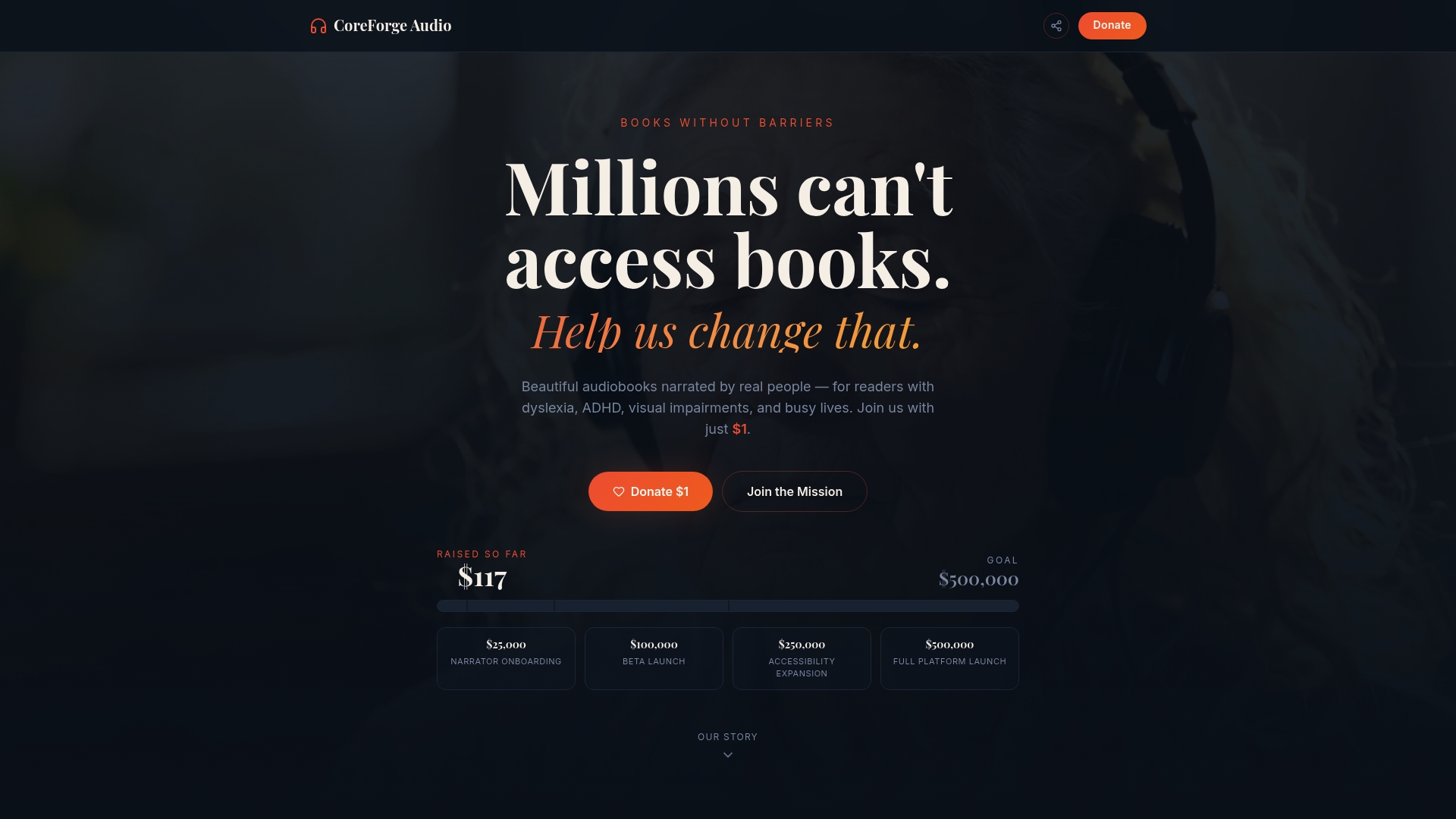
Coreforgeaudio is building a platform where human narration and genuine accessibility meet. Designed specifically for listeners who face reading barriers, including dyslexia, ADHD, and visual impairments, the platform pairs real voice narration with features like adjustable narration speeds, dyslexia-friendly fonts, and multilingual support. Every audiobook on the platform is produced with fair compensation for voice actors and a commitment to ethical storytelling. If you believe books should be available to everyone and that the voice delivering them should be authentically human, support the mission and help bring that vision to life.
FAQ
What are the main benefits of human narrated audiobooks?
Human-narrated audiobooks deliver higher emotional engagement, better listener retention, and 2.1 times higher completion rates compared to AI-narrated titles. The combination of natural breath, tonal variation, and emotional subtext makes the listening experience more memorable and effective for both learning and leisure.
How do human narrators compare to AI in audiobook production?
Human narrators maintain consistent character voices, deliver emotional nuance, and produce natural speech patterns that reduce cognitive load. AI voices increase decoding effort due to missing breath and micro-pitch variations, which reduces long-term retention and listener satisfaction for complex content.
Are audiobooks as effective as reading for learning?
Neuroscience shows semantic processing is comparable between listening and reading, though active reading tends to produce stronger explicit memory. Human-narrated audiobooks are especially effective for language learners, people with reading barriers, and multitasking scenarios where silent reading is not practical.
When is human narration the right choice over AI?
Choose human narration for fiction, memoir, emotionally complex nonfiction, language learning, and any content where listener trust and sustained engagement matter. AI narration is adequate for brief instructional or low-stakes informational content where emotional connection is not a factor.
How do audiobooks help people with reading barriers?
Audiobooks narrated by humans support comprehension for listeners with dyslexia, ADHD, and visual impairments by removing the physical decoding effort of reading while providing emotional and tonal cues that support understanding. Platforms like Coreforgeaudio pair human narration with accessibility features to maximize those benefits.
Recommended
- Human narrators vs AI: why real voices still matter in audiobooks — CoreForge Audio Blog
- Blog — CoreForge Audio | Accessible Audiobooks for Every Reader
- Blog — CoreForge Audio | Accessible Audiobooks for Every Reader
- How narrators actually prepare for an audiobook (and why it shows) — CoreForge Audio Blog