

Audiobook integration in classroom curriculum is defined as the planned use of audio-narrated texts alongside direct instruction to build vocabulary, comprehension, and engagement across grade levels. Research confirms that audiobooks improve literacy outcomes when paired with explicit teaching, not used as a standalone replacement for reading. A randomized controlled trial with 314 students found that explicit scaffolding with audiobooks produces significantly greater vocabulary gains than audiobooks alone. That finding reframes the entire conversation: audiobooks are a delivery mechanism, not a curriculum. Used correctly, they are one of the most flexible tools available to educators working with diverse learners.
How to integrate audiobooks into classroom curriculum: prerequisites and tools
Successful audiobook integration starts before a single student presses play. You need three things in place: compatible technology, curriculum alignment, and trained teachers.
Technology requirements
- Stable internet access or offline-capable devices for every student
- Audio files in standard formats such as MP3 to ensure LMS compatibility across platforms
- Platforms that support chapter-level editing so content can be updated as curriculum changes
- Headphones or speaker systems appropriate for the classroom size
Curriculum alignment checklist
| Requirement | What to verify |
|---|---|
| Reading level match | Audiobook Lexile or grade band matches unit goals |
| Content standards | Titles align with state ELA or content-area standards |
| Accessibility features | Adjustable playback speed, dyslexia-friendly fonts available |
| Format compatibility | MP3 or equivalent supported by your LMS |
Teacher training is the most overlooked prerequisite. A census of 53 secondary school teachers found that educators face systemic barriers including limited internet, insufficient training, and policy gaps, even when they feel confident about audiobook pedagogy. Confidence without institutional support produces inconsistent results. Schedule professional development before rollout, not after problems surface.
Pro Tip: Pilot audiobook integration with one unit and one class before scaling. Document what breaks technically and what confuses students. Fix both before expanding.
How do you design lesson plans that use audiobooks effectively?
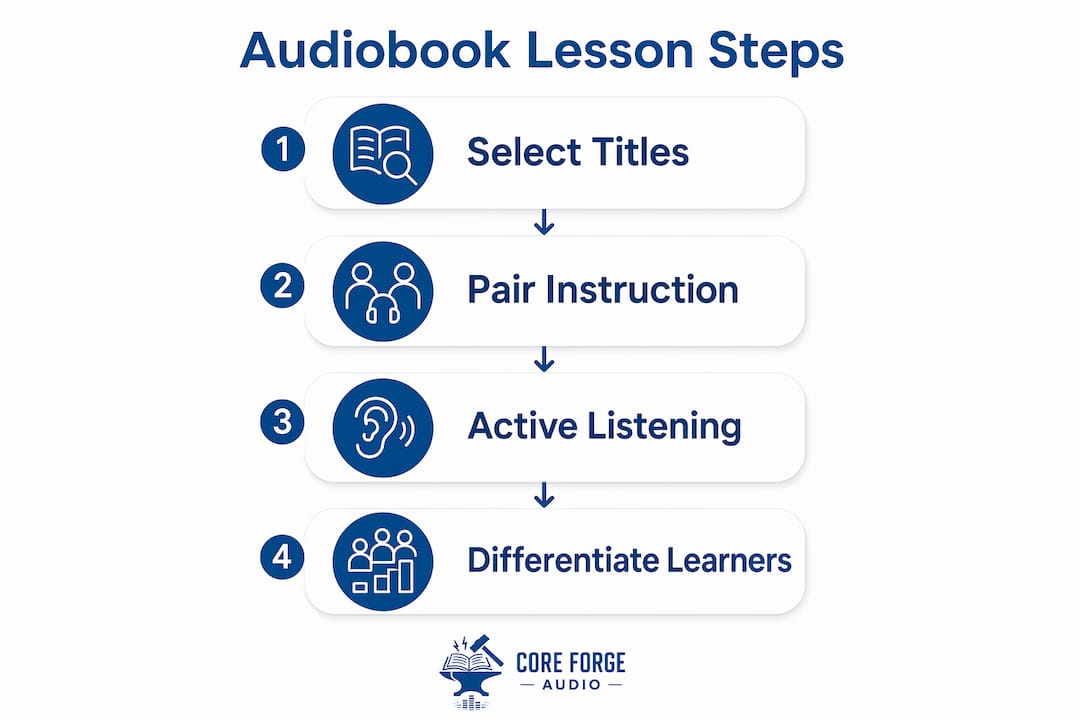
Lesson design determines whether audiobooks build skills or just fill time. The most effective approach follows four stages: selection, instruction, active listening, and differentiation.
1. Select curriculum-aligned titles
Choose audiobooks that match your unit's learning objectives, not just the reading level. A 7th-grade history unit on the Civil Rights Movement benefits from a narrative nonfiction audiobook that brings primary voices to life. A 4th-grade ELA unit on character development works well with a fiction title narrated with distinct character voices. Framing audiobooks as a distinct literary experience rather than a text substitute increases long-term student engagement. That framing matters: students who see audiobooks as a real literary mode are more likely to choose them independently.
2. Pair audiobooks with direct instruction
Audiobooks alone do not consistently improve vocabulary for struggling readers. A study with hundreds of 3rd and 4th graders showed that poor readers gained vocabulary only when supplemental one-on-one tutoring accompanied the audio. The audiobook delivers the text. The teacher delivers the meaning. Plan explicit pre-listening vocabulary instruction, guided discussion during listening breaks, and post-listening comprehension checks for every lesson.
3. Teach active listening strategies explicitly
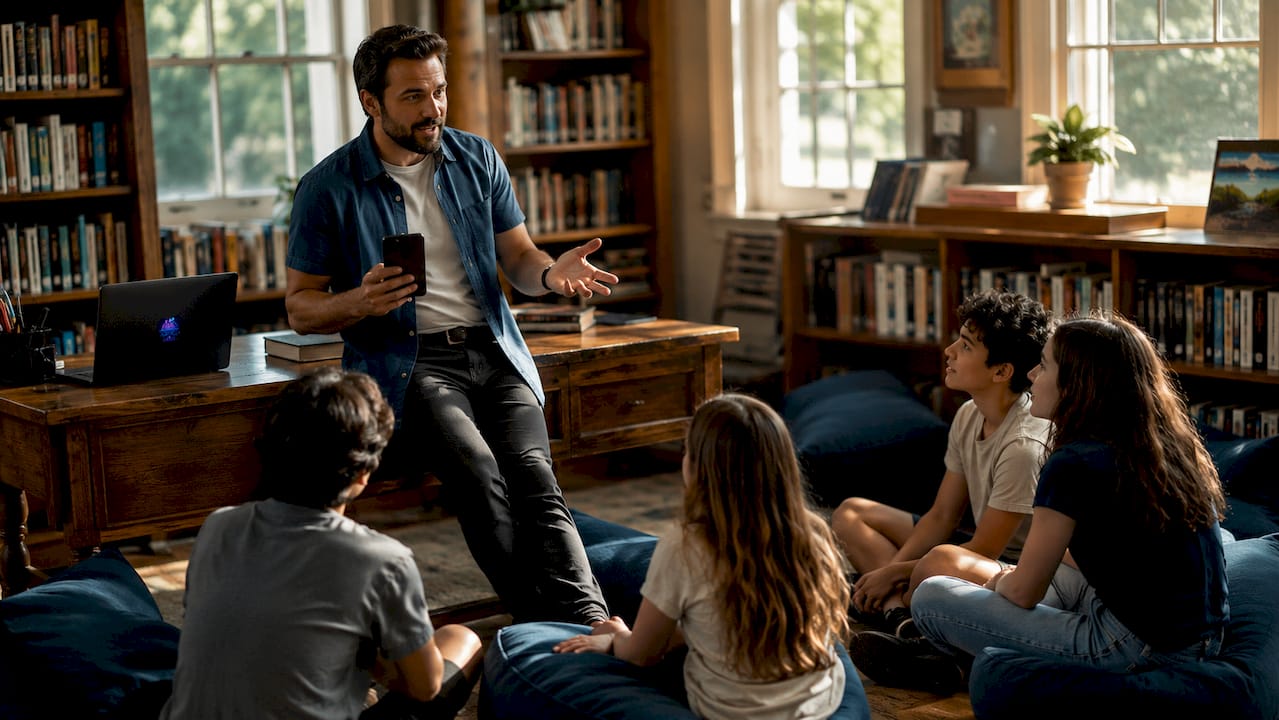
Active listening is a skill, not a default behavior. Teach students to use bookmarking, rewinding, and adjustable playback speed as deliberate comprehension tools. A student who rewinds a confusing passage is doing the same cognitive work as a reader who rereads a sentence. Make that connection explicit. Provide a listening log where students record timestamps, questions, and vocabulary they want to revisit.
4. Differentiate for diverse learners
Audiobooks are one of the most practical tools for differentiated instruction because they separate decoding from comprehension. A student with dyslexia can access grade-level content without the barrier of print decoding. An English language learner can adjust playback speed and replay sections. Students with ADHD benefit from the pacing control that audio provides. Build these options into your lesson plan explicitly rather than treating them as accommodations added after the fact.
Pro Tip: Assign different playback speeds to different student groups during a shared listening activity. Slower speeds for struggling readers, standard for on-level, and 1.25x for advanced readers who need less processing time. Debrief together afterward.
What are the most common challenges in classroom audiobook use?
Barriers to audiobook integration are predictable. Most fall into four categories.
- The "less rigorous" misconception. More than 40% of Americans perceive audiobook listening as less demanding than traditional reading. That perception exists among educators, parents, and students. Counter it directly by citing research in parent communications and by grading listening-based work with the same rubrics used for reading-based tasks.
- Technology gaps. Low-access environments face real barriers: unreliable internet, shared devices, and outdated software. Prioritize offline-capable platforms and MP3 downloads over streaming-only solutions. Build a device checkout system if one-to-one access is not available.
- Passive listening. Students who listen without structured tasks absorb less. Passive listening is the audiobook equivalent of reading words without processing them. Structured listening logs, timed pause-and-discuss moments, and comprehension questions tied to specific timestamps prevent passive drift.
- Insufficient teacher preparation. Teachers who receive no training on audio pedagogy default to using audiobooks as free-reading substitutes. That approach wastes the tool's potential. Pair audiobook rollout with a professional development session focused on active listening strategies and explicit vocabulary instruction.
Addressing these barriers before launch saves significant rework. Schools that treat audiobook integration as a technology project rather than a pedagogical one consistently underperform those that invest in teacher preparation first.
How do you evaluate and improve audiobook integration over time?
Measuring impact requires more than a post-unit quiz. Use a combination of vocabulary assessments, student feedback, and teacher observation to build a complete picture.
Assessment techniques that work
Vocabulary pre-tests and post-tests tied to specific audiobook units give you clean data on word-level gains. Comprehension checks using text-dependent questions confirm whether students processed meaning, not just sound. Running records or reading fluency assessments taken before and after an audiobook unit reveal whether audio exposure transfers to print reading skills.
Collecting feedback to refine practice
Student surveys after each audiobook unit reveal what worked and what felt confusing. Ask specific questions: Did the playback speed feel right? Did you use the rewind function? What vocabulary felt unfamiliar? Teacher reflection logs capture implementation fidelity. If a teacher skipped the pre-listening vocabulary instruction three times in a row, that is a training gap, not a student gap.
Updating content and deepening engagement
Curriculum changes require audiobook content updates. Platforms that support chapter-level editing and MP3 formats make those updates practical rather than burdensome. The most advanced engagement strategy is student-produced audiobooks. When students record their own audiobooks, they analyze pacing, tone, and expression, which builds critical reading skills from the inside out. This approach works particularly well for capstone projects and end-of-unit assessments.
Supporting students with reading barriers through audiobooks is not a short-term fix. Sustained integration, updated content, and regular assessment cycles are what produce lasting literacy gains.
Key Takeaways
Audiobook integration succeeds when explicit instruction, active listening strategies, and institutional support work together rather than when audio simply replaces print.
| Point | Details |
|---|---|
| Pair audio with instruction | Audiobooks alone do not close vocabulary gaps; direct teaching must accompany every listening session. |
| Teach active listening | Bookmarking, rewinding, and playback speed adjustment are skills students need to learn explicitly. |
| Address the rigor misconception | Counter the belief that audiobooks are less demanding by using the same assessment rubrics as print-based work. |
| Prioritize teacher training | Systemic barriers like insufficient training undermine integration more than technology gaps do. |
| Measure and update regularly | Vocabulary pre/post tests and student feedback cycles keep audiobook use aligned with curriculum goals. |
Why most audiobook programs in schools fall short
The schools I have seen struggle with audiobook integration share one pattern: they treat it as a content delivery upgrade rather than a pedagogical shift. They buy licenses, load titles onto tablets, and call it done. Six weeks later, teachers report that students are "just listening" and nothing measurable has changed.
The research is clear on this. Audiobooks as a distinct literary mode require a different instructional frame than print reading. You cannot hand a student a pair of headphones and expect the same outcomes you would get from a guided reading lesson. The audio format demands its own set of strategies, and those strategies need to be taught, practiced, and assessed.
What actually works is treating audiobooks the way you treat any complex skill: model it, scaffold it, and release responsibility gradually. Start with a shared listening experience where you pause and think aloud. Then move to small group listening with structured discussion. Then independent listening with a log. That progression mirrors the gradual release model that reading researchers have validated for decades.
The other thing I would push back on is the remediation framing. Audiobooks are not just for struggling readers. When you position them as a tool for students who "can't read," you stigmatize the format and lose the engagement benefits for your whole class. Frame them as a literary experience in their own right, and you will see stronger buy-in from every student in the room.
— Sarmed
Coreforgeaudio: built for educators who need accessible audiobooks
Educators who want to incorporate audiobooks in curriculum with accessibility at the center will find Coreforgeaudio built specifically for that purpose. The platform offers human-narrated audiobooks with adjustable playback speeds, dyslexia-friendly fonts, and multilingual support, features that align directly with the differentiation strategies covered here.
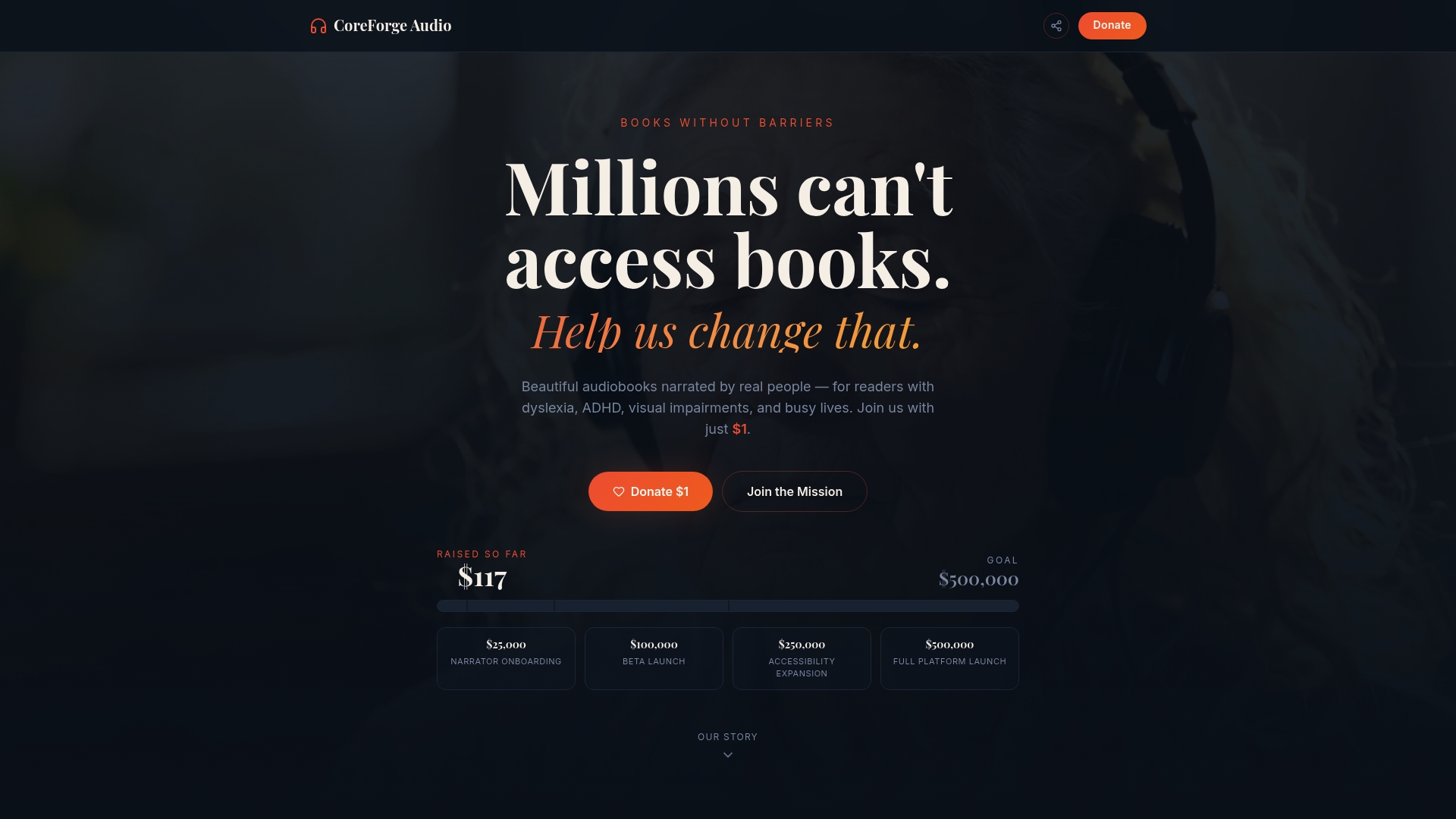
Coreforgeaudio is designed for learners with dyslexia, ADHD, visual impairments, and language barriers, which means the accessibility features are built in, not bolted on. The platform supports the kind of flexible, student-centered audiobook use that produces real literacy gains. Educators can explore available titles and learn about the platform's mission as Coreforgeaudio moves toward full launch.
FAQ
What does it mean to integrate audiobooks into classroom curriculum?
Audiobook integration means using audio-narrated texts as a planned instructional tool alongside direct teaching, not as a replacement for print reading. The goal is to build vocabulary, comprehension, and engagement through structured listening activities.
Do audiobooks actually improve reading skills?
Audiobooks improve vocabulary and comprehension when paired with explicit instruction. A randomized controlled trial with 314 students confirmed that explicit scaffolding produces significantly greater gains than audiobooks used alone.
How do you prevent students from passively listening?
Teach active listening strategies explicitly, including bookmarking, rewinding, and adjusting playback speed. Structured listening logs and timed pause-and-discuss moments keep students cognitively engaged throughout the session.
Are audiobooks appropriate for all learners, not just struggling readers?
Audiobooks benefit all learners, not just those with reading difficulties. Framing them as a distinct literary experience rather than a remedial tool increases engagement across the full range of student abilities.
What technical standards should classroom audiobook platforms meet?
Platforms should support standard formats such as MP3 and offer chapter-level editing to stay compatible with LMS systems and curriculum updates. Offline access and adjustable playback speed are also critical for low-access environments.