

Choosing how to weave audio into a curriculum is not as simple as pressing play. Educators and curriculum developers searching for genuine audio learning integration curriculum examples often find broad theory where they need specific models, research-backed structures, and real decisions about accessibility. This article cuts through that. You will find three detailed examples drawn from documented research and institutional practice, a framework for evaluating them, and a comparison table to help you match the right approach to your context. Every example includes accessibility requirements, not as an afterthought but as a core design feature.
Table of Contents
- Key takeaways
- 1. Audio learning integration curriculum examples: the evaluation framework
- 2. Example 1: podcast-based extensive listening for language learners
- 3. Example 2: multimedia instruction with metacognitive strategy integration
- 4. Example 3: curriculum mapping across content areas over time
- 5. Comparing the three approaches
- 6. Ensuring accessibility compliance at every level
- My perspective on audio integration done right
- How Coreforgeaudio supports accessible audio curriculum design
- FAQ
Key takeaways
| Point | Details |
|---|---|
| Align audio to outcomes | Map every audio activity to a specific learning outcome, teaching method, and assessment before adding it to your curriculum. |
| Accessibility is non-negotiable | Transcripts must include speaker labels and meaningful non-speech sounds to meet WCAG 2.x standards. |
| Podcasts reduce anxiety | Research with 80 EFL learners shows podcast-based listening significantly improves comprehension and confidence. |
| Multimedia plus strategy works | Combining audio with metacognitive strategy instruction produces greater listening gains than audio alone. |
| Curriculum mapping prevents drift | A four-stage mapping process keeps audio materials coherent, progressive, and free of repetition across a program. |
1. Audio learning integration curriculum examples: the evaluation framework
Before examining specific models, you need criteria to judge them. Curriculum design with audio is not a single decision. It is a chain of aligned choices spanning content selection, instructional method, accessibility infrastructure, and assessment.
The most reliable framework borrows from Universal Design for Learning (UDL), which asks designers to proactively remove barriers rather than retrofit accommodations later. Applied to audio, that means building in text alternatives, flexible playback options, and varied engagement modes from day one. UDL principles treat accessibility as a design standard, not a compliance checkbox.
The four criteria that matter most when evaluating any audio-based curriculum example:
- Instructional alignment: Does each audio activity map directly to a stated learning outcome and a corresponding assessment? Curriculum mapping at institutions like Aalto University confirms that audio activities scattered without outcome ties quickly become decorative rather than instructional.
- Accessibility compliance: Do materials include verbatim transcripts with speaker labels and notations for meaningful non-speech sounds? WCAG 2.x requires this for audio-only content. Automatic transcripts without curation routinely fail this standard.
- Cognitive load management: Is audio introduced with scaffolding, such as pre-listening strategy prompts, before moving to open-ended exposure? Research confirms that structured listening tasks reduce anxiety and help learners concentrate more effectively.
- Learner engagement factors: Does the audio format motivate the specific learner population? Format choice matters. A podcast works differently than a narrated textbook chapter, even when covering identical content.
Pro Tip: Before selecting any audio format, write out the intended outcome in one sentence and ask whether a student could demonstrate mastery of that outcome without the audio itself. If yes, the audio is decorative. If no, you have genuine instructional alignment.
2. Example 1: podcast-based extensive listening for language learners
This is one of the most well-documented audio learning strategies in second-language education. The model uses self-selected or curated podcasts as the primary listening material, with structured pre-listening and post-listening tasks surrounding each episode.

A study of 80 Iraqi EFL students demonstrated that learners receiving podcast-based instruction showed significant comprehension gains compared to a control group using traditional listening materials. More notably, the gains were accompanied by reduced anxiety and increased confidence, two factors that conventional listening curricula rarely address directly.
The implementation follows a clear sequence:
- Teach learners how to use the podcast platform, including playback speed controls and replay functions.
- Assign a specific episode with a pre-listening task that activates prior knowledge.
- Provide structured listening exercises (note-taking frames, comprehension questions) to direct attention during the episode.
- Follow with a post-listening reflection or discussion that connects content to course outcomes.
- Supply a verbatim transcript so learners can check comprehension and so students with hearing impairments have full access.
What makes this model transferable beyond language learning is the structure, not the podcast itself. Any curriculum can adopt the pre-listen, structured listen, post-reflect sequence with narrated lectures, documentary audio, or recorded expert interviews. The podcast format simply provides a motivating, authentic input that feels less clinical than a textbook recording.
Pro Tip: When selecting podcasts for learners below intermediate proficiency, choose episodes under 15 minutes with a single speaker. Multi-speaker episodes with overlapping voices significantly increase cognitive load before learners have built the processing stamina to handle them.
The accessibility requirements for this model are specific. Transcripts must go beyond auto-generated text. They need accurate speaker labels, time-stamps where useful, and notation for any meaningful sound (an alarm, a laugh, a sound effect that carries meaning). Accessible multimedia requires players compatible with screen readers and keyboard navigation, not just standard browser audio controls.
3. Example 2: multimedia instruction with metacognitive strategy integration
This model goes a step further than audio alone. It combines podcasts and video (such as YouTube content with closed captions) with explicit instruction in metacognitive listening strategies. Think of it as teaching learners how to listen at the same time as giving them something worth listening to.
The research base is strong. A quasi-experimental study found that EFL learners using multimedia combined with strategy instruction showed greater gains on standardized listening assessments than groups using audio or strategy instruction separately. The combination also improved learner confidence in ways that neither component achieved alone.
The curriculum design sequence for this model typically includes:
- Strategy instruction first: Before any audio content, teach students to predict, monitor, clarify, and evaluate. These four moves are the core of metacognitive listening.
- Layered media input: Introduce a podcast segment first for audio-only processing, then follow with a related video that adds visual context. This staging allows the audio channel to be processed independently before visual support is added.
- Reflection protocols: After each session, students complete a short written reflection on which strategies they used and where comprehension broke down.
- Formative assessment tied to strategies: Assessments ask students to report on process, not just content recall. This makes metacognition a graded behavior, not a suggestion.
This model works particularly well for learners with ADHD or processing differences because the strategy instruction gives them an explicit mental framework to follow during listening. Without it, audio-only tasks can feel unmanageable. With it, learners have a set of moves to make when they get lost, which is where most listening comprehension breaks down.
For educators integrating audio in education within content areas beyond language classes, this model adapts cleanly. A science unit on climate data could pair a narrated dataset explanation with a visual graph, followed by student reflection on what the audio conveyed that the visual did not.
4. Example 3: curriculum mapping across content areas over time
The first two examples focus on specific instructional techniques. This example addresses the system level: how to design a multi-course or multi-year program so that audio materials build coherently on each other without redundancy.
Aalto University's four-stage curriculum development model offers a practical framework. The four stages are: define program outcomes, map teaching methods and assessments to those outcomes, identify gaps and overlaps, and revise for progression and coherence. Applied to audio, this means treating audio activities as trackable curriculum elements with the same rigor as reading assignments or lab sessions.
The mapping process uses a matrix where rows represent courses or units and columns represent learning outcomes. Each cell indicates which teaching methods (including specific audio formats) address that outcome, and which assessments measure it. This reveals two common problems: audio materials that are repeated across units without progression, and audio formats that appear in a curriculum but connect to no formal assessment.
| Stage | Action | Audio-specific task |
|---|---|---|
| Define outcomes | Write measurable program-level goals | Identify which outcomes require listening or audio literacy skills |
| Map methods | Assign teaching approaches to outcomes | Designate podcast, narrated lecture, or recorded interview per outcome |
| Identify gaps | Find outcomes without instructional coverage | Check whether audio-mapped outcomes have accessible alternatives |
| Revise for progression | Sequence materials from foundational to advanced | Confirm audio complexity increases appropriately across units |
Accessibility at the system level means more than individual transcripts. It means effective communication accommodation across the entire program, so students with disabilities have consistent access in every course, not just the ones taught by accessibility-conscious instructors.
5. Comparing the three approaches
Each model has a distinct profile. Knowing where each one fits saves significant redesign time.
| Approach | Best for | Accessibility requirements | Resource intensity | Assessment link |
|---|---|---|---|---|
| Podcast extensive listening | Language learners, motivation-focused contexts | Transcripts, accessible player | Low to moderate | Comprehension tasks, reflection |
| Multimedia plus metacognitive strategy | Mixed-ability classrooms, ADHD or processing differences | Captions, transcripts, accessible player | Moderate to high | Strategy reflection, listening tests |
| Curriculum mapping with audio | Program-level design, multi-course coherence | System-wide transcript standards, AT compatibility | High (initial investment) | Aligned to program-level outcomes |
When choosing between them, consider these factors:
- If your learners are anxious about listening tasks or have low prior experience with audio learning, start with the podcast extensive listening model. The structure is clear and the anxiety reduction is documented.
- If you teach learners with significant processing differences or your learners regularly report losing track during audio tasks, the metacognitive strategy model adds the scaffolding they need.
- If you are designing or revising a multi-course program, curriculum mapping is not optional. Without it, audio materials accumulate without coherence and transcript requirements go unmet across entire departments.
For a deeper look at how audio supports different learner profiles across a program, the audio differentiated instruction guide from Coreforgeaudio connects these examples to practical classroom decisions.
6. Ensuring accessibility compliance at every level
Accessibility in audio learning is a legal and pedagogical obligation. The WCAG 2.x standard requires that audio-only content be accompanied by a transcript that is verbatim, correctly sequenced, and includes speaker identification. Background music does not require transcription, but any sound that carries meaning does.
The nonprofit accessibility checklist from Nonprofit Web Design breaks this down practically for institutions operating under public accessibility mandates. The key checklist items for audio content include: accessible media player with keyboard navigation, synchronized captions for audio-video content, and text alternatives that match the communication channel of the learner.
What most curriculum developers miss is that compliance is a minimum floor, not a design target. A transcript that passes WCAG may still be unhelpful if it is buried three clicks away from the audio file, formatted in tiny text, or written in dense academic prose that the learner cannot parse. Genuine accessibility means the text alternative is as usable as the audio itself.
Pro Tip: Test your audio materials with the media player's audio disabled. If a student could still achieve the learning outcome using only the text alternative and any visual media, your accessibility design is solid.
My perspective on audio integration done right
I've reviewed enough curriculum audits to tell you that the single most common failure is not a technical one. It is treating audio as decoration. An educator drops a podcast into a module because it feels engaging, with no transcript, no connection to the unit's outcomes, and no assessment that touches what the audio actually covers. Students with hearing differences are immediately excluded. Every other student gets a vague sense that the audio was optional.
What I've found actually works is treating audio with the same discipline you would apply to a required reading. Define what the student must do with it. Specify how you will know they did it. Build the accessibility infrastructure before the audio goes live, not after a student complaint arrives.
The research on metacognitive strategy integration is particularly underused by curriculum designers outside of language education. The insight transfers directly. Giving any learner a mental framework to follow during audio tasks, regardless of subject area, changes the experience from passive listening to active processing. That shift is the difference between audio that educates and audio that plays in the background.
The tools are getting better fast. Adjustable playback speed, AI-assisted transcript drafts (with human review), and audio platforms built around accessibility rather than retrofitted for it are moving from specialized to standard. Educators who build audio learning strategies with inclusion at the center now will not need to redo their work when accessibility expectations rise further.
— Sarmed
How Coreforgeaudio supports accessible audio curriculum design
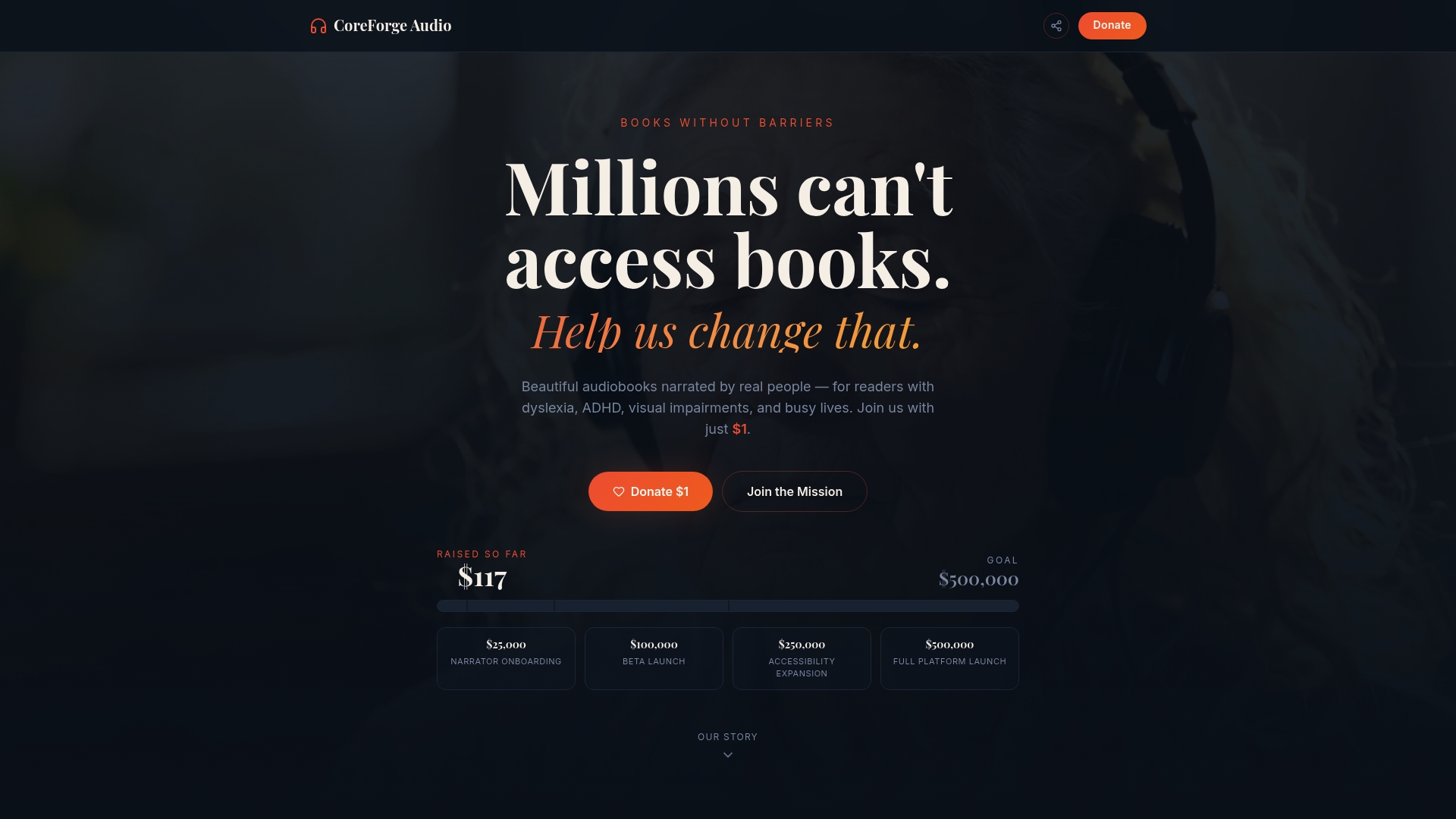
At Coreforgeaudio, accessibility is the starting point, not a feature added at the end. The platform is built around human-narrated audio with adjustable playback speeds, dyslexia-friendly text display, and multilingual support, exactly the kind of infrastructure that makes audio supplementation in curriculum practical rather than aspirational. For educators and curriculum developers who want audio materials that meet WCAG standards and genuinely serve diverse learners, Coreforgeaudio's approach reflects the same research-backed principles covered in this article. Visit Coreforgeaudio to learn more about the platform's mission, current development, and how you can support accessible audio learning for students who need it most.
FAQ
What are audio learning integration curriculum examples?
Audio learning integration curriculum examples are documented models where audio content (podcasts, narrated lectures, recorded interviews) is embedded into a curriculum with explicit alignment to learning outcomes, accessibility features, and formative assessment. The three most research-supported models are podcast-based extensive listening, multimedia instruction with metacognitive strategy integration, and system-level curriculum mapping.
How do I meet WCAG accessibility standards for audio in my curriculum?
WCAG 2.x requires that audio-only content be accompanied by a verbatim transcript with speaker labels and notations for meaningful non-speech sounds. The media player must also support keyboard navigation and screen reader compatibility. Automatic transcripts often fail this standard without manual review and correction.
Which audio learning strategy works best for students with ADHD or processing differences?
The metacognitive strategy integration model is most effective for learners with ADHD or processing differences. It provides explicit mental frameworks (predict, monitor, clarify, evaluate) that give students specific moves to make when comprehension breaks down during listening, reducing the disorientation that unstructured audio tasks often create.
How does curriculum mapping improve audio integration across a program?
Curriculum mapping tracks which audio activities address which learning outcomes, teaching methods, and assessments across every course in a program. This prevents audio materials from accumulating without progression, reveals gaps in accessibility infrastructure, and makes it possible to confirm that no student completes the program without accessible alternatives to every audio component.
Can podcast-based learning work outside of language education?
Yes. The pre-listen, structured listen, post-reflect sequence documented in EFL research transfers to any subject where audio input is authentic and goal-directed. Science, history, and professional training programs all use this structure effectively with narrated case studies, expert interviews, and documentary audio.