

Audiobooks are defined as a direct intervention for closing the achievement gap, the persistent difference in academic performance between students with and without learning barriers. Research from MIT and Harvard confirms that audio-based learning builds vocabulary, background knowledge, and engagement for students who struggle with traditional print. Understanding how audiobooks reduce achievement gaps requires looking at both the cognitive science behind listening and the practical conditions that make audio effective. The benefits of audiobooks for students are real, but they depend heavily on how educators and parents deploy them.
How audiobooks reduce achievement gaps: what the research says
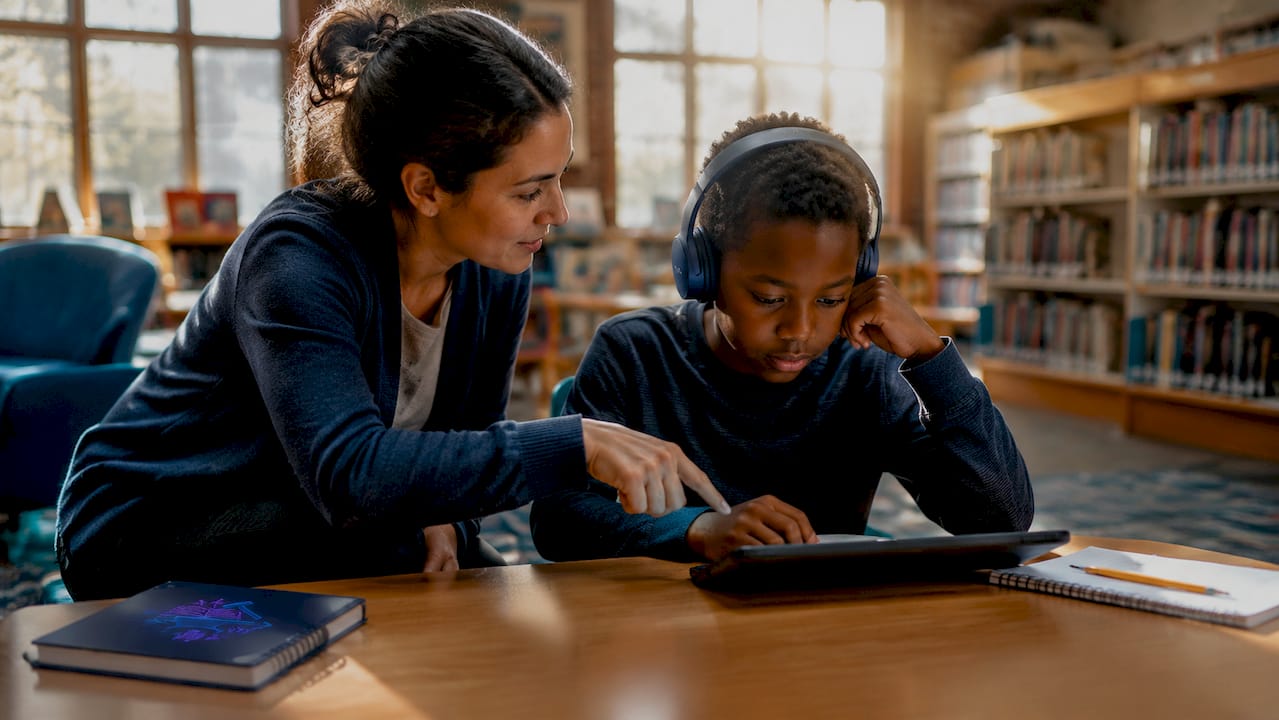
The most important finding from 2026 research is that audiobooks work best when paired with direct instruction. An MIT study on vocabulary gains involving hundreds of third- and fourth-graders found that students improved vocabulary only when audiobook listening was combined with one-on-one instruction. Poor readers who listened to audiobooks alone showed no measurable improvement. That result reframes the entire conversation: audiobooks are a delivery mechanism, not a complete intervention.
The impact of audiobooks on learning is also shaped by socioeconomic context. The same MIT research found that students from low-income households did not show significant gains even when instruction accompanied audiobooks. That finding does not disqualify audiobooks as equity tools. It signals that audiobooks must be part of a broader, context-sensitive support system rather than a standalone fix.
A meta-analysis of 46 studies adds another layer. Reading outperforms audiobooks for inferential comprehension because print allows readers to pause, reread, and control their pace. Listening is linear. Students cannot easily backtrack when a concept is unclear. That difference matters most for complex texts, which are exactly the texts that struggling readers need most.
Pro Tip: Use audiobooks for content-rich subjects like science and social studies, where background knowledge matters more than decoding precision. Reserve explicit phonics instruction for dedicated reading blocks.
Key research takeaways for educators and parents:
- Audiobooks paired with one-on-one instruction produce vocabulary gains in third and fourth graders.
- Audiobooks alone do not advance poor readers without guided support.
- Socioeconomic context shapes how much students benefit from audio-based learning.
- Print reading retains an advantage for inferential comprehension tasks.
How do audiobooks complement traditional reading for diverse learners?
Audiobooks function as accessibility tools, not shortcuts. Harvard neuroscientist Nadine Gaab has shown that the brain activates overlapping regions during both reading and listening. That shared neural architecture means listening to a book is not a lesser version of reading. It is a different path to the same destination.
For students with dyslexia, ADHD, or visual impairments, traditional print creates a bottleneck. Decoding demands consume so much cognitive energy that comprehension suffers. Audiobooks remove that bottleneck. Educational experts confirm that audiobooks build background knowledge and vocabulary while a student's phonics skills are still developing. That bridge matters enormously for students who are intellectually capable but reading below grade level.
Multimodal reading, where a student follows printed text while listening to a narrated version, produces the strongest results for students with learning differences. This approach reduces visual load and supports sustained attention better than audio alone. The student hears fluent, expressive reading while tracking words on the page. That combination reinforces word recognition without demanding independent decoding.
Pro Tip: For students with dyslexia, pair audiobooks with dyslexia-friendly fonts and adjustable narration speeds. Slowing narration by 10–15% gives the brain time to connect spoken words with their printed forms.
Practical ways audiobooks support students with learning differences:
- Students with dyslexia access grade-level content without decoding barriers.
- Students with ADHD maintain attention through engaging narration and expressive voice performance.
- Students with visual impairments participate fully in shared reading experiences.
- English language learners build oral vocabulary and prosody through native-speaker narration.
- Students with processing differences benefit from multisensory learning that combines listening and text tracking.
What are the limitations of relying solely on audiobooks?
Audiobooks carry real limitations that educators and policymakers must understand before scaling audio-based programs. The core problem is cognitive control. Print reading is self-paced. A student can stop, reread a sentence, and reflect before moving forward. Audiobooks run at a fixed pace set by the narrator. Students who miss a detail must actively seek it out, a skill that requires training.
Research is direct on this point:
"Audiobooks require teaching specific listening strategies since their fixed pace limits backtracking and self-regulation possible in print reading."
That is not a reason to avoid audiobooks. It is a reason to teach listening as a skill, just as educators teach reading comprehension strategies. Without that instruction, students may follow along passively without building the deeper processing that leads to retention.
The limitations become more pronounced in specific contexts:
- Inferential comprehension tasks. A meta-analysis of 46 studies shows print reading produces stronger outcomes when students must draw conclusions or analyze text structure.
- Early phonics development. Audiobooks must be integrated carefully alongside phonics instruction to avoid creating gaps in decoding skills.
- Low-income student populations. MIT's 2026 data shows that audio plus instruction did not produce significant gains for students from low-socioeconomic households, pointing to the need for additional, targeted support.
- Passive listening habits. Students who treat audiobooks as background noise rather than active learning tools gain little from the experience.
The honest conclusion is that audiobooks and educational equity are linked, but not automatically. The link requires deliberate instructional design.
What strategies maximize audiobooks' role in closing achievement gaps?
Effective audiobook integration follows a clear pattern: combine audio access with explicit instruction, teach listening as a skill, and match the format to the learning goal. The MIT McGovern Institute confirmed that individualized instruction delivered by trained non-experts can scale this model. That means schools do not need specialists for every student. Trained tutors, paraprofessionals, and even trained parent volunteers can deliver the guided support that makes audiobooks effective.
Classroom strategies for educators
- Assign audiobooks for content-area reading in science, history, and literature to build background knowledge.
- Pair every audiobook assignment with a vocabulary pre-teaching session before students listen.
- Use differentiated instruction methods to assign audio versions alongside print for students who need them.
- Teach students to pause, summarize aloud, and predict before resuming playback. These metacognitive habits transfer directly to reading comprehension.
- Schedule brief discussion sessions after listening to check for inferential understanding.
Home strategies for parents
Parents play a direct role in how audiobooks support reading skills outside the classroom. Listening together and discussing the story afterward replicates the guided support that makes school-based programs effective. Parents can ask open-ended questions like "What do you think will happen next?" or "Why did that character make that choice?" Those conversations build the inferential thinking that audio alone does not develop.
Policy considerations
Policymakers allocating resources for literacy programs should treat audiobooks as infrastructure, not supplemental material. Funding should cover both access (devices, subscriptions, and accessible formats) and training (teacher professional development in audio-based instruction). Schools serving high-need populations require the most support, not the least. The research is clear that context-specific interventions outperform one-size-fits-all audio rollouts.
| Strategy | Implementation focus |
|---|---|
| Pair audio with vocabulary instruction | Pre-teach key terms before each listening session |
| Train listening metacognition | Teach pause, summarize, and predict techniques |
| Use multimodal reading | Combine text tracking with narrated audio |
| Scale with non-expert tutors | Train paraprofessionals to deliver guided sessions |
| Fund access and training equally | Allocate resources for devices and educator development |
Key Takeaways
Audiobooks reduce achievement gaps most effectively when paired with explicit instruction, taught listening strategies, and context-sensitive support rather than deployed as a standalone solution.
| Point | Details |
|---|---|
| Instruction is non-negotiable | MIT's 2026 research shows audiobooks alone do not improve outcomes for poor readers. |
| Multimodal reading works best | Following text while listening reduces visual load and supports attention for diverse learners. |
| Listening is a teachable skill | Students need explicit metacognitive strategies to benefit from audiobooks' fixed-pace format. |
| Context shapes outcomes | Students from low-income households need additional, targeted support beyond audio access. |
| Policy must fund both access and training | Devices and subscriptions without educator development produce limited gains. |
Why I think we've been asking the wrong question about audiobooks
The debate over whether audiobooks "count" as reading has wasted years of instructional energy. Gaab's work at Harvard settled the neuroscience: the brain processes language through overlapping circuits regardless of whether input arrives through the eyes or ears. The real question is not whether audiobooks count. The question is whether we are using them well.
I have seen classrooms where audiobooks sit on a shared tablet, assigned as independent work with no follow-up. Students listen, close the app, and move on. Nothing sticks. Then I have seen classrooms where a trained tutor sits with a student, pauses the narration every few minutes, and asks a single question. The difference in engagement and retention is visible within a single session.
The stigma around audiobooks as "cheating" is the most damaging myth in literacy education. It stops students who need audio access from using it, and it stops teachers from recommending it. Framing audiobooks as accessibility tools for reading changes that dynamic entirely. A student using an audiobook is not avoiding reading. That student is accessing language at the level their mind is ready for, even when their decoding skills have not caught up yet.
The research calls for ongoing investment in tailored interventions, not generic audio rollouts. That means training, follow-up, and honest assessment of which students need what kind of support. Audiobooks are one of the most powerful tools available for educational equity. They are not magic. They are infrastructure.
— Sarmed
Coreforgeaudio: accessible audiobooks built for educational equity
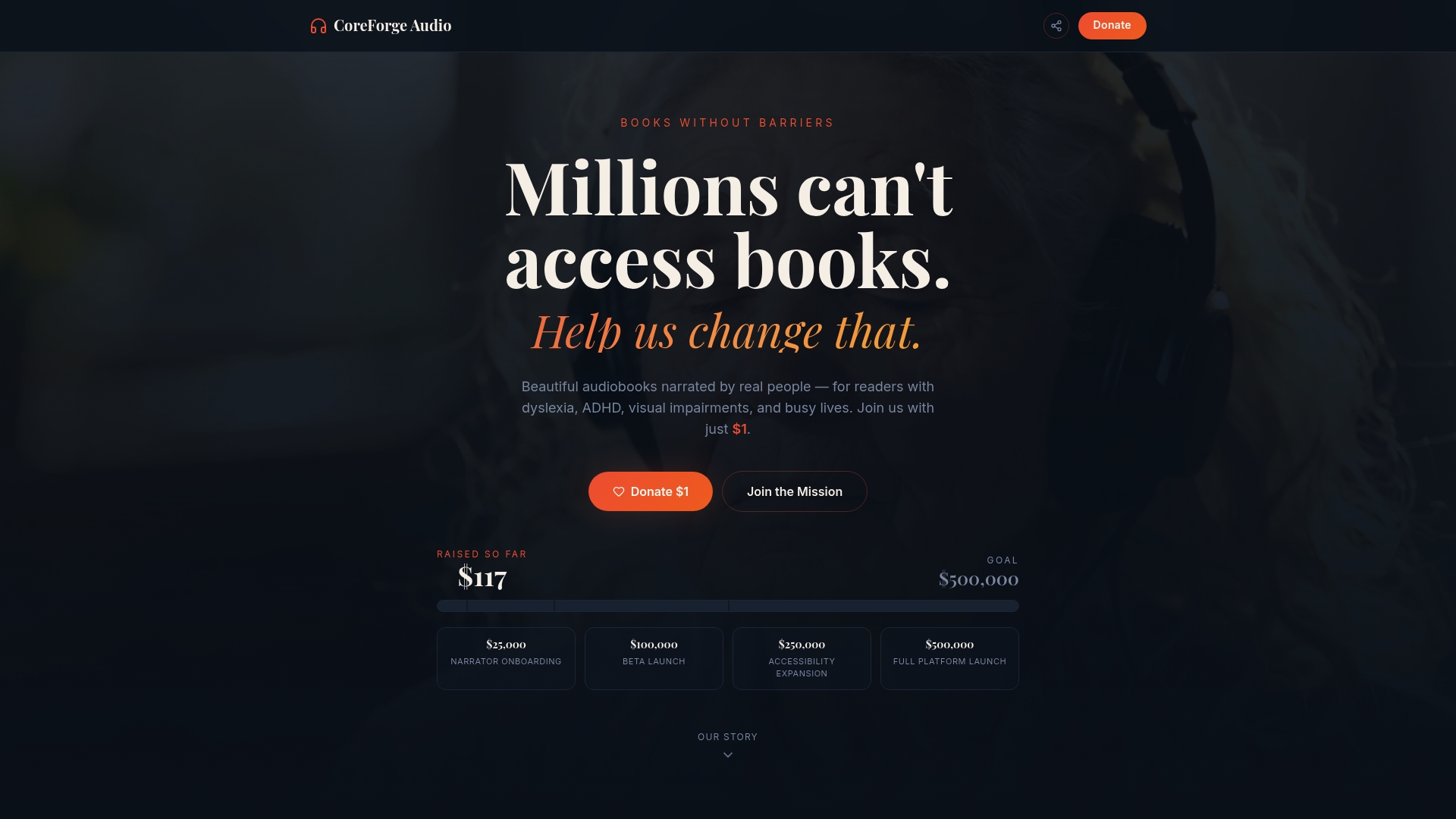
Coreforgeaudio is a nonprofit-focused platform built specifically for students, educators, and families who need more than a standard audiobook subscription. The platform offers human-narrated audiobooks with dyslexia-friendly fonts, adjustable narration speeds, and multilingual support, features designed around the exact barriers that research identifies as obstacles to learning. For educators looking to implement audio-based literacy support, and for parents seeking tools that work alongside classroom instruction, Coreforgeaudio provides accessible, ethically produced content grounded in the same principles this research supports. The platform is actively fundraising to expand its library and accessibility features for the communities that need them most.
FAQ
Do audiobooks help with achievement gaps for all students?
Audiobooks help most students build vocabulary and background knowledge, but research from MIT shows they do not close gaps for poor readers or low-income students without paired instruction.
Are audiobooks a replacement for phonics instruction?
Audiobooks are not a replacement for phonics. They should be integrated alongside phonics to give students access to grade-level content while decoding skills develop separately.
How do audiobooks support students with dyslexia?
Audiobooks remove the decoding bottleneck that prevents students with dyslexia from accessing complex texts. Pairing audio with text tracking and adjustable narration speeds produces the strongest results for this group.
What is multimodal reading and why does it matter?
Multimodal reading means following printed text while listening to a narrated version simultaneously. This method reduces visual load and supports sustained attention, making it particularly effective for students with learning differences.
Can parents use audiobooks effectively at home?
Yes. Parents who listen alongside their child and ask open-ended comprehension questions after each session replicate the guided support that makes school-based audiobook programs effective.