
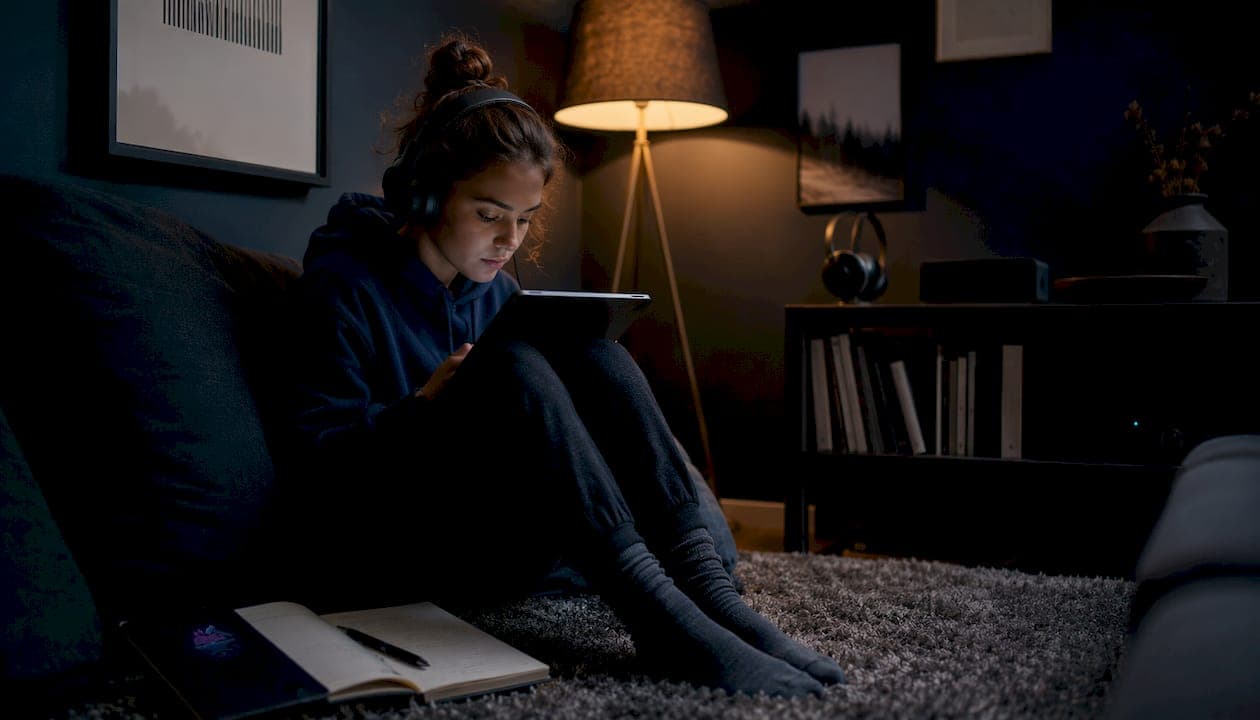
Choosing audiobooks for learning differences is not about picking whatever sounds engaging. It requires matching the learner's specific needs to the right platform, narration style, and accessibility features. The three factors that matter most: reducing cognitive load, supporting attention, and building confidence over time. In the US, Learning Ally and Bookshare are the most established platforms for learners with reading disabilities, offering specialized catalogs and school-compatible formats. Coreforgeaudio is a nonprofit-focused platform built around human narration, dyslexia-friendly design, and ethical production, currently fundraising to expand access.
Before selecting any audiobook, consider these core factors:
- Learner profile: Does the learner have dyslexia, ADHD, a visual impairment, or a combination of challenges?
- Narration quality: Human narration with expressive tone outperforms robotic text-to-speech for sustained attention.
- Accessibility features: Look for adjustable playback speed, dyslexia-friendly fonts, and bookmarking.
- Platform eligibility: Some platforms require documentation of a print disability; others are open access.
- Device compatibility: The audiobook must work on the device the learner actually uses daily.
- Content complexity: Match chapter length and vocabulary level to the learner's current comprehension, not grade level.
Table of Contents
- Why audiobooks genuinely help learners with reading disabilities
- Which US platforms give learners with disabilities the best access?
- How to use audiobooks so they actually build comprehension
- What accessibility features should you check before selecting an audiobook?
- Coreforgeaudio brings ethical audiobook access to learners who need it most
- Key Takeaways
Why audiobooks genuinely help learners with reading disabilities
Audiobooks are evidence-based access tools for learners with dyslexia, not workarounds. When a learner with dyslexia listens instead of decodes, cognitive effort shifts from sounding out words to understanding meaning. That shift matters because decoding burden consumes so much mental energy that comprehension suffers, even when the learner is capable of high-level thinking.
For learners with ADHD, structure is everything. Audiobooks with frequent natural stopping points and expressive narration have been shown to help ADHD students improve recall, with studies indicating a 26% increase in recall among those using audiobooks structured with short, easily navigable chapters. Short chapters create achievable success points, which keeps motivation intact rather than letting frustration build.
"Audiobooks allow students to listen and rewind, thus keeping pace with the story in their own time. Hearing words pronounced correctly in an audiobook helps student reading fluency. Teachers using audiobooks as comprehension and decoding support have noticed a marked improvement with students that used audiobooks in the classroom." — Christie Sylvester, Head Librarian, Prospect High School, via ASCD
Beyond comprehension, audiobooks help learners build a reading identity. A student who has always struggled to finish a book can finish one. That experience changes how they see themselves as learners. Additional benefits worth knowing:
- Vocabulary exposure through rich, complex language that struggling readers rarely encounter in print
- Improved fluency when audio is paired with print, since learners hear correct pronunciation in real time
- Reduced anxiety during independent reading, since no one can see that they are listening rather than reading
- Flexible learning environments, including commutes, movement breaks, and bedtime routines
- Support for IEP accommodations across 13 special education categories recognized in US public schools
An MIT McGovern Institute study found that students gained vocabulary through audiobooks alone, but poor readers made significantly greater gains when audiobooks were paired with explicit one-on-one instruction. Audiobooks open the door; targeted support helps learners walk through it.
Which US platforms give learners with disabilities the best access?
Three platforms stand out for parents and educators in the United States. Each serves a different population and operates on a different model.
Learning Ally produces audiobooks synchronized with highlighted text on screen, so learners can follow along as they listen. The MIT McGovern Institute partnered with Learning Ally specifically because of this synchronized format. Membership is available for students with print disabilities, and the catalog spans K–12 and higher education titles. Schools can access institutional licenses.

Bookshare is the world's largest accessible online library for people with print disabilities, funded in part by the US Department of Education. It offers over one million titles in formats including DAISY audio, MP3, and braille-ready files. Qualified US students receive free membership. The catalog includes textbooks, which makes it particularly useful for classroom settings.
Coreforgeaudio takes a different approach. As a nonprofit-focused platform, it prioritizes high-quality human narration, fair compensation for voice actors, and built-in accessibility features including adjustable narration speeds, dyslexia-friendly fonts, and multilingual support. It is currently in a fundraising phase, with a micro-donation model that keeps the mission transparent. For families and educators who want audiobooks produced with both ethical standards and accessibility at the core, Coreforgeaudio represents a meaningful alternative to mainstream platforms.
| Platform | Primary audience | Key accessibility features | Access model |
|---|---|---|---|
| Learning Ally | Students with print disabilities, K–12 and college | Synchronized text highlighting, human narration | Membership, school licenses |
| Bookshare | US students and adults with print disabilities | DAISY audio, MP3, braille-ready, 1M+ titles | Free for qualified US students |
| Coreforgeaudio | Learners with dyslexia, ADHD, visual impairments | Adjustable speed, dyslexia fonts, multilingual, human narration | Nonprofit, micro-donation supported |
Additional accessibility benefits across these platforms:
- DAISY format allows chapter navigation, bookmarking, and speed control without losing place
- Dyslexia-friendly fonts reduce visual crowding that makes reading harder for some learners
- Multilingual options support English language learners who also have reading disabilities
- School and public library licenses reduce cost barriers for families
Pro Tip: If a student qualifies for special education services under IDEA, check whether their IEP explicitly lists audiobook access as an accommodation. That documentation often unlocks free membership to platforms like Bookshare and Learning Ally.
How to use audiobooks so they actually build comprehension
Access is step one. How learners use audiobooks determines whether they build skills or just pass time.
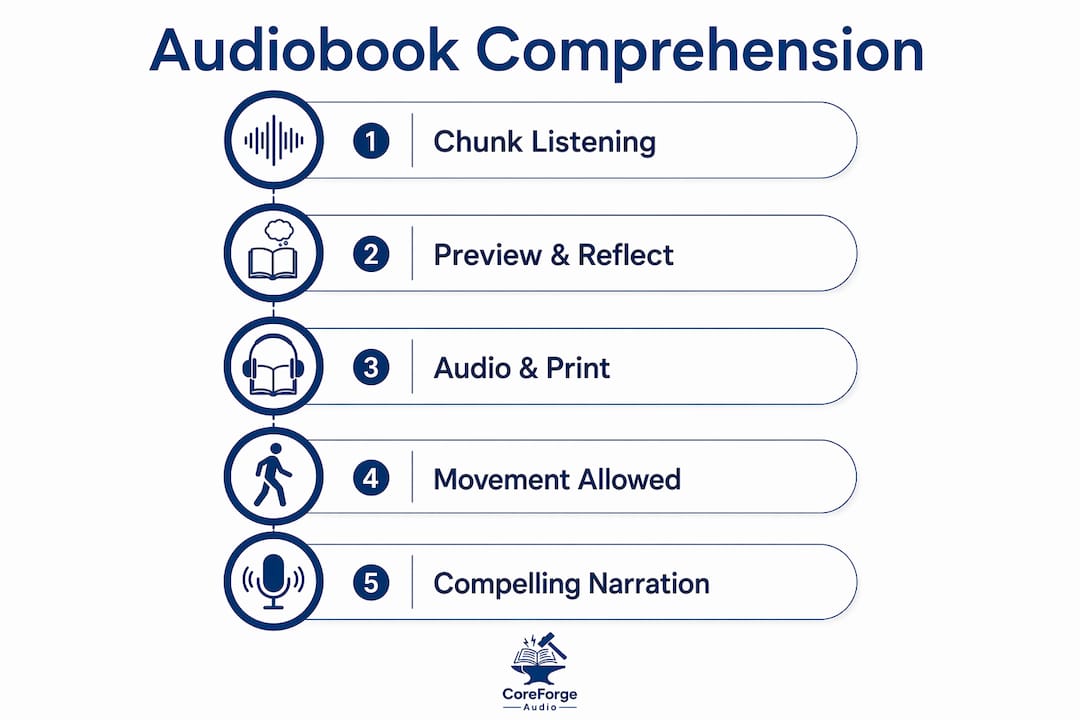
1. Chunk the listening into 5–10 minute segments
Short audio chunks of 5–10 minutes paired with reflection questions transform passive listening into active study. After each segment, pause and ask: "What just happened? What surprised you? What do you think comes next?" This works especially well for learners with ADHD, who lose the thread in longer uninterrupted sessions.
2. Use a preview, listen, reflect, retell routine
Before pressing play, preview the chapter title and any section headings. After listening, reflect on two or three key ideas. Then retell the content in the learner's own words, either verbally or in a quick sketch. This listening routine mirrors the comprehension strategies used in strong reading instruction.
3. Pair audio with print when possible
Combining audio with print strengthens decoding skills while keeping comprehension intact. The learner hears the word pronounced correctly at the same moment they see it on the page. Over time, this connection builds phonological awareness without making the learner feel like they are doing remedial work.
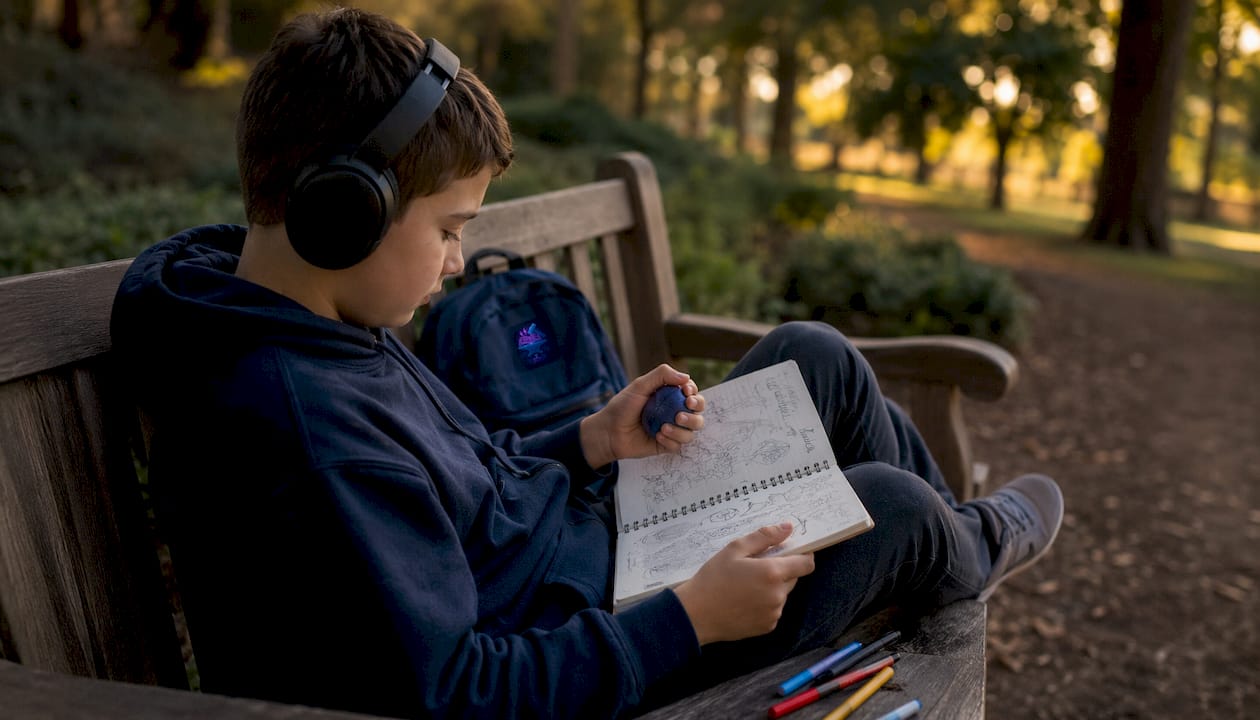
4. Allow movement for ADHD learners
For learners with ADHD, sitting still while listening is often counterproductive. Fidget tools, walking, or drawing while listening can actually improve focus rather than distract from it. ADHD learning at home research supports pairing physical activity with audio learning to sustain attention.
5. Start with short chapters and compelling narration
Dense non-fiction with excessive citations creates auditory processing difficulties. Start with narrative non-fiction or fiction structured as stories, where momentum carries the listener forward. Author-narrated titles often work well because the voice carries genuine enthusiasm for the material.
Pro Tip: Give any new audiobook setup a 2–4 week calibration period. Experiment with playback speeds between 1.25x and 1.5x, and adjust weekly based on how much the learner retains. This approach helps learners find their optimal pace and improves overall engagement and retention.
What accessibility features should you check before selecting an audiobook?
Not every audiobook labeled "accessible" actually meets the needs of learners with reading disabilities. Before committing to a platform or title, run through this checklist.
Narration quality
- Is the narrator human, not synthesized text-to-speech?
- Does the narrator use expressive tone, varied pacing, and clear pronunciation?
- Is the narrator's pitch lower rather than high and sharp? Lower-pitched voices are perceived as more stable and sustain attention better for learners with auditory sensitivity.
Playback controls
- Can the learner adjust speed without distortion?
- Is there a reliable bookmarking function?
- Can the learner rewind in small increments (15–30 seconds) without losing their place?
Visual and text support
- Does the platform offer synchronized text highlighting alongside audio?
- Are dyslexia-friendly fonts available (such as OpenDyslexic)?
- Can font size and spacing be adjusted independently?
Device and technology compatibility
- Does the platform work on the device the learner uses at school and at home?
- Is it compatible with screen readers or other assistive technology already in use?
- Can it integrate with text-to-speech tools the learner already relies on?
Content fit
- Is the chapter length short enough for the learner's current attention span?
- Does the vocabulary match comprehension level, not just grade level?
- Is the topic genuinely interesting to the learner? Motivation is an accessibility feature in its own right.
Shorter chapters and compelling narration reduce anxiety and build consistent listening habits over time. A learner who finishes one audiobook is far more likely to start a second.
Coreforgeaudio brings ethical audiobook access to learners who need it most
Most audiobook platforms were built for general audiences and retrofitted with accessibility features. Coreforgeaudio was designed from the ground up with learners who face reading barriers at the center of every decision.
The platform uses exclusively human voice actors, paid fairly, because narration quality directly affects how well learners with dyslexia and ADHD can sustain attention. Built-in features include adjustable narration speeds, dyslexia-friendly fonts, and multilingual support, so the platform works for a wide range of learners without requiring workarounds. Coreforgeaudio funds its development through a transparent micro-donation model, which means the mission stays accountable to the community it serves rather than to advertising revenue.
For parents and educators who have read this far, the next step is straightforward. Visit Coreforgeaudio to learn about the platform's current offerings, support the fundraising campaign, and get early access updates as the platform expands its catalog.
Key Takeaways
Audiobooks work best for learners with reading differences when the platform, narration quality, and listening strategy are matched deliberately to the learner's specific needs.
| Point | Details |
|---|---|
| Match platform to eligibility | Learning Ally and Bookshare offer free or low-cost access for US students with documented print disabilities. |
| Prioritize human narration | Lower-pitched, expressive narrators sustain attention better for learners with dyslexia and ADHD than synthesized voices. |
| Chunk listening sessions | Short 5–10 minute segments with reflection pauses significantly enhance comprehension and retention for learners with attention challenges. |
| Calibrate playback speed | A 2–4 week period experimenting with speeds between 1.25x and 1.5x helps learners find the pace that reduces fatigue. |
| Coreforgeaudio | A nonprofit-focused platform with human narration, dyslexia-friendly fonts, and adjustable speeds built in from the start. |