

Building an audiobook listening routine for dyslexia is defined as a structured practice of active, goal-directed listening that replaces passive hearing with deliberate comprehension strategies. Audiobooks reduce decoding load for dyslexic readers, freeing cognitive resources for understanding complex ideas and vocabulary. That shift is the entire point. When you pair that cognitive relief with a repeatable structure, short focused sessions, and the right tools, audiobooks stop being a workaround and start being a genuine reading skill builder. This guide gives you exactly that structure.
How to build an audiobook listening routine for dyslexia
The most effective audiobook routine for dyslexia follows a before-during-after framework: set a goal, listen in short chunks, then reflect. This is not casual advice. A 3-part active listening structure with pre-listening goals, 5–10 minute focused segments, and post-listening reflection is the method that consistently produces comprehension gains. Passive listening, where you simply press play and zone out, limits those gains significantly.
The distinction between passive and active listening matters more than most people realize. Listening for dyslexia is an active cognitive process involving prediction, summarization, and comprehension checks. That means you are doing real cognitive work during a well-run session. The goal of this guide is to show you how to set that work up correctly from day one.
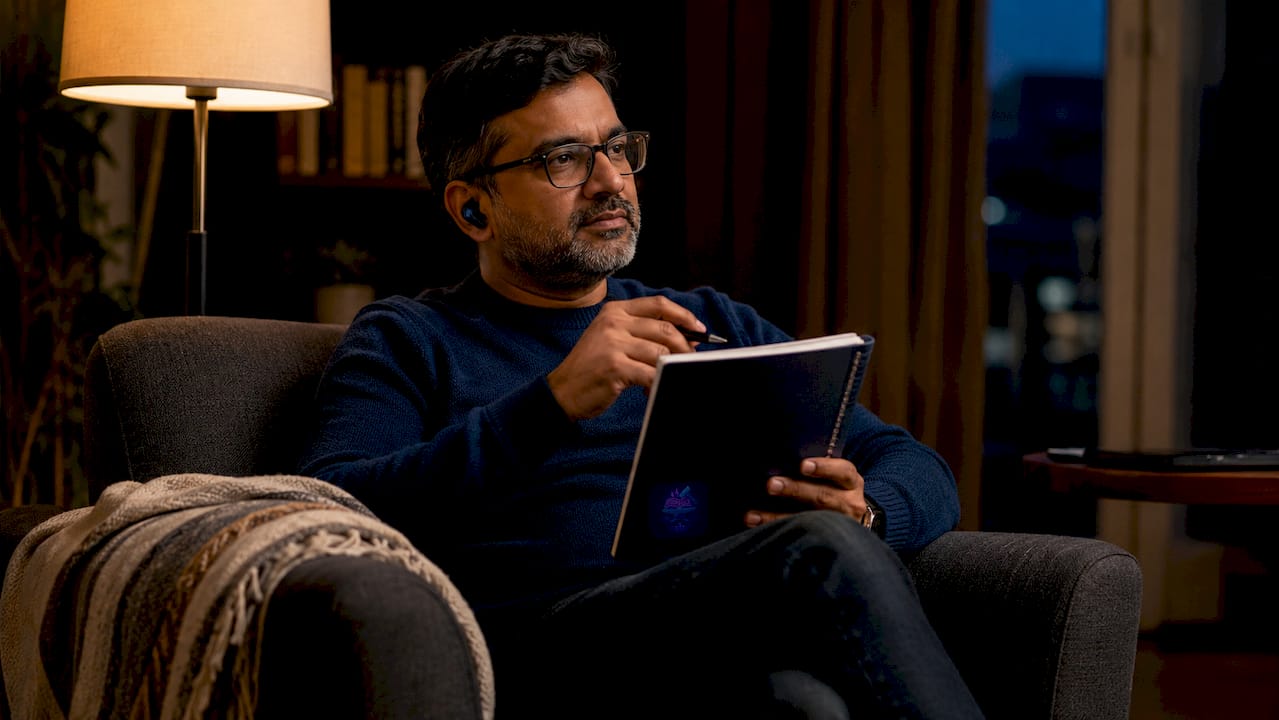
What tools do you need before you start?
The right setup removes friction before your first session. You do not need expensive equipment, but a few specific choices make a real difference.
Devices and apps to consider:
- Voice Dream Reader (iOS/Android): Offers adjustable narration speed, dyslexia-friendly fonts, and text highlighting synced to audio. It is one of the most cited tools in dyslexia support communities for good reason.
- Learning Ally: A nonprofit audiobook service built specifically for readers with print disabilities, with human-narrated titles across grade levels.
- Audible: Wide catalog, variable speed control, and Whispersync for Voice, which syncs audio with Kindle text.
- Bookshare: Free for qualifying U.S. students and adults, with thousands of accessible titles.
Environment and materials:
- A quiet space with minimal visual distractions. Background noise competes directly with narration processing.
- A physical copy or digital text of the book, if you plan to sync audio with print.
- A notebook or voice memo app for quick post-session reflections.
- A timer. Seriously. Set it for 10 minutes and honor it.
Pro Tip: Start with a narrator whose voice you genuinely enjoy. Skilled narrators provide emotional cues and rhythm that sustain attention far longer than monotone voices. Spending five minutes previewing a sample before committing to a title saves hours of frustration.
Narrator quality is not a luxury preference. It is a functional variable. A flat, monotone narrator increases mental fatigue and makes it harder to stay engaged. An expressive narrator does part of the comprehension work for you by signaling tone, emphasis, and emotion.
How should you structure each listening session?
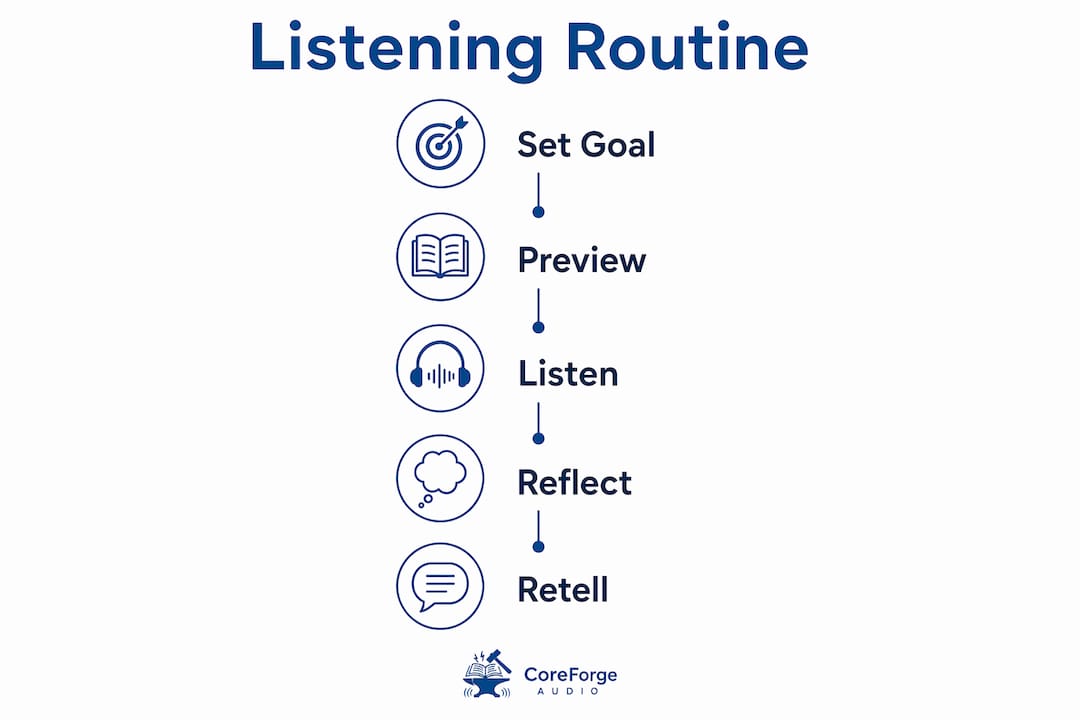
A well-structured session has three phases. Each phase has a specific job.
Before you listen (1–2 minutes):
- Set one clear goal. "I want to understand why the main character made that decision" is a goal. "I want to listen to chapter three" is not.
- Preview any unfamiliar words or names in the chapter. A quick scan of the text or a title summary takes 60 seconds and pays off in comprehension.
- Recall what happened in your last session. One or two sentences out loud or in writing activates prior knowledge.
During listening (5–10 minutes per chunk):
- Press play and listen with your goal in mind.
- Pause at the end of each chunk. Do not skip this step.
- Answer your own comprehension question: What was the main idea? What caused that event? What did you predict next?
- Adjust playback speed if needed. Modifying speed by ±0.25x helps users maintain focus and match their natural processing pace.
After the session (2–3 minutes):
- Write or say a two-sentence summary of what you heard.
- Note one word or idea you want to revisit.
- Mark your stopping point clearly so the next session starts with zero friction.
Pro Tip: Use a sticky note with three printed prompts: "Main idea," "Cause and effect," and "What's next?" Place it next to your device. Glancing at it during pauses keeps your thinking structured without requiring extra mental effort.
Here is a simple session format you can follow from day one:
| Phase | Duration | Activity |
|---|---|---|
| Pre-listening | 1–2 minutes | Set goal, preview words, recall last session |
| Active listening | 5–10 minutes | Listen, pause, answer comprehension question |
| Post-listening | 2–3 minutes | Summarize, note one word, mark stopping point |
| Total session | 8–15 minutes | Manageable for daily practice |
The before-during-after framework prevents mind wandering and boosts cognitive engagement. Beginners who skip it often treat listening passively and wonder why comprehension does not improve.
Does pairing audio with print actually help?
Syncing audio with print, called bimodal reading, is one of the most effective techniques for dyslexic learners. It builds the visual-auditory connections that underpin fluent reading. Short bursts of 5–10 minutes with a physical tracking aid improve focus and reduce eye strain. That time limit matters because bimodal reading is cognitively demanding. More is not always better.
Methods that work:
- Finger tracking: Follow the printed text with your finger while listening. This keeps your eyes anchored to the correct word and reinforces the sound-symbol connection.
- Whispersync for Voice (Audible + Kindle): Highlights the exact word being narrated in real time. No manual tracking required.
- Voice Dream Reader: Scrolls and highlights text automatically as the narrator reads.
- Bookshare with Read&Write: Combines accessible text with synchronized audio highlighting.
| Method | Best For | Effort Level |
|---|---|---|
| Finger tracking with print | Building decoding skills | Low tech, high focus |
| Whispersync (Audible/Kindle) | Fluency and vocabulary | Moderate setup |
| Voice Dream Reader | Full accessibility features | App-based, easy |
| Bookshare with Read&Write | Students, free access | Requires registration |
Bimodal reading also supports vocabulary and pronunciation. When you hear a word narrated correctly while seeing it on the page, your brain links the sound to the spelling. That link is exactly what orthographic mapping requires for words to become automatic. Start with one 10-minute bimodal session per day and add more only when it feels comfortable, not strained.
What are the common challenges and how do you fix them?
Every person who tries to build a consistent audiobook habit hits the same walls. Here is what they are and how to get past them.
Attention drifting mid-session: Shorten your chunks to 5 minutes instead of 10. Add an active prompt card next to your device. Drifting is not a focus problem. It is a structure problem.
Poor recall after listening: Add a quick retell immediately after each chunk. Saying "The character just found out that..." out loud forces your brain to consolidate what it heard. Written notes work too, but spoken retells are faster and just as effective.
Narrator mismatch: If a narrator's voice or pace feels wrong after two sessions, switch. Choosing content that matches intellectual interests rather than reading fluency sustains habits longer. The same logic applies to narrators. You are not obligated to finish a book with a voice that drains you.
Difficulty choosing books: Pick topics you already care about. A 12-year-old who loves soccer will engage more with a sports biography than a classic novel assigned for its literary merit. Interest beats level every time.
Fitting the routine into daily life: Attach listening sessions to existing habits. Car rides, morning routines, and household chores are natural anchors. A 10-minute session during breakfast is more sustainable than a 45-minute block you have to schedule.
Pro Tip: Track your sessions with a simple paper log or a habit-tracking app like Streaks or Habitica. Seeing a streak of completed sessions builds momentum. Missing one day feels less catastrophic when you can see 12 days of success behind it.
Research on guided audiobook use from MIT's McGovern Institute shows significantly better vocabulary growth when listeners have structured support rather than listening alone. That finding points directly at the value of the routine itself, not just the audiobook.
Key takeaways
A structured audiobook listening routine for dyslexia works because active engagement, short sessions, and content matched to your interests produce measurable comprehension and vocabulary gains over time.
| Point | Details |
|---|---|
| Use the before-during-after framework | Set a goal, listen in 5–10 minute chunks, then summarize to prevent mind wandering. |
| Choose narrators deliberately | Expressive narrators reduce fatigue and sustain attention longer than monotone voices. |
| Pair audio with print gradually | Bimodal reading builds decoding skills but requires short sessions to avoid overload. |
| Match content to interest | Picking topics you care about sustains the habit better than matching reading level. |
| Track sessions consistently | Short daily sessions beat long irregular ones for building lasting comprehension habits. |
What i've learned after years of watching dyslexic readers use audiobooks
Most people approach audiobooks the wrong way. They press play, let the narrator wash over them, and then wonder why they cannot remember what they heard. That is not a dyslexia problem. That is a method problem.
The single biggest shift I have seen is when a listener moves from passive to active. The moment someone pauses after 7 minutes and says "okay, what just happened?" out loud, everything changes. Comprehension improves. Confidence improves. The book becomes something they are doing, not something happening to them.
I also want to push back on the idea that longer sessions mean more learning. They do not. A 10-minute session with a clear goal and a 2-minute retell beats a 45-minute passive listen every single time. Consistency is the variable that matters most, and short sessions are far easier to keep consistent.
The pairing of audio with print is genuinely powerful, but I have watched people burn out on it by trying to do it for every session from day one. Introduce it slowly. One bimodal session per day is enough to build the visual-auditory connections you are after. The science behind audiobook learning supports gradual integration, not immersion.
Finally, celebrate the small wins. Finishing a chapter, recalling a plot point correctly, or simply showing up for 10 days in a row are real achievements. Dyslexia makes reading harder. Building a habit that works around that difficulty is not a compromise. It is a skill.
— Sarmed
How Coreforgeaudio supports your listening routine
Coreforgeaudio is built for exactly this kind of routine. The platform offers human-narrated audiobooks with adjustable narration speeds, dyslexia-friendly fonts, and accessibility features designed to support the structured listening methods described in this guide.
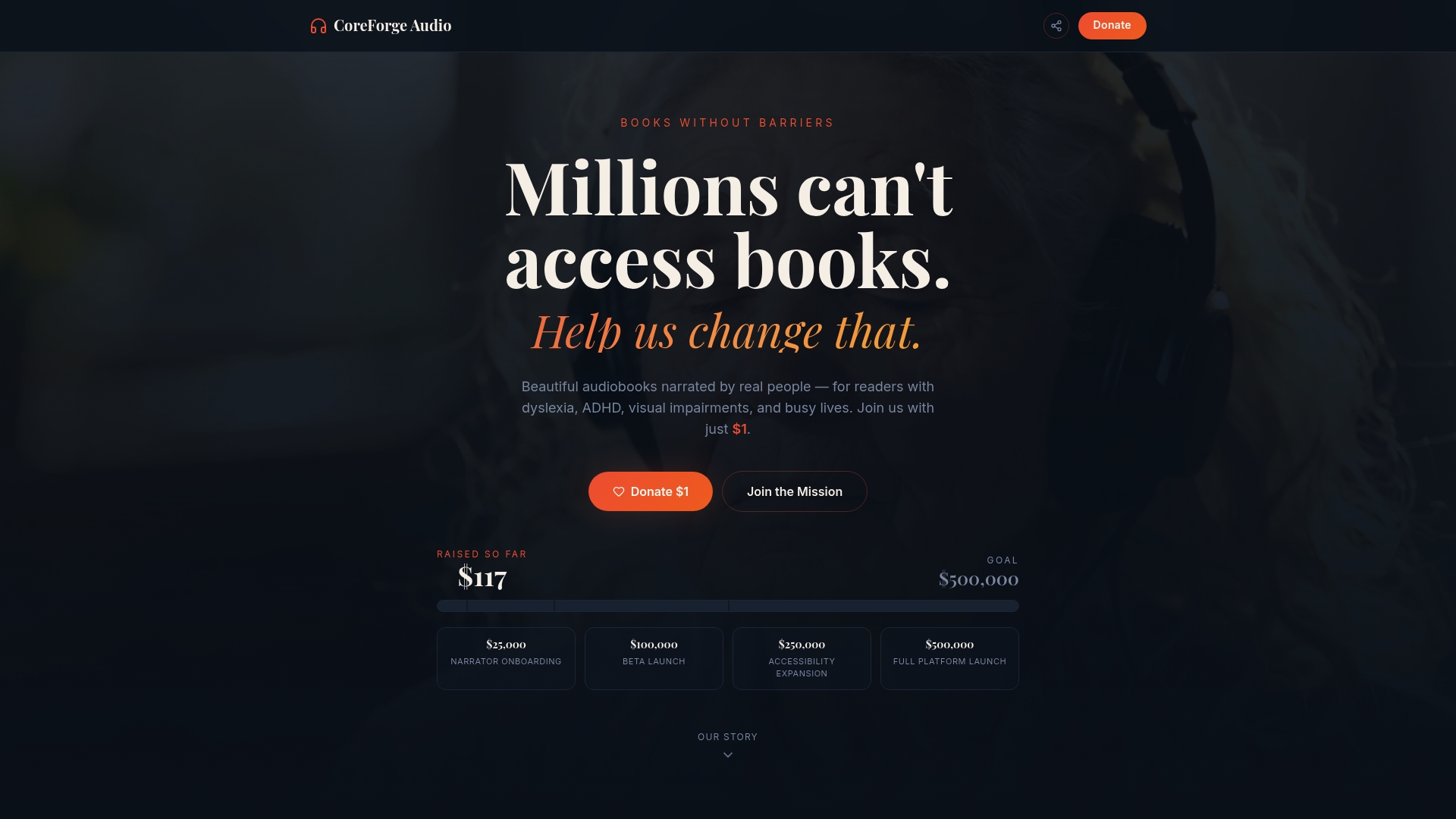
If you are ready to put this routine into practice, Coreforgeaudio gives you the tools to do it right. Browse the accessible audiobook library and find a title that matches your interests, not just your reading level. The platform also publishes in-depth resources on audio and dyslexia learning to support every stage of your listening habit. Coreforgeaudio is currently fundraising to expand its catalog and accessibility features, so every listener who joins helps build something bigger.
FAQ
Why do audiobooks help dyslexic readers specifically?
Audiobooks remove the decoding burden that makes traditional reading exhausting for dyslexic readers. That frees cognitive resources for comprehension, vocabulary building, and genuine engagement with the content.
How long should an audiobook session be for dyslexia?
The recommended session length is 5–10 minutes of focused listening per chunk, with 1–2 minutes of reflection after each chunk. Total daily sessions of 8–15 minutes are sustainable and effective for most listeners.
Can audiobooks replace traditional reading for dyslexia?
Audiobooks are not a replacement for reading instruction but a powerful complement to it. Pairing audio with print through bimodal reading builds the decoding and orthographic mapping skills that support long-term literacy development.
What features should a dyslexic listener look for in an audiobook app?
Look for adjustable playback speed, text highlighting synced to audio, dyslexia-friendly fonts, and bookmarking. Apps like Voice Dream Reader and platforms like Coreforgeaudio are built with these features in mind.
How do i stay consistent with an audiobook routine?
Attach your listening session to an existing daily habit, such as breakfast or a commute, and track your sessions with a simple log. Short daily sessions are far easier to maintain than longer, irregular ones.