

What are the best audiobooklore.com alternatives for accessible audiobooks?
If you need an audiobook platform that actually works for readers with dyslexia, ADHD, or visual impairments, these six options cover the full range of what's available in the US right now.
- AMPlify Audiobooks — A direct-sale platform where authors earn a high royalty share on every purchase, with no subscription required. Best for readers who want to support creators directly and own what they buy.
- Libro.fm — Hands you a DRM-free MP3 file you keep forever, and routes a share of each sale to an independent bookstore you choose. Strong catalog overlap with major platforms.
- Everand — A subscription service with unlimited access to a large library. No per-book ownership, but the low monthly cost works well for high-volume listeners who don't need to keep files permanently.
- Audiobooks.com — A credit-based subscription with a 30-day free trial and a catalog of 200,000+ professionally narrated titles. Credits expire after three months, which can complicate budgeting.
- LibriVox — Completely free, volunteer-read recordings of public domain books. Production quality varies, and the app experience is basic, but the price is unbeatable for classic literature.
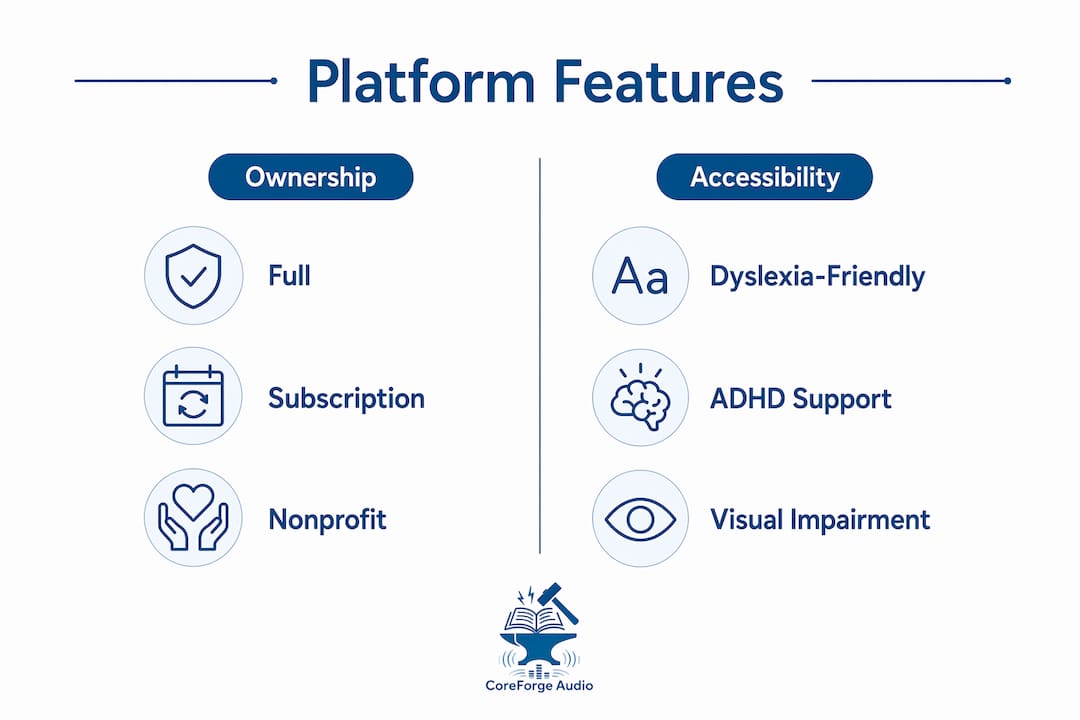
- Coreforgeaudio — A nonprofit-focused platform built specifically for readers with accessibility needs, featuring dyslexia-friendly fonts, adjustable narration speeds, and multilingual support, with a firm commitment to fair pay for human voice actors.
Each platform solves a different problem. The right pick depends on whether you prioritize ownership, ethics, cost, or accessibility features built into the interface itself.
Table of Contents
- How do these platforms compare on ownership, pricing, and ethics?
- What accessibility features should you look for in an audiobook platform?
- How do ethical royalties and creator support vary across platforms?
- Coreforgeaudio is built for readers who need more than a standard platform
- Key Takeaways
How do these platforms compare on ownership, pricing, and ethics?
The differences between these platforms go deeper than price. Ownership terms, royalty structures, and accessibility features vary enough that choosing the wrong one can mean losing your library or paying for features you can't actually use.

| Platform | Ownership model | Accessibility features | Pricing | Ethical royalties | Usability |
|---|---|---|---|---|---|
| AMPlify Audiobooks | Permanent purchase, no DRM lock-in | Standard app; narrator search available | Pay-per-book, no subscription | 65% minimum author royalty | Clean interface, community features |
| Libro.fm | DRM-free MP3, yours forever | Standard app; narrator search | Pay-per-book | Shares revenue with indie bookstores | Solid app, good catalog depth |
| Everand | Access tied to subscription; revoked if canceled | Broad library, basic accessibility | Subscription-based | Standard platform royalties | Polished app, unlimited access |
| Audiobooks.com | Perpetual license per credit; credits expire in 3 months | 200,000+ titles, professional narration | 30-day free trial | Standard retail royalties | Good app, credit system can confuse |
| LibriVox | Free downloads, no account needed | Public domain only, variable quality | Free | Volunteer-based, no royalties | Basic interface, limited app polish |
| Coreforgeaudio | Mission-driven platform, ethical licensing | Dyslexia-friendly fonts, adjustable speed, multilingual | Fundraising phase; check site | Fair pay for voice actors | Built for accessibility from the ground up |
One thing worth knowing before you commit to any subscription: DRM-protected libraries don't travel with you. If you build a collection on a platform that locks files, switching services means starting over. Libro.fm and AMPlify Audiobooks are the clearest exceptions to that pattern.
Pro Tip: Before subscribing, check whether the platform's credits expire. Audiobooks.com's three-month expiration window catches a lot of readers off guard, especially during busy stretches when listening time drops.
What accessibility features should you look for in an audiobook platform?
Most platforms treat accessibility as an afterthought. For readers with dyslexia, ADHD, or visual impairments, a few specific features separate genuinely usable platforms from ones that just technically work.
The most overlooked feature is metadata depth. Narrator-first search, trope and vibe tagging, and full-cast production indicators help readers find the right listening experience before they commit. AudiobookLore.com itself is built around this idea, which is exactly why readers looking for alternatives want the same depth elsewhere.
Here's what to check on any platform you're evaluating:
- Narrator search and ratings — Can you search by voice actor, not just title or genre? Community-powered performance ratings tell you what kind of listen to expect before you press play.
- Dyslexia-friendly fonts and display options — Platforms that let you adjust text display alongside audio make following along far easier for readers with processing differences.
- Adjustable playback speed — A standard feature on most apps, but the range matters. Some platforms cap at 2x; others go higher or offer finer increments.
- Screen reader compatibility — The app interface itself needs to work with VoiceOver (iOS) or TalkBack (Android), not just the audio content.
- Offline playback — Reliable offline access matters for readers who use assistive devices in low-connectivity environments.
- Multilingual support — For readers whose first language isn't English, or who process information better in their native language, catalog and interface language options are a real accessibility consideration.
Consistent metadata across platforms remains rare. Most services prioritize genre and bestseller lists over the narrator and production details that matter most to accessibility-focused listeners. That gap is exactly what platforms like Coreforgeaudio are designed to close. You can read more about audiobook apps accessibility features in a dedicated guide that breaks down what each major platform actually offers.
How do ethical royalties and creator support vary across platforms?
The gap between what a platform promises creators and what it actually pays them is wider than most listeners realize. Understanding it helps you vote with your wallet.
AMPlify Audiobooks takes the most direct approach: authors set their own prices and keep at least 65% of every sale. There's no subscription model pulling revenue away from creators, and no algorithm deciding whether a book gets promoted or given away for free. That structure puts the author relationship front and center.
Libro.fm routes a portion of every purchase to an independent bookstore the buyer chooses. It's a different kind of ethical model, one focused on the broader book ecosystem rather than just the author. Both approaches reflect a genuine commitment to fair revenue sharing that standard retail platforms rarely match.
- Direct sale models (AMPlify): Author sets price, keeps at least 65% per sale, builds direct audience relationship.
- Bookstore partnership models (Libro.fm): Platform shares revenue with local indie bookstores, supporting the broader literary community.
- Standard subscription models (Everand, Audiobooks.com): Revenue split follows platform terms; authors typically receive lower per-listen or per-credit payouts.
- Volunteer models (LibriVox): No royalties involved; readers contribute recordings for free public access to classic works.
One real concern with subscription platforms is access revocation. When your subscription lapses, titles you've "unlocked" on services like Everand disappear. That's not ownership. For readers who want to build a permanent, accessible library, DRM-free ownership through Libro.fm or direct purchase through AMPlify is the only model that actually holds up long-term.
Analyst Todd Jones puts it plainly: user priorities should drive the choice. Ownership and independent bookstore support point toward Libro.fm, while budget-first or unlimited-access needs fit subscription services better. If you're curious how these ethical models connect to broader accessible audio platforms, that comparison goes deeper on royalty transparency across the field.
For families looking at audio content for younger listeners, the same ethical and accessibility criteria apply. Production quality and inclusive design matter just as much for children navigating reading differences.
Coreforgeaudio is built for readers who need more than a standard platform
Every platform covered here does something well. But none of them started with accessibility as the core design principle rather than a feature added later.
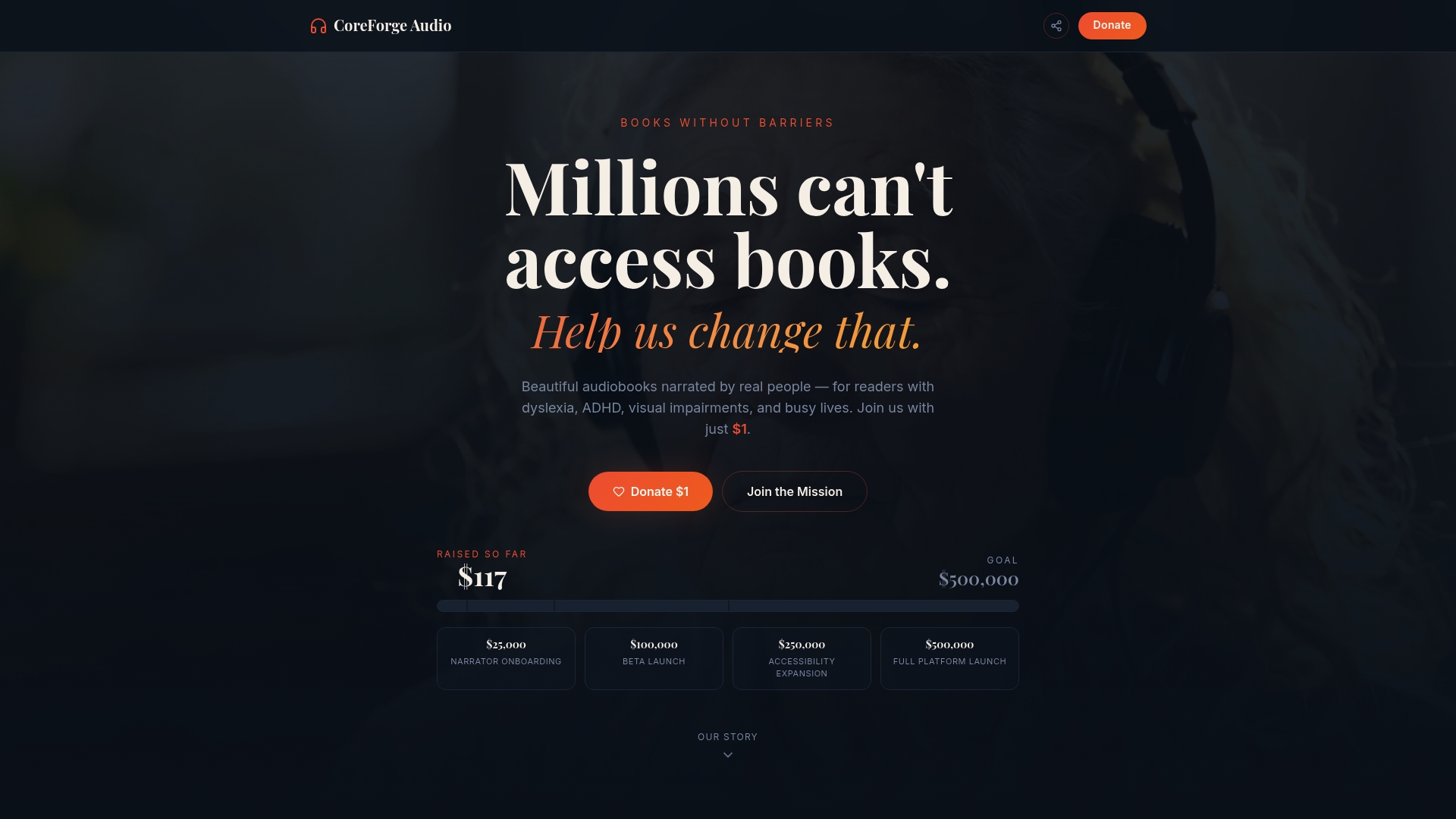
Coreforgeaudio is a nonprofit-focused platform built from the ground up for readers with dyslexia, ADHD, visual impairments, and other reading barriers. Dyslexia-friendly fonts, adjustable narration speeds, and multilingual support aren't add-ons here. They're the foundation. The platform also holds a firm line on human narration and fair pay for voice actors, rejecting the cost-cutting AI narration trend that's quietly degrading audio quality across the industry.
Coreforgeaudio is currently in its fundraising phase, which means you can get in early and directly support a platform designed to serve communities that existing services consistently underserve. If accessible, ethically produced audiobooks matter to you, this is where that support has the most direct impact. Visit Coreforgeaudio to learn more and back the campaign.
Key Takeaways
The most important thing to know: ownership model and accessibility features together determine whether an audiobook platform actually works for readers with disabilities, not just price.
| Point | Details |
|---|---|
| Ownership varies widely | DRM-free files from Libro.fm survive cancellation; subscription unlocks on Everand do not. |
| AMPlify pays creators most | Authors keep at least 65% per sale with no subscription model cutting into that share. |
| Accessibility features differ | Dyslexia-friendly fonts, adjustable speed, and screen reader support are rare across mainstream platforms. |
| Free options have real limits | LibriVox is cost-free but offers volunteer recordings with variable quality and a basic app experience. |
| Coreforgeaudio leads on inclusion | Built specifically for readers with accessibility needs, with fair voice actor pay and multilingual support. |