

Finding an accessible audiobook service that offers transparent pricing and barrier-free enrollment is time-consuming for listeners with reading or visual differences. Some platforms place core features or pricing behind mandatory sign-up screens, limiting easy preview and comparison before account creation. This comparison highlights five accessible audiobook services with public details so people with reading barriers can choose one that fits their workflow and access needs.
Table of Contents
CoreForge Audio
At a Glance
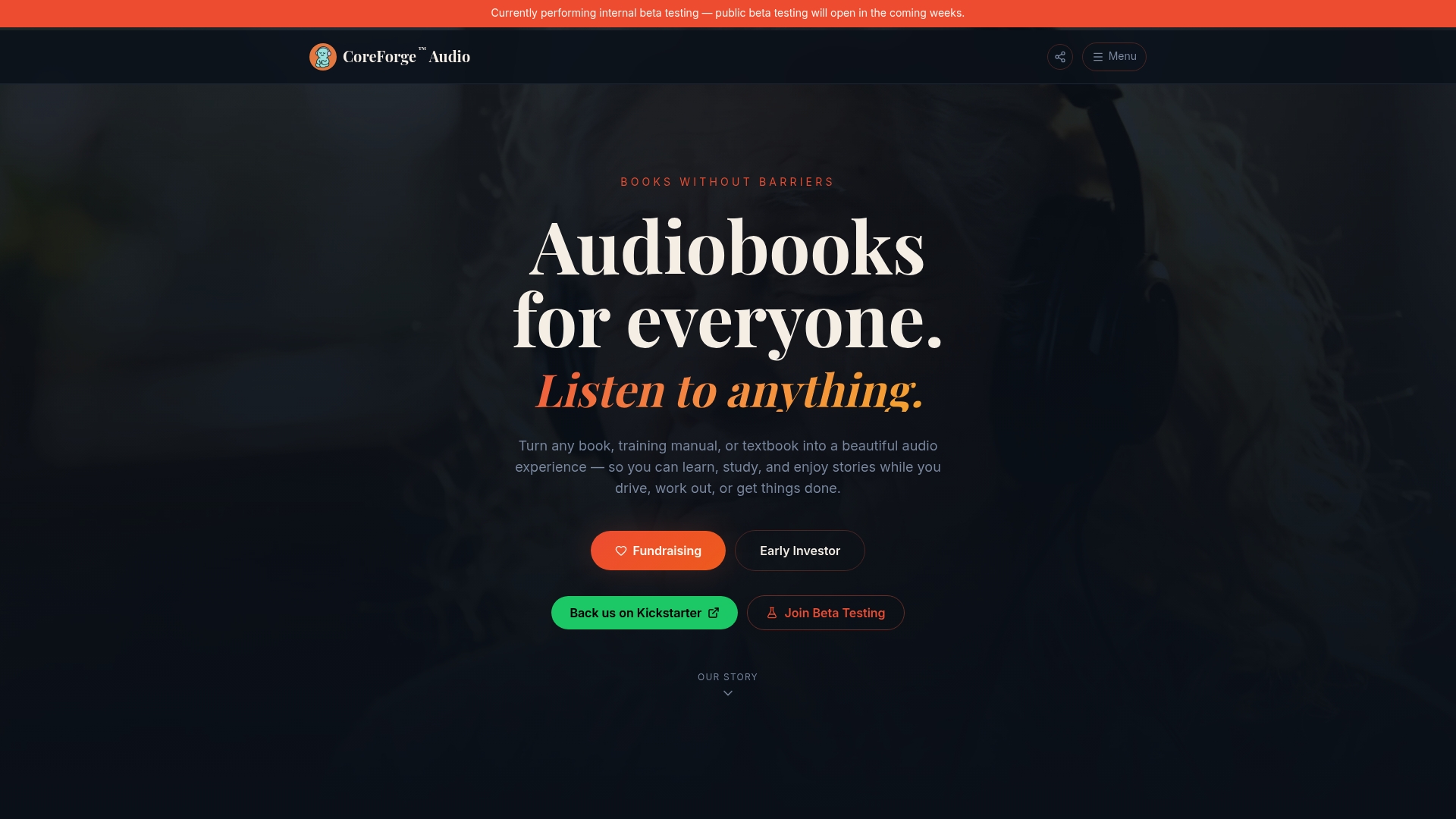
Nonprofit focused and running a public beta supported by a micro donation campaign, Coreforgeaudio prioritizes fair pay for voice actors. The site targets listeners with dyslexia, ADHD, and low vision and uses human narrated recordings rather than synthetic voices. The platform is actively testing accessibility tools and transparent cost reporting as it develops.
Core Features
Coreforgeaudio lets community members upload books, manuals, or PDFs and convert them into audio for listening on the go. The platform pairs adjustable narration speeds with pitch correction and voice customization, so listeners can set tone, pitch, and warmth to match their needs. The interface offers multilingual UI and narration support and includes dyslexia friendly fonts and other accessibility options.
Key Differentiator
Coreforgeaudio builds accessibility from the ground up with a firm focus on human narrators and design choices for neurodiverse and visually impaired members. That emphasis shows in features such as dyslexia friendly fonts, adjustable narration speeds, and multilingual narration. The project also foregrounds fair compensation and consent first use of any AI in production.
Pros
The community driven beta invites members to test features and provide feedback while the team funds development through a transparent micro donation model. Using real human narrators preserves natural pacing and emotional nuance for listeners who lose meaning with synthetic speech. Broad personalization controls let readers tailor voice warmth, pitch, and speed for concentration or comprehension. Accessibility options target common barriers for people with reading differences and low vision.
Cons
- Still in public beta, so features and stability may change and content remains limited during testing
Who It's For
People with reading barriers and learning differences who need readable audio versions of textbooks, manuals, or longform content will find this community focused approach relevant. Members who care about fair pay for narrators or who prefer human narrated audio will appreciate the platform. Students and professionals needing personalized study audio are a natural fit.
Unique Value Proposition
The site runs a public micro donation campaign and publishes transparent cost aims for licensing, development, and accessibility tools. That funding model lets members support growth without hidden corporate sponsors and signals the platform will prioritize accessibility investments. For community members this means features are guided by listener feedback and funding targets rather than purely commercial metrics.
Real World Use Case
A dyslexic student uploads course PDFs and configures a slightly slower narration with warmer voice tone for better comprehension. The student listens during commutes and highlights passages to share with classmates through community threads. Feedback from testing prompts the team to refine speed controls and font options for future releases.
Website: https://coreforgeaudio.com
xigxag
At a Glance
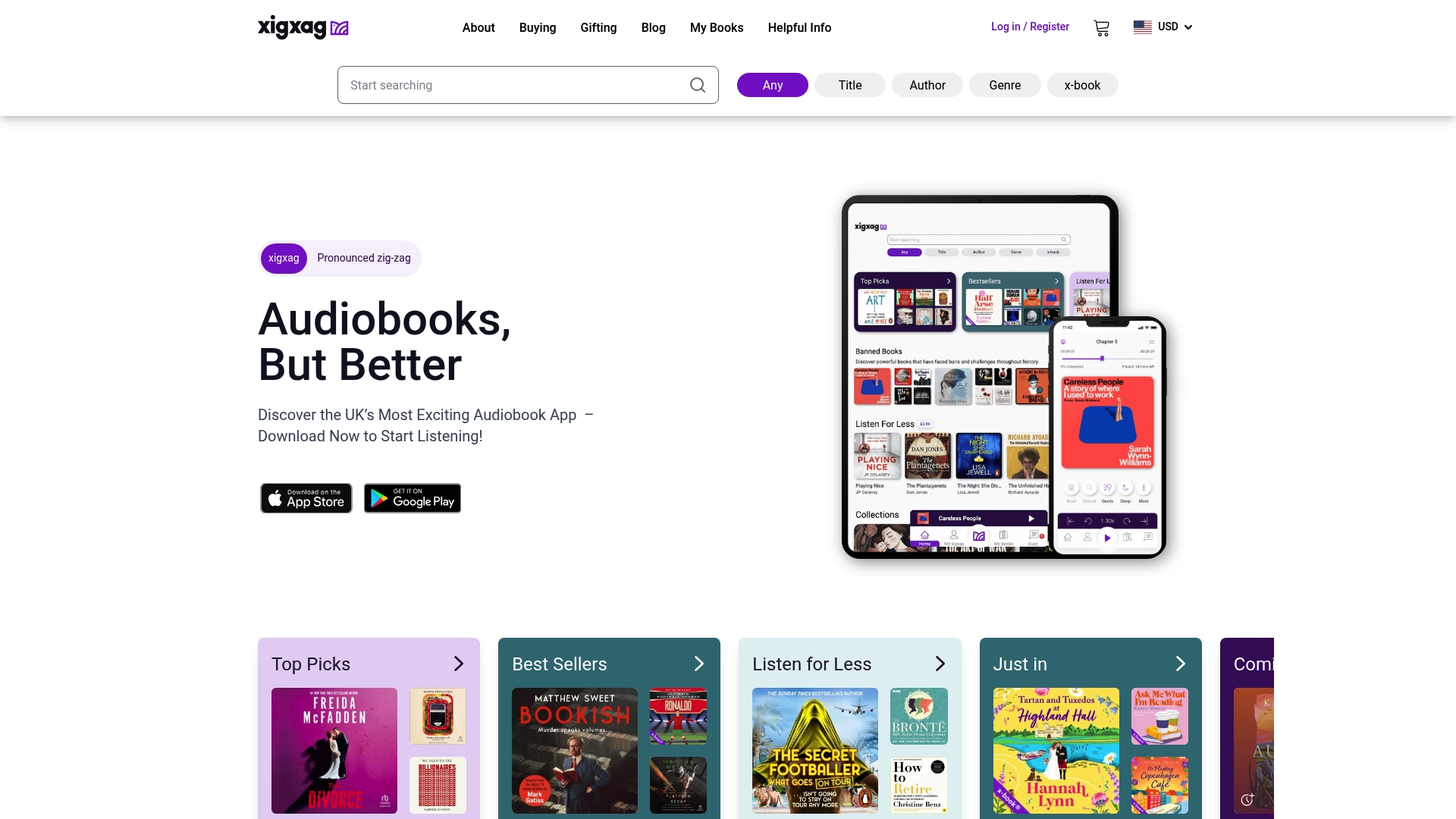
First fully integrated listen and read experience combining audio, text, and images while letting you buy books without a subscription. The platform is B Corp certified and promotes low carbon footprint publishing. Pricing follows a pay per title model with volume discounts.
Core Features
Integrated audio and full text display include images and let you switch between listening and reading without losing your place. In-app tools let you search, annotate, take notes, and look up words while narration continues. Social features support quote sharing, gifting titles, and posting recommendations from inside the app.
Key Differentiator
A clear difference is the synchronized audio, text, and images delivered without a subscription commitment. That format helps readers who benefit from dual input for comprehension and retention. Sustainability credentials and social sharing give the product a distinct social mission angle.
Pros
The synchronized audio and text format helps readers with dyslexia and attention differences follow complex passages more easily. Pay per title pricing removes subscription commitment and rewards bulk buyers with discounts. Built in sharing, note taking, and gifting foster community interaction around books while the sustainability focus aligns with ethical readers.
Cons
- Catalog size is not specified publicly, and selection appears smaller than some subscription libraries.
- Buyer reviews report limited availability of certain titles at times, which frustrates readers looking for specific new releases.
- Per title pricing starts at $13.95, which may feel high for casual listeners despite discounts on bulk purchases.
When It May Not Fit
If you prefer an all you can read monthly plan, the per book model will feel limiting. Large scale readers who want a massive on demand catalog will likely prefer subscription libraries. If you need every new release the day it ships, availability can be uneven.
Who It's For
You if you prefer to pay per book, value environmental responsibility, and want synchronized audio and text. You want social features such as quote sharing and gifting built into the reading app. You need accessibility tools like search, annotations, and word lookup while listening.
Real World Use Case
A reader opens a classic novel, listens to the narration, and follows the text with images for context. They highlight a passage, copy a quote, and share it with friends in the app. They buy additional titles on demand and benefit from volume discounts.
Pricing
Pricing follows a pay per title model with items starting at $13.95. Selected titles can be priced as low as $7.95 and discounts apply for multiple purchases.
Website: https://xigxag.co.uk
CoderFAIry
At a Glance
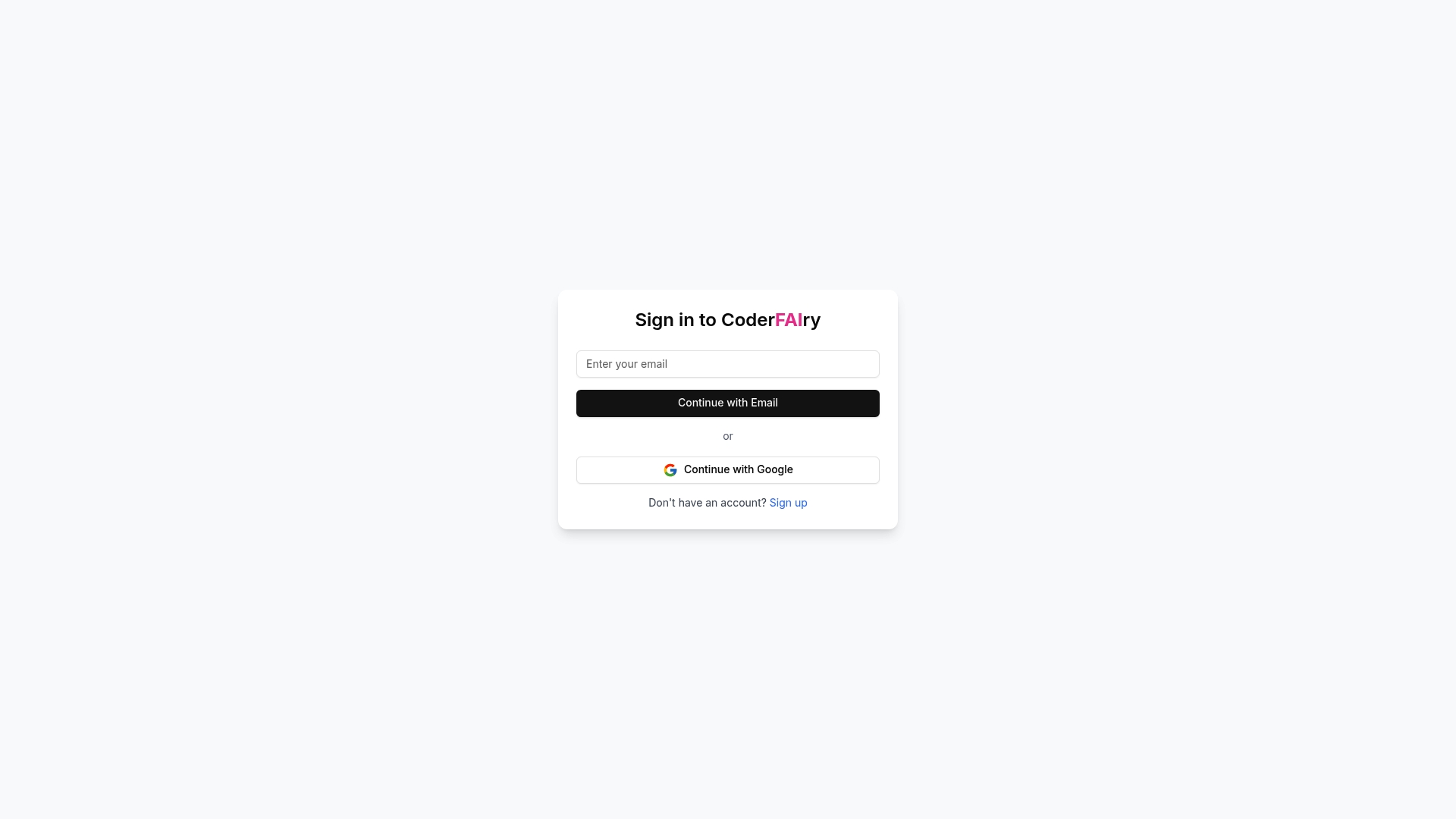
Public pages are locked behind a sign in gate, with pricing, features, and integrations viewable only after account creation. The site shows separate sections for pricing, features, integrations, products, and use cases, but those pages require login to access. That access pattern suggests the platform is structured around authenticated developer workflows.
Core Features
The visible surface reveals a focused authentication flow and an account onboarding experience with Email and Google sign in. The site organizes core content into dedicated sections for pricing, features, integrations, products, and use cases that appear once a user logs in. Publicly available content is minimal, so most functional detail remains behind the account boundary.
Key Differentiator
The defining characteristic is the login required access model combined with Google sign in support. That design choice concentrates discovery and functionality behind authenticated sessions, which can speed personalized workflows for returning developers. It also signals a platform that controls access to tools and documentation rather than exposing them to casual browsing.
Pros
Sign in and registration are clearly implemented, and the site supports Email and Google sign in. Separate pages for pricing, features, integrations, and use cases indicate the product likely groups its tooling and documentation methodically. The gated model can protect early beta features and allow the team to present personalized onboarding. For developers who prefer starting inside an account, this structure reduces noise and surfaces relevant sections after authentication.
Cons
- Limited public information makes it hard to evaluate features before signing up.
- The homepage centers on sign in prompts rather than describing product value.
- No explicit feature descriptions or workflows are available without an account.
- Restricted access prevents quick comparison with other coding AI platforms.
When It May Not Fit
If you need to compare platforms without creating accounts, this product will feel restrictive. Teams that require transparent accessibility, licensing, or third party audits before evaluation will find the public site insufficient. Researchers or procurement teams needing detailed specs on a public page will need to request access or contact the vendor directly.
Notable Integrations
- Google sign in
- Email authentication
Who It's For
Developers, coders, and AI enthusiasts who are comfortable creating accounts to access specialized tooling. People who prefer trialing a platform behind an authenticated sandbox will get the intended experience. Those who require immediate public documentation may find the approach inconvenient.
Real World Use Case
A freelance developer signs up with Google to reach a private workspace that hosts coding AI tools and product docs. After logging in, the developer navigates to the features and pricing pages to choose a plan and access integrations. The platform workflow centers around authenticated access and onboarding.
Pricing
Pricing is not publicly listed on the public site and is labeled as not applicable for informational pages. The site includes a pricing section that appears accessible only after account creation, so exact tiers or costs require signing in.
Website: https://coderfairy.com
Volyo Audiobooks
At a Glance
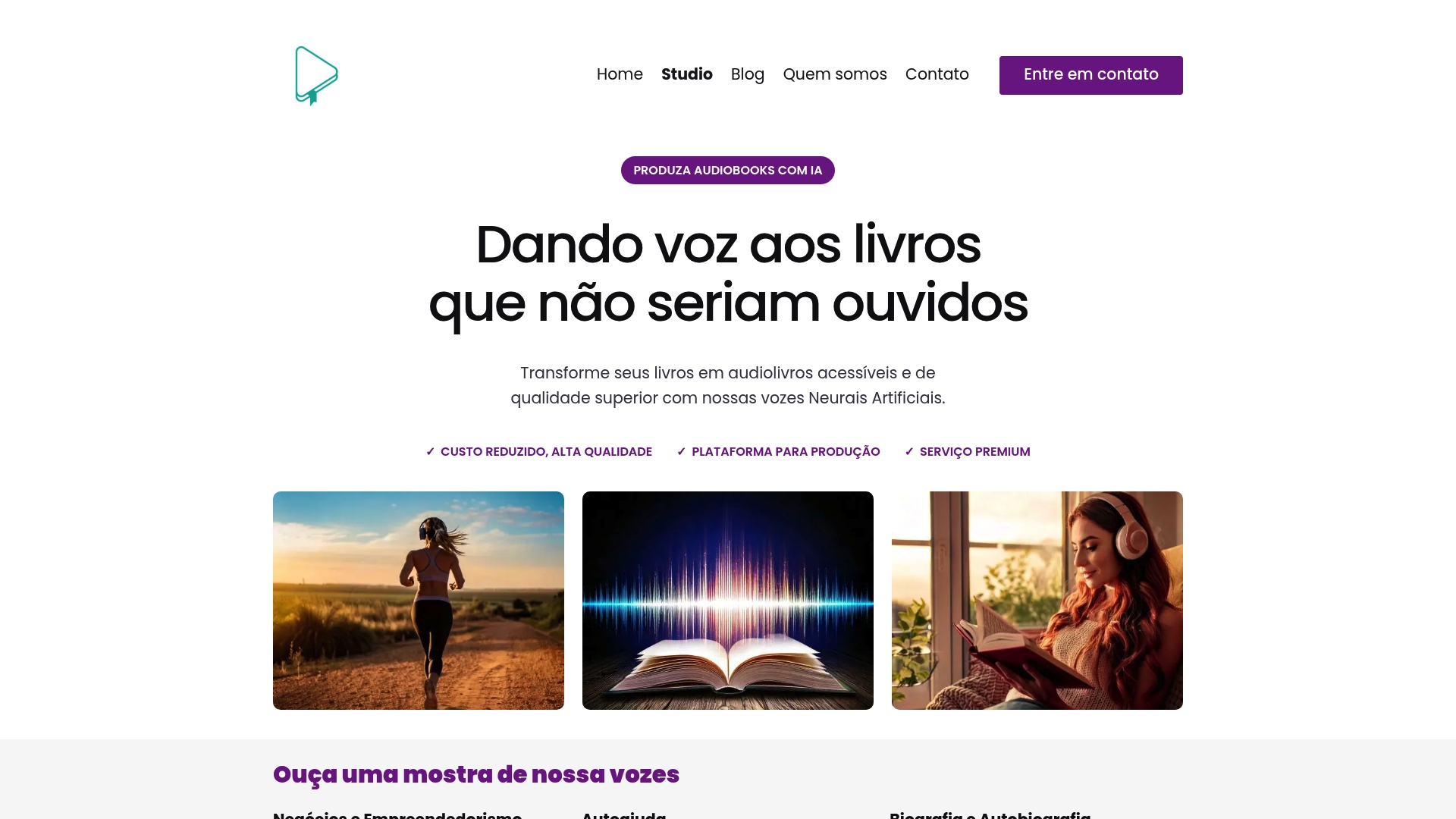
Volyo launched in 2022 and positions itself as an early adopter of neural voice narration for the Brazilian publishing market. The company pairs an automated production studio with editorial support, so publishers can convert large backlists to audio quickly. That combination aims to lower per-title costs while keeping human review in the loop.
Core Features
Volyo offers a production platform powered by AI that converts manuscripts into narrated audio using high-fidelity neural voices. The platform includes a do-it-yourself production workflow, tools for adapting and editing text, and tiered subscription plans that scale by production volume. Support services cover script adaptation, handling of footnotes, and technical help for publishers and authors.
Key Differentiator
The product stands out for combining an autonomous authoring workflow with hands-on editorial support for complex texts. Publishers can run multiple conversions themselves and still get expert help for academic notes or tricky formatting. That mix of automation plus editorial aid targets teams that need both speed and fidelity.
Pros
Volyo cuts production expense by replacing some human narration with neural voices while keeping final quality control under editorial supervision. The platform lets authors and editors produce titles independently, which reduces vendor coordination. Its accessibility focus means audio output and workflows consider listeners with visual impairments and reading differences. The interface and scripted support shorten the learning curve for teams new to audio production. Subscription tiers plus credit options give predictable paths for scaling volume.
Cons
- Final quality still needs human review, especially for long or technical books.
- Converting academic notes and footnotes requires manual strategy to avoid losing critical information.
- Voice cloning and high-fidelity voice options raise ethical and copyright concerns for some rights holders.
When It May Not Fit
If you need fully human-narrated performance audio, this platform is the wrong match. Large publishers that require actor contracts and union guarantees should look elsewhere. Projects with strict voice licensing needs or clients who reject synthetic voice use will face workflow and legal hurdles. Teams that cannot allocate editorial time for final review will not get intended quality from automated output alone.
Who It's For
Volyo fits small to mid-size publishers, independent authors, and education institutions that need low-cost audio at scale. It also suits accessibility programs that want to broaden audio libraries without large narration budgets. Production teams that can pair automation with editorial oversight will get the most value.
Real World Use Case
A mid-size publisher used Volyo to convert a backlist of technical manuals into audio. The in-house editorial team ran the conversions, then edited sections with dense footnotes. The publisher expanded accessibility offerings while avoiding full-time narrator costs and keeping oversight on technical accuracy.
Pricing
Volyo uses a flexible consumption model with credit-based plans and monthly subscriptions for higher volumes. The company advertises a Starter option with no monthly fee and pay-for-what-you-use credits for occasional producers. Exact rates and credit bundles are available on request from the vendor.
Website: https://volyoaudiobooks.com
AIBooks
At a Glance
AIBooks says it can produce full audiobooks by training models on short human voice recordings, removing long studio sessions. The company was founded in Finland in 2023. It mixes AI narration with human narration and works on classics and original titles.
Core Features
AIBooks offers AI based narration trained from voice recordings supplied by human actors, which lets a single session create large volumes of audio. The producer also runs projects fully narrated by humans and collaborates directly with voice artists for custom reads. Services include multilingual production in Finnish, Swedish, and English and work on both classic and original texts.
Key Differentiator
According to the company, AIBooks leverages machine learning to deliver human-quality voice synthesis while cutting production steps and studio time. That model aims to lower costs for publishers and authors. The approach pairs ethical voice licensing with automated production to scale titles more quickly.
Pros
AIBooks claims lower costs and faster turnaround compared with traditional studio workflows, which helps small publishers move titles to audio sooner. The company states its audio quality can match or exceed standard studio recordings for many genres. It emphasizes fair payment and legal handling of voice rights, and supports multiple languages for broader reach.
Cons
- Dependence on AI voice fidelity may not match listener preferences for certain genres or narrator styles.
- The voice actor library currently offers a limited set of styles and tones.
- Custom requests that need very specific human vocal nuance may not be fully satisfied.
- Producing a bespoke signature voice may introduce legal and licensing complexity.
When It May Not Fit
Publishers seeking highly interpretive, fully live narration may find AIBooks too automated for some literary fiction projects. Projects that require a wide range of distinct narrator personalities could exceed the gallery of available voices. Buyers who require fully proven legal frameworks for custom voice cloning should review rights and contracts carefully.
Who It's For
AIBooks fits audio publishers, independent authors, and educational content creators who need cost efficient production. Voice actors can partner to extend reach and earn fees from licensing recordings. Small publishers aiming to convert backlist titles to audio without large studio budgets will find the model useful.
Real World Use Case
A mid size publisher uses AIBooks to convert a catalog of classic short novels into audiobooks without booking studio time. The publisher supplies a few reference recordings and approves synthetic drafts. The result trims production hours and lets the team release more titles in months rather than years.
Website: https://aibooks.fi
Comparison of alternatives
Meeting diverse auditory reading needs often entails evaluating multiple audiobook service providers to identify which suits specific user requirements. This comparison highlights distinctive attributes and features of these services while offering insights for prospective audiences.
Accessibility features and user interface
CoreForge Audio distinguishes itself with a focus on accessibility, aimed explicitly at neurodiverse listeners and those with visual impairments. Its usage of human-narrated content offers an authentic auditory experience complemented by customizable playback features and an array of accessibility settings. While other services cater to similar accessibility needs, such as Volyo Audiobooks and AIBooks with their neural narration options for efficient production, the former still necessitates editorial input for quality, and the latter relies heavily on AI-generated content, providing less flexibility for nuanced requirements. CoreForge Audio excels in offering functionalities explicitly tailored for its focus audience.
Experience integration and supporting tools
xigxag provides a uniquely integrated listen-read experience, combining audio, text, and images for an enhanced understanding of content. This approach benefits readers who prefer dual input methods, aiding comprehension and retention. Tools such as in-app search and note-taking provide additional value for its users who value interactivity in their reading applications. These features differentiate xigxag by catering to a hybrid experience, which is absent in competitors like CoderFAIry and Volyo Audiobooks, focusing instead on traditional audiobook forms or production methodologies.
Best fit
- Students or professionals seeking highly customizable accessibility options and ethically managed human narration will find CoreForge Audio most accommodating.
- Readers looking for tools that integrate text, visuals, and synchronized audio to aid concentration and comprehension will appreciate xigxag for its unique approach.
- Publishers and authors searching for cost-effective batch audiobook production with neural narration can benefit from Volyo Audiobooks.
- Producers needing multilingual production from a company focused on ethical voice licensing should consider AIBooks.
Our pick
For users prioritizing a focus on accessibility and fair pay for narrators, CoreForge Audio offers support, combining human-narrated audiobooks with tailored playback adjustments. While others provide efficient solutions for broader publishing needs or hybrid interfaces, CoreForge's alignment with ethical and inclusive practices makes it a top choice for individuals needing such specific accommodations.
This table compares accessible audiobook services based on their features, user focus, and accessibility tools.
| Product | Core Feature | Key Differentiator | Best For | Pricing | Notable Limitation |
|---|---|---|---|---|---|
| Coreforgeaudio | Human narrated audiobook conversions | Accessibility focus for neurodiverse | People with reading barriers and learning differences | Price not published | Content limited during public beta phase |
| xigxag | Synchronized text, audio, and images | Pay-per-title model without subscription | Ethical readers preferring environmental responsibility | From $13.95 per title | Smaller catalog with uneven availability |
| CoderFAIry | Authenticated access to tools and features | Login-required design for personalized workflows | Developers preferring sandboxed platforms | Price not published | Limited public information available |
| Volyo Audiobooks | AI-based audio production with editorial aid | Balanced automation and quality control | Small to mid-size publishers and accessibility programs | Flexible credit-based subscriptions | Requires manual review for complex texts |
| AIBooks | AI-based audiobook narration technology | Proprietary machine-learning voice synthesis | Publishers and authors needing cost-efficient audio | Price not published | Limited voice actor styles available |
How Can You Find Accessible Audiobook Alternatives to coderfairy.com?
If you face reading barriers like dyslexia, ADHD, or low vision, finding audiobook platforms that use real human narration can be challenging. coderfairy.com alternatives often lack clear accessibility options or rely on synthetic voices. Coreforgeaudio meets these needs with a nonprofit approach that prioritizes fair pay for voice actors and offers tools such as dyslexia-friendly fonts, adjustable narration speed, and multilingual support.
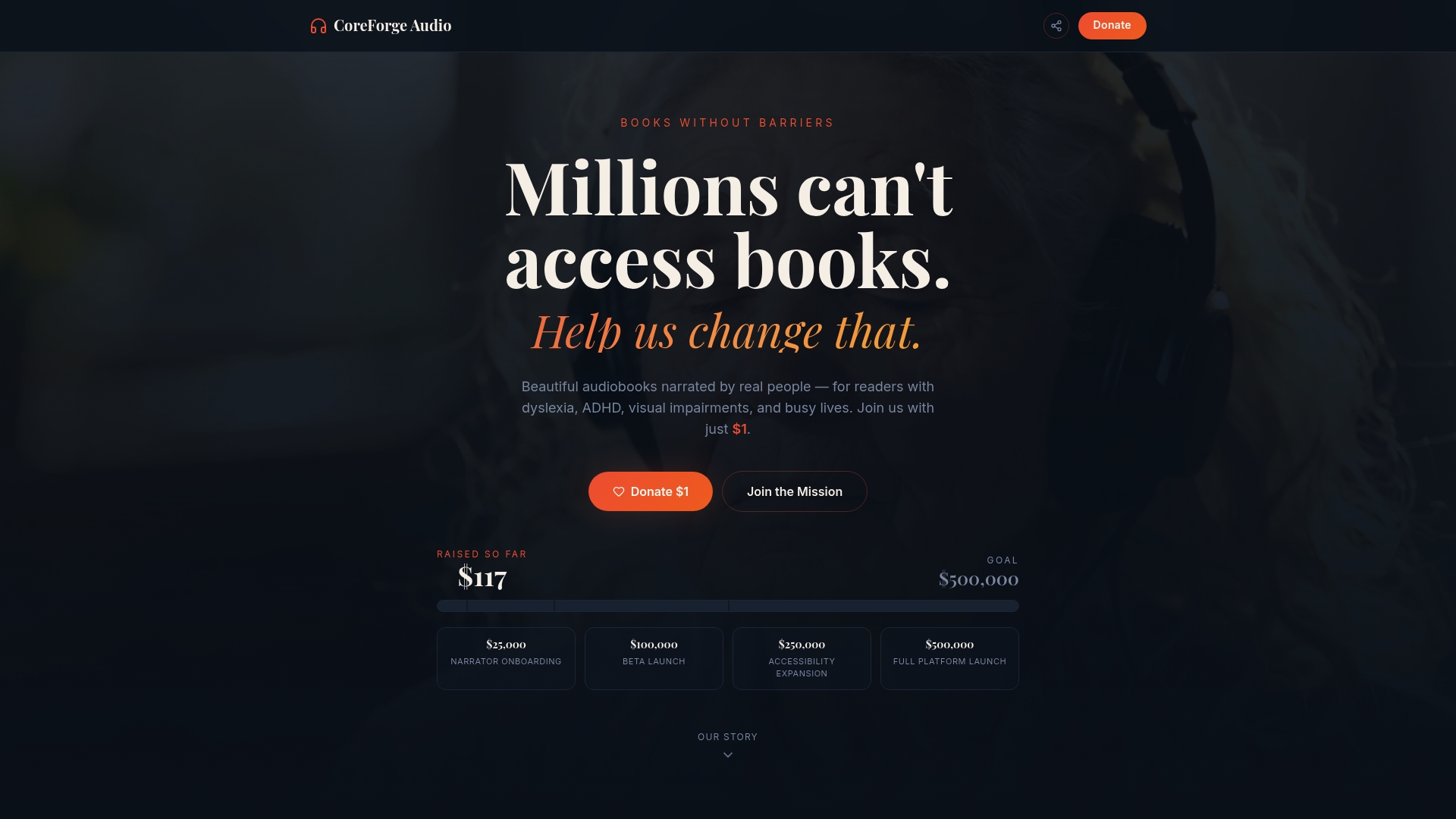
People who want human-narrated audiobooks designed for neurodiverse and visually impaired listeners can visit Coreforgeaudio to join the growing community. Test features in the public beta and support accessibility through transparent micro donations. Take the next step to listen to audiobooks that fit your reading needs and values.
FAQ
What features make Coreforgeaudio stand out for users with reading barriers?
Coreforgeaudio provides a unique focus on human narration, which enhances emotional nuance and pacing for listeners who struggle with synthetic voices. The platform allows users to upload texts and convert them into accessible audio formats, addressing specific needs of people with dyslexia, ADHD, and low vision. Those seeking a more personalized audio experience should try Coreforgeaudio to benefit from its tailored narration and accessibility features.
How does Coreforgeaudio compare to xigxag in terms of pricing model?
Xigxag operates on a pay-per-title model, making it an appealing choice for users who prefer not to commit to a subscription. In contrast, Coreforgeaudio allows community members to engage in a transparent micro-donation campaign, which ensures that development and accessibility tools remain funded without a corporate influence. Users interested in supporting fair pay for narrators should consider Coreforgeaudio's approach, as it prioritizes ethical funding.
Which platform offers more options for voice customization?
Coreforgeaudio excels in voice customization, offering adjustable narration speeds and voice tone personalization, designed for users to match their specific listening preferences. This feature is especially beneficial for individuals who need to tailor their audio experience for improved comprehension. Those looking for a highly customizable experience should explore Coreforgeaudio's options to find what suits them best.
Can I find multilingual support on Coreforgeaudio?
Yes, Coreforgeaudio includes multilingual narration support, catering to a diverse audience and enhancing accessibility. This feature accommodates listeners who may prefer or require audio content in different languages. Users can expect a more inclusive audio experience with Coreforgeaudio compared to some competition.
What are the limitations of Coreforgeaudio during its public beta phase?
As Coreforgeaudio is still in its public beta phase, users may encounter limited content availability and potential feature changes as the platform evolves. Feedback from the user community will guide ongoing development. Those interested in exploring the platform should stay informed about updates and be prepared for occasional adjustments in features and content.