
Finding an accessible audiobook service that offers real human narration and flexible listening options is difficult for people with reading or vision challenges. Many services restrict choices to AI voices, charge high fees, or skip tools for neurodiverse users and readers needing personalized formats. This comparison covers feature sets, pricing, and accessibility so busy readers, educators, and people with reading challenges can select an audiobook platform that matches their needs.
Table of Contents
CoreForge Audio
At a Glance
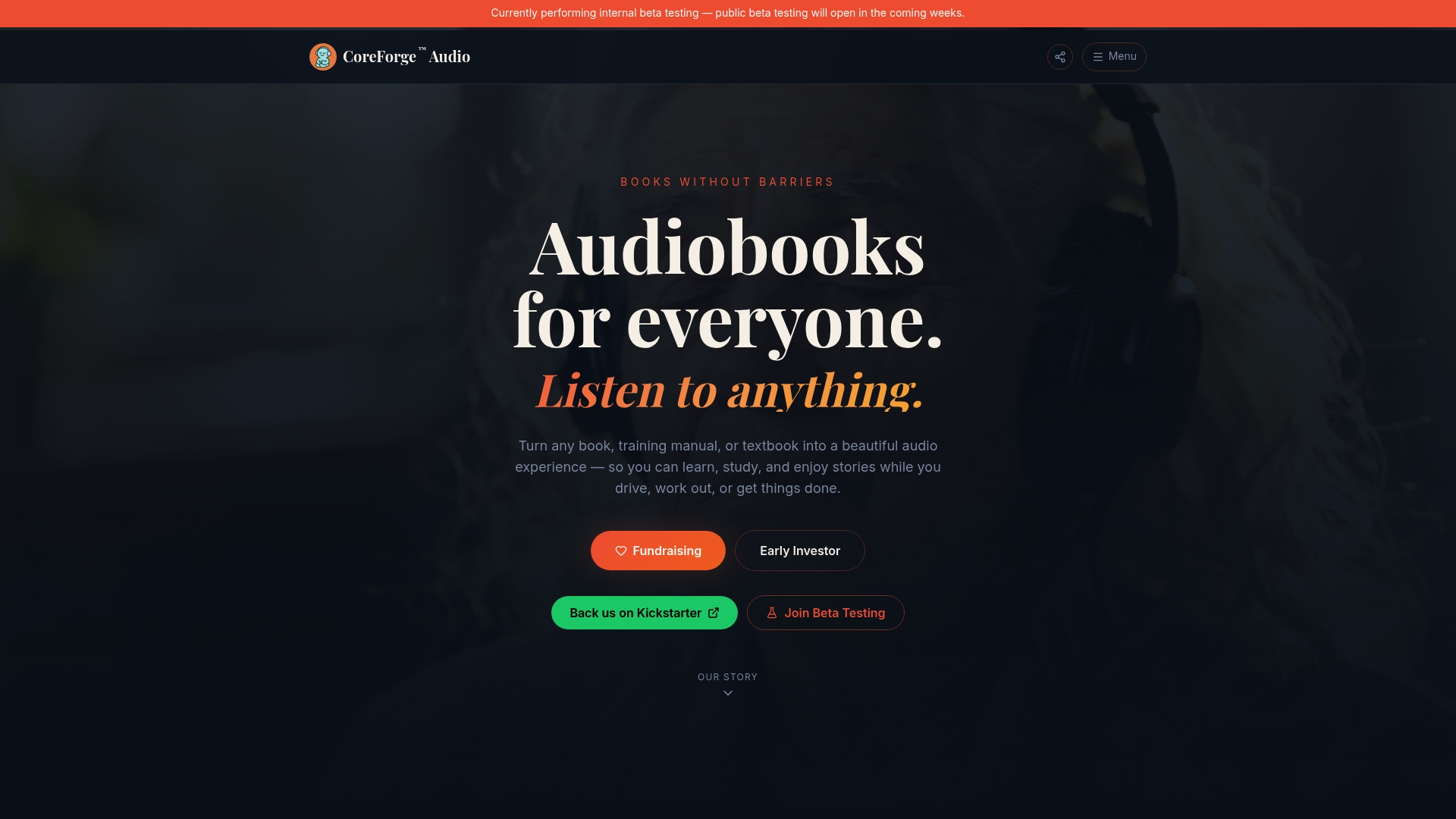
A firm stance against AI generated voices combined with a policy of fair pay shapes narration choices. The project operates as a nonprofit and is fundraising through a micro donation campaign to cover licensing and accessibility tools. The platform is currently in internal beta while it finalizes narrator workflows and accessibility features.
Core Features
Users can upload books, textbooks, manuals, and PDFs and turn them into listenable audio with selectable narration preferences. Built in accessibility tools include dyslexia friendly typography, adjustable narration speeds with pitch correction, and UI support for multiple languages. The platform emphasizes consent based use of AI only for accessibility tooling while relying on real human narrators for the final audio.
Key Differentiator
Built around accessibility from the ground up with real human narrators and neurodiverse friendly features. The design targets dyslexia, ADHD, and low vision through both interface choices and audio controls. That focus directs decisions about narration, compensation, and feature priorities.
Pros
The platform centers accessibility for readers who need alternative formats and for people with low vision. Its narrator policy pairs authentic human performance with a clear commitment to fair pay and narrator consent. Customization options such as adjustable speed and pitch correction make long textbooks easier to follow, and multilingual support arrives from launch to help non English readers.
Cons
- Currently in beta, so the public experience, narrator roster, and content library remain limited while the team scales the service.
Who It's For
This service fits people with reading challenges or vision disabilities who want human narrated audiobooks tailored to neurodiverse needs. Educators and organizations that serve neurodiverse populations will find the platform relevant for curricular and accessibility work. Busy readers who prefer a controlled audio experience will benefit from the adjustable playback and text upload features.
Unique Value Proposition
A micro donation fundraising model funds licensing and accessibility costs while keeping narrator compensation transparent. That approach lets schools and nonprofits support accessible audio without assuming major licensing overhead up front. For organizations, the funding model reduces friction when adding human narrated content for learners with reading barriers.
Real World Use Case
A visually impaired student uploads course textbooks and listens during commutes with controlled narration speed and pitch correction. The student switches voice preferences for technical material and for fiction to aid comprehension. Teachers receive accessible copies for class assignments and can recommend the platform to students who need neurodiverse friendly formats.
Pricing
Not applicable for pricing at this stage because the project is informational while in internal beta. The team is fundraising through micro donations to cover licensing, development, and accessibility tools before a public pricing model is announced.
Website: https://coreforgeaudio.com
Audibook
At a Glance
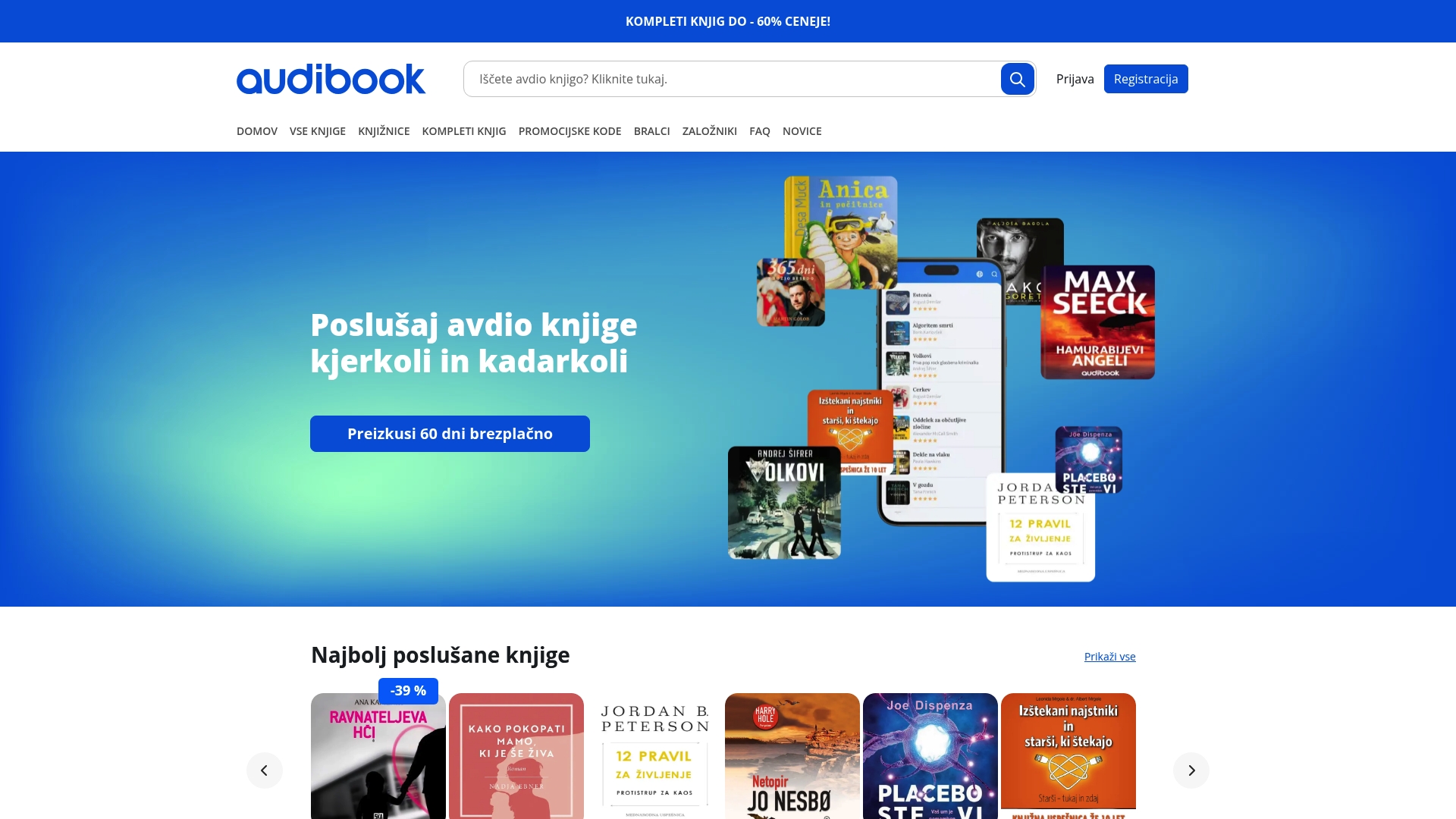
Audibook reports a library of over 7,500 audiobooks across more than 30 categories. The platform supports Android and iOS and offers both web and mobile access for listening or downloading. The vendor advertises a 60 day free trial that lets listeners try the service before they buy or rent titles.
Core Features
Audibook supplies streaming and offline download options so you can listen without a constant connection. The app includes an advanced media player with speed control and chapter navigation, plus the ability to create personal libraries. Titles can be rented or purchased permanently, giving flexibility for short term or long term listening.
Key Differentiator
The vendor advertises a 60 day free trial that grants unlimited access to the catalog for two months. That trial gives new listeners time to sample many genres and build a personal library without upfront cost. For people who prefer trying multiple narrators and formats before spending, this model reduces upfront risk.
Pros
Audibook has a notably large catalog, which helps readers find niche titles in education, medicine, and history. Cross platform access across Android, iOS, and web keeps your progress synced and lets you switch devices while listening. The media player’s speed control and chapter navigation make focused study or speed listening practical, and the rental option keeps individual session costs low.
Cons
- No subscription model is mentioned, so access requires renting or buying individual audiobooks. This can be more expensive for heavy listeners.
- Library loans have a 14 day borrowing limit, which shortens availability for longer audiobooks. That constraint can interrupt multiweek listening plans.
- The site does not list regional availability, so some titles may be unavailable in certain countries.
Who It's For
Busy commuters, students, and readers who want flexible, device friendly access fit Audibook well. People who prefer renting individual titles to a monthly subscription will find the pay per audiobook model sensible. Listeners who value offline access and granular player controls will also benefit.
Real World Use Case
A professional who commutes daily can download an educational audiobook on the web app, then switch to the mobile app for listening on the train. A parent can rent short children’s titles for a road trip and return to paid purchases for favorites. The rental option makes occasional listening affordable.
Pricing
Audibook uses a pay per audiobook model with pricing that varies. The vendor lists rentals starting at around €2.49 and purchases from €10.99 after the trial period.
Website: https://audibook.si
Audible
At a Glance
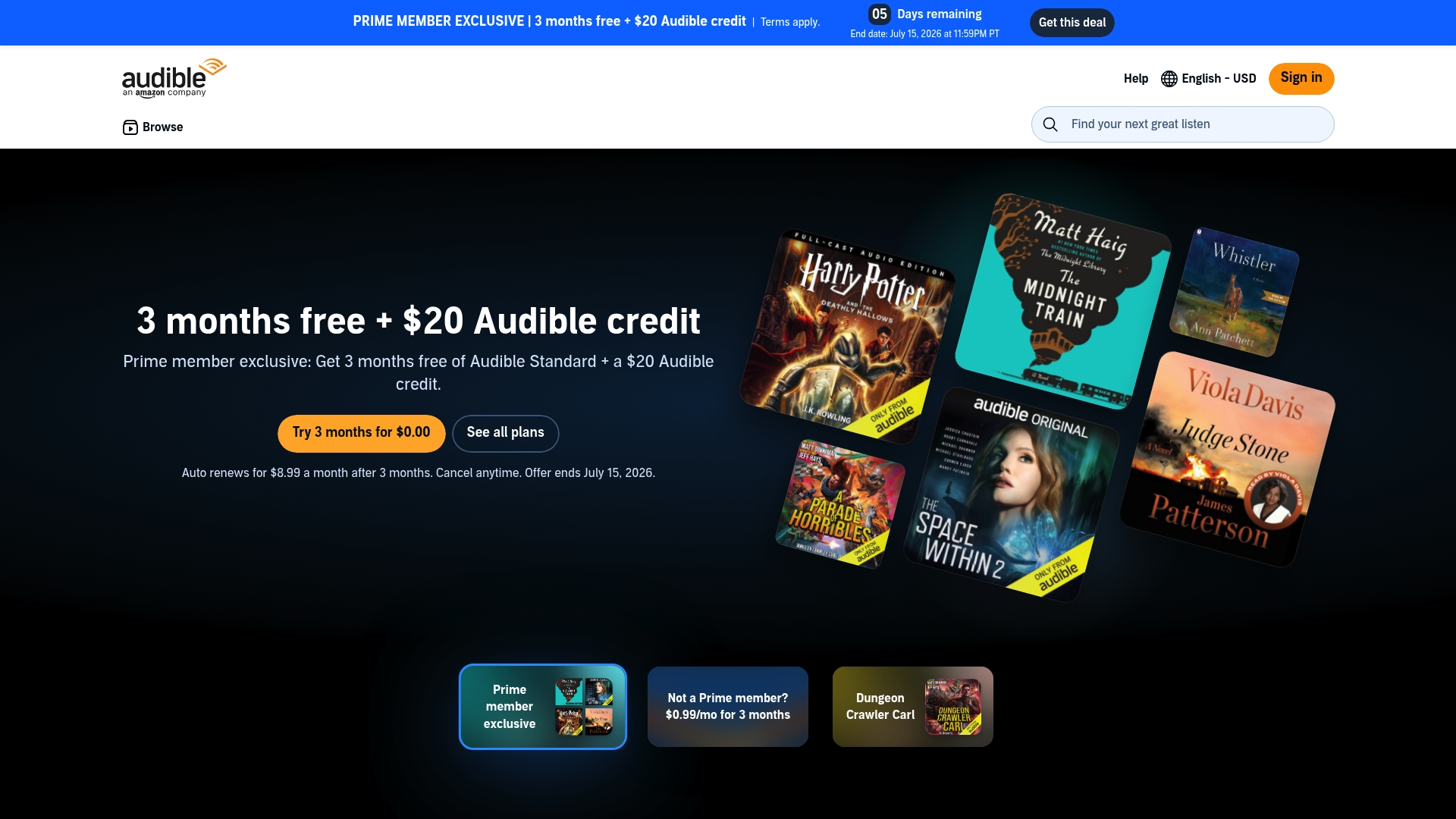
Full cast editions and exclusive broadcasts form a major part of Audible's catalog. For readers comparing audibly.dev alternatives, Audible pairs that content with offline listening and adjustable playback speed. The service runs across apps and the web with flexible membership options.
Core Features
Audible offers a wide variety of audiobooks, podcasts, and exclusive productions that include author and celebrity projects. Core playback features include offline listening, adjustable speed controls, personalized recommendations, and full cast editions. Apps and web access let listeners move between phone, tablet, and desktop without losing progress.
Key Differentiator
The single strongest point is Audible's catalog of exclusive content combined with full cast editions. That mix produces audio that reads more like produced performance than a single narrator reading. Listeners who value scripted productions and celebrity narrators will notice the difference immediately.
Pros
Audible's content library spans fiction, nonfiction, and niche subjects to support broad discovery through recommendations. The app delivers high quality audio and a user friendly interface for downloading and playback controls. Flexible membership features such as roll over credits and cancel anytime policies make it simple to try the service and pause membership when needed.
Cons
-
Subscription cost can be high compared to other audio services. That pricing can exclude budget conscious listeners.
-
Some titles are region restricted. Availability changes with licensing and may disappear by location.
-
Non included titles require separate purchases even for members. Credits do not always cover every premium release.
When It May Not Fit
If you need the lowest monthly cost, Audible's membership may not fit your budget. If your listening depends on globally available editions, regional restrictions will cause frustration. If you rely exclusively on free podcasts or library lending, Audible will add recurring expense and extra purchases.
Who It's For
Listeners who enjoy long form narration, celebrity productions, and scripted audio will get the most value from Audible. Commuters and people who need offline access will benefit from device support and playback controls. Anyone who prioritizes exclusive editions and a large catalog of titles will find Audible a suitable option.
Real World Use Case
A commuter subscribes to Audible to listen to bestsellers and author interviews during daily trips. They download episodes for offline listening and set faster playback speed for nonfiction. Monthly credits cover core picks while extras are purchased individually when interest spikes.
Website: https://audible.com
Comparison of alternatives
CoreForge Audio, Audibook, and Audible differ in their priorities, catering to distinct needs within the audiobook listener community.
Accessibility and inclusivity
CoreForge Audio commits to providing a platform built around the needs of neurodiverse people and listeners with visual impairments. Features such as dyslexia-friendly typography, multilingual support, and human narrators bring an inclusive experience unattainable in traditional models. Comparatively, while Audible has a rich content library and Audiobook provides flexibility in content access, CoreForge’s focus on adaptive design minimizes barriers for marginalized user groups.
Content range and exclusivity
Audible stands out with its exclusive productions and celebrity-narrated full-cast editions, catering to audiences that crave unique audio experiences. CoreForge Audio offers an option to upload books and transform them into audio, but it does not yet parallel Audible’s vast proprietary catalog. Audibook delivers value with its extensive rental library, yet, unlike Audible, it lacks exclusive narrated productions.
Best fit
- Neurodiverse readers requiring accessibility tools elsewhere will benefit most from CoreForge Audio.
- Listeners prioritizing exclusive narrated productions and celebrity audio experiences will align with Audible.
- Casual audiobook consumers seeking affordable rentals and flexible library options should turn to Audibook.
Our pick
CoreForge Audio stands apart due to its unwavering commitment to accessibility and inclusivity, bridging existing gaps in audiobook offerings. While competitors have strengths in content variety and exclusive productions, CoreForge excels for users who prioritize adaptive interfaces and curated, human-narrated content.
Here is a comparison to help identify the most suitable accessible audiobook service:
| Product | Core Feature | Best For | Pricing | Limitation |
|---|---|---|---|---|
| Coreforgeaudio | Human-narrated audiobooks with neurodiverse tools | Neurodiverse individuals needing accessibility | Price not published | Currently in internal beta phase |
| Audibook | Streaming with a 60-day trial for offline access | Listeners preferring rental-based access | Rentals from €2.49; purchases from €10.99 | 14-day borrowing limit on library loans |
| Audible | Diverse audiobooks, exclusive productions | Enthusiasts for exclusive and scripted content | Subscription cost may vary | High subscription cost compared to competitors |
Finding Audiobook Solutions That Work for Neurodiverse Needs
Many audiobook platforms offer large libraries but miss tailored accessibility features that support reading challenges like dyslexia, ADHD, and visual impairments. Coreforgeaudio puts human narrators and inclusive design at the center, ensuring books are not only listenable but also easier to follow with dyslexia-friendly fonts and adjustable narration speeds. This nonprofit model prioritizes fair pay and consent for narrators while providing multilingual support.
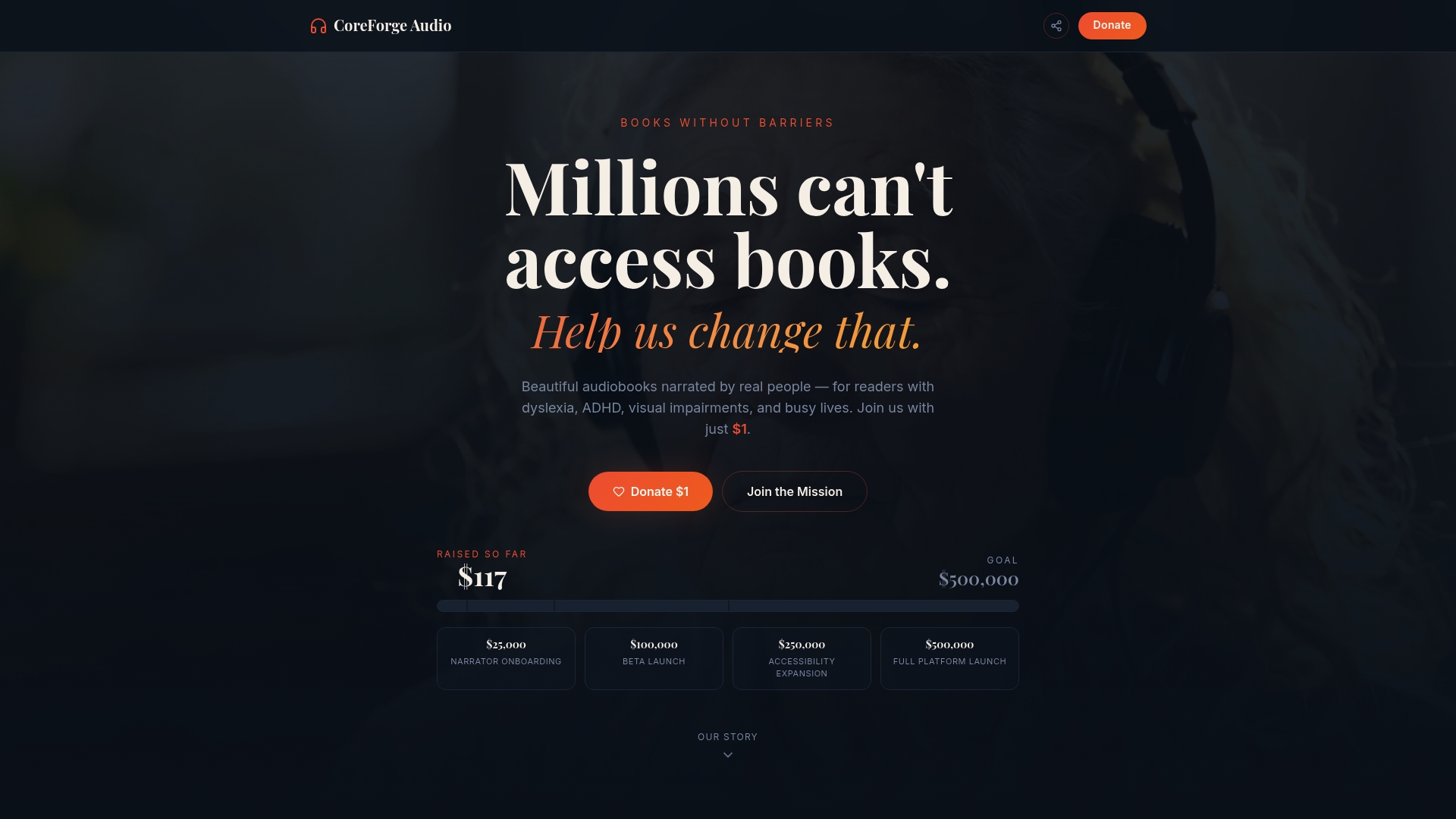
Explore how Coreforgeaudio meets the needs of readers with reading barriers and vision disabilities by visiting Coreforgeaudio. Upload your materials and experience personalized narration options built to support neurodiverse listening preferences and busy schedules.
FAQ
What makes Coreforgeaudio an ideal choice for users needing accessible audiobooks?
Coreforgeaudio emphasizes accessibility by using real human narrators and features designed for neurodiverse users. Its built-in accessibility tools include dyslexia-friendly typography and adjustable narration speeds. This makes it a great fit for readers with specific needs, allowing easy consumption of diverse texts.
How does Coreforgeaudio compare to Audibook regarding pricing?
Audibook has a pay-per-audiobook model starting around €2.49 for rentals and €10.99 for purchases. In contrast, Coreforgeaudio's fundraising model allows for transparent narrator compensation without major upfront costs for schools and nonprofits. This could be beneficial for organizations looking to support accessible audio without extensive financial commitment.
What unique features does Coreforgeaudio offer for neurodiverse users?
Coreforgeaudio provides features tailored to dyslexia, ADHD, and low vision, such as customizable playback and interface options. This focus on neurodiversity sets it apart from traditional platforms, ensuring that users receive an experience that caters specifically to their needs.
Can educators use Coreforgeaudio effectively for their students?
Educators can utilize Coreforgeaudio to provide accessible audiobooks tailored to their students' diverse learning needs. The service allows for uploading various text formats, making it easier to integrate into curricular activities focused on neurodiverse populations.
Which platform supports offline listening?
Audibook allows users to listen offline by offering download options for its audiobooks. Coreforgeaudio, while currently in beta, focuses on real human narration, providing an engaging user experience that allows for accessibility tools integrated into the audio experience.