
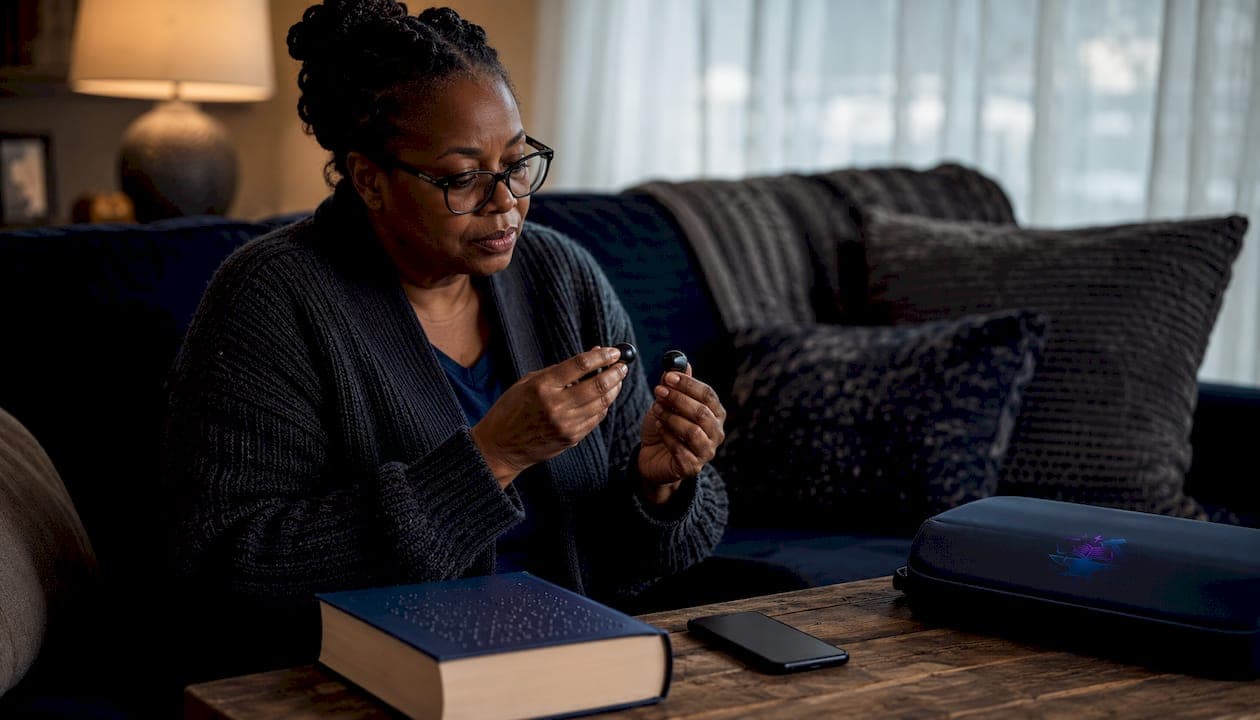
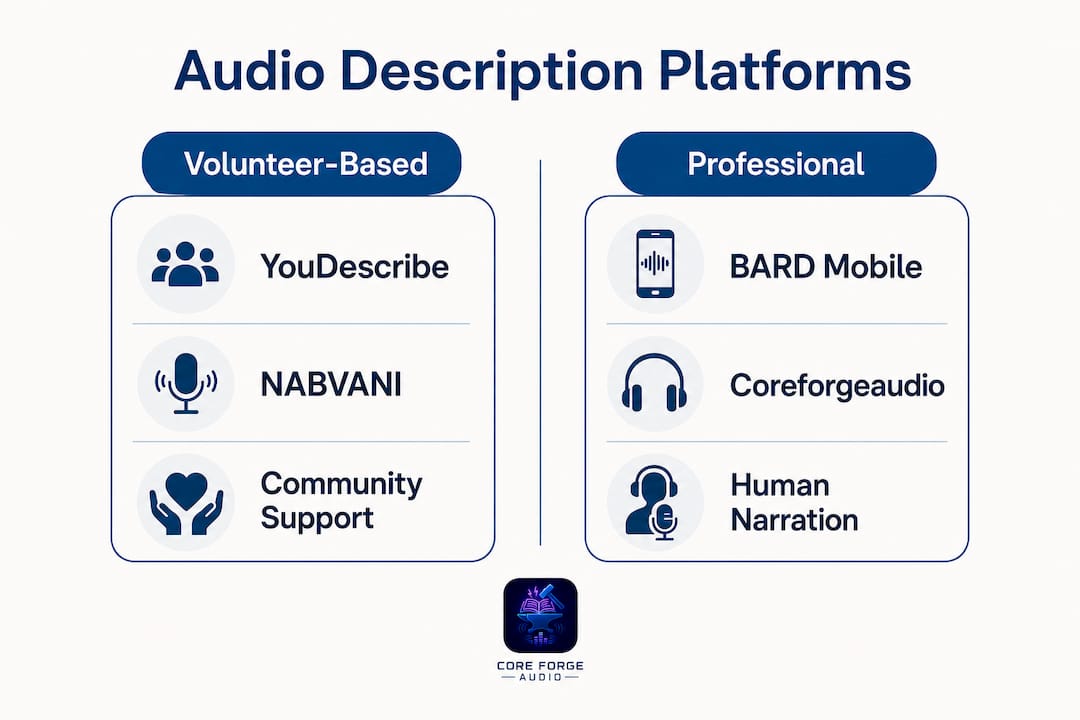
If you want a straight answer: start with Coreforgeaudio for human-narrated audiobooks, BARD Mobile (NLS BARD) for free government-backed library access, and YouDescribe for volunteer-described YouTube videos. Those three cover the most common use cases. Round out your toolkit with SensoReader for DAISY-format playback, and NABVANI for a volunteer-supported offline library.
Audio description platforms for visually impaired users fall into two broad categories: audiobook-first services (Coreforgeaudio, BARD Mobile, NABVANI, SensoReader) and video/audio-description tools (YouDescribe). Knowing which category you need most narrows the choice fast.
- Daily reading and audiobooks: Coreforgeaudio or BARD Mobile
- DAISY-format or institutional content: SensoReader
- YouTube video descriptions: YouDescribe
- Offline volunteer library: NABVANI
Audio description itself works as a secondary audio track inserted during natural pauses in dialogue, narrating scene changes, actions, and on-screen text that the main soundtrack never covers. It is not a caption or transcript; it supplies visual context in spoken form.
Table of Contents
- Which audio description platforms work best for visually impaired users?
- How these platforms were evaluated
- What do these platforms actually cost?
- Where do you get support as a visually impaired user?
- What devices work with each platform?
- What U.S. law says about audio description access
- Coreforgeaudio is built for readers like you
- Key Takeaways
Which audio description platforms work best for visually impaired users?
| Platform | Best for | Media supported | Narration type | Accessibility features | Cost / eligibility | U.S. availability | Sync & sharing |
|---|---|---|---|---|---|---|---|
| Coreforgeaudio | Human-narrated audiobooks with dyslexia-friendly UI | Audiobooks | Human (professional) | Dyslexia fonts, adjustable speed, multilingual, screen-reader ready | Micro-donation / early access; eventual subscription | Yes | Planned |
| BARD Mobile | Free NLS-eligible library access | Audiobooks, braille | Human | VoiceOver support, offline downloads, adjustable playback | Free (NLS eligibility required) | Yes | No |
| SensoReader | DAISY-standard and multi-format playback | DAISY, EPUB, PDF | Human / AI-assisted | Accessible navigation, screen-reader compatible | Institutional / varies | Yes | No |
| YouDescribe | Volunteer-described YouTube videos | Video (YouTube) | Volunteer human | Wish-list requests, keyboard nav | Free | Yes | Via sync apps |
| NABVANI | Free offline volunteer audiobook library | Audiobooks | Volunteer human | High-contrast themes, offline mode, request-a-book | Free | Yes (iOS) | No |
What trust signals should you look for?
The platforms above were chosen because they demonstrate at least three of the five signals that matter most for accessible media:
- Human narration with editorial judgment, not raw text-to-speech
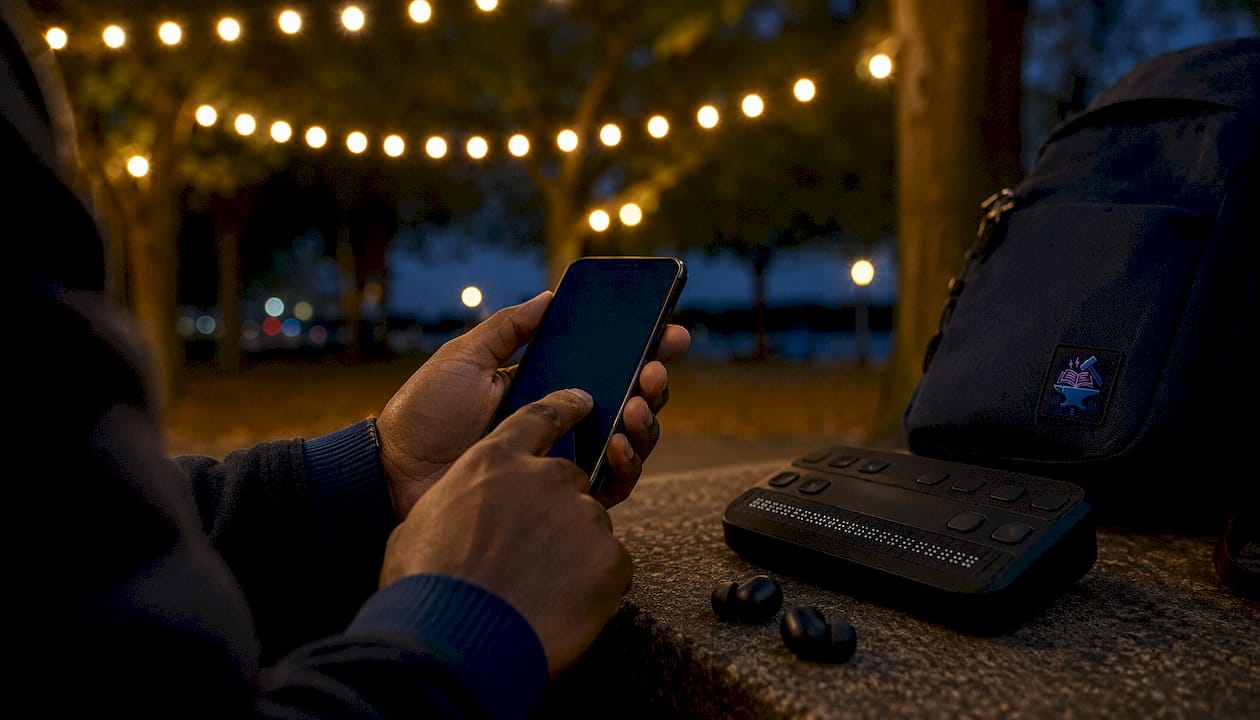
- Screen-reader compatibility (VoiceOver on iOS, NVDA on Windows)
- Keyboard navigation throughout the interface
- Clear accessibility documentation or a published accessibility statement
- Transparent eligibility or funding so you know what you are signing up for
YouDescribe's volunteer workflow lets you submit a wish-list request for any YouTube video that lacks a description track. Turnaround depends on volunteer availability, so it works best for content you can wait on rather than live events.
Pro Tip: When watching described video with others, use a sync app to route the description track to your earbuds while the room hears the original audio. This technique, called "ducking," lowers the primary soundtrack volume during description segments so narration stays audible without cutting over dialogue.
How these platforms were evaluated
Every platform on this list was assessed against a consistent set of criteria: screen-reader compatibility, narration quality, format support, cost transparency, and U.S. availability. No platform paid for inclusion.
Narration quality was judged on whether descriptions prioritize essential information. Good audio description is objective, describing observable facts like actions, settings, and scene changes rather than interpreting character motives. The NLM's guidance on audio description makes the point plainly: because time slots are limited, describers must choose what is essential and avoid over-describing. Platforms that use trained human narrators or editorial review of volunteer tracks scored higher on this dimension.
Volunteer platforms like YouDescribe and NABVANI lower the production barrier for niche content, but editorial quality varies by contributor. That variability is noted in the table rather than papered over.
What do these platforms actually cost?
BARD Mobile is free to any U.S. resident who qualifies for NLS services, which covers people with visual impairments, physical disabilities that prevent holding a book, or reading disabilities certified by a doctor or specialist. There are no subscription fees, no hidden tiers.
YouDescribe and NABVANI are also free. NABVANI's library is volunteer-recorded, so the cost is zero but the catalog depth depends on contributor activity.
SensoReader pricing is not publicly listed for individual consumers; it is typically deployed through institutions, schools, or libraries. Contact Sensotec directly for a quote.
Coreforgeaudio is currently in a micro-donation fundraising phase. Early supporters contribute at reward tiers that unlock early access and audiobook credits. The eventual model will be subscription or pay-per-use once the platform launches fully. Pricing details are published on the fundraising page as the campaign progresses. There are no hidden fees buried in the current model; the campaign page itemizes where donations go, covering licensing, development, and accessibility tooling.
One thing worth watching on any platform: AI-assisted narration can cut production costs significantly, but hybrid models that pair an AI draft with human review are the current standard for high-visibility content. Pure AI narration still struggles with pacing, emphasis, and the editorial judgment that makes description genuinely useful.
Where do you get support as a visually impaired user?
BARD Mobile users have access to the National Library Service's regional network. Your local NLS affiliate library can help with enrollment, device setup, and catalog questions. The NLS also publishes an accessible user guide for BARD Mobile.
YouDescribe is maintained by the Smith-Kettlewell Eye Research Institute and supported by the broader blindness community. The Perkins School for the Blind publishes tutorials on how to use and contribute to the platform.
NABVANI has an in-app request workflow and a community of volunteer narrators. Support is community-driven rather than staffed.
Coreforgeaudio is building a community-first support model. Early-access supporters get direct communication channels with the founding team during the beta phase, which is the most responsive support window available.
For peer community, the American Foundation for the Blind (AFB) and the National Federation of the Blind (NFB) both maintain active forums where members share platform recommendations, workarounds, and setup tips. These communities are often faster than official support channels for practical troubleshooting.
What devices work with each platform?
BARD Mobile runs on iOS and Android. VoiceOver on iPhone and TalkBack on Android are both supported. Offline downloads mean you are not dependent on a Wi-Fi connection once a title is saved.
SensoReader supports Windows, iOS, and Android, with DAISY playback across all three. Its DAISY compliance means it handles structured navigation within a book, letting you jump by chapter, section, or page rather than scrubbing through a linear audio file.
YouDescribe runs in a web browser and on iOS. It works alongside YouTube, so any device that runs YouTube can use it with the YouDescribe layer.
NABVANI is currently available on iOS. Android availability is not publicly listed.
Coreforgeaudio is building for iOS and Android with an accessible-first UI. The audiobook app accessibility guide on the Coreforgeaudio blog covers what to check before committing to any app, including VoiceOver compatibility, font scaling, and contrast settings.
For setup, the single most important step on any platform is enabling your device's built-in screen reader before opening the app. VoiceOver on iOS and NVDA on Windows both interact with app interfaces at the OS level, so a platform that is screen-reader compatible will work correctly once the reader is active.
What U.S. law says about audio description access
The W3C WCAG 2.2 Success Criterion 1.2.5 requires audio description for all prerecorded video content at Level AA conformance. Most U.S. federal websites and federally funded digital content must meet this standard under Section 508 of the Rehabilitation Act.
The FCC mandates audio description on broadcast and cable television for the top broadcast networks and the top cable channels in the top television markets. This covers a significant share of primetime programming but does not extend to all streaming services automatically.
The Americans with Disabilities Act (ADA) applies to places of public accommodation, which courts have increasingly interpreted to include websites and apps. Organizations that receive federal funding have the clearest obligations under Section 504 and Section 508.
This article is general information, not legal advice. For your specific situation, consult the FCC's accessibility resources or a qualified attorney familiar with disability rights law.
Coreforgeaudio is built for readers like you
Human-narrated audiobooks with a UI designed for accessibility from day one, not bolted on afterward. That is the gap Coreforgeaudio fills. Where BARD Mobile requires NLS eligibility and SensoReader leans institutional, Coreforgeaudio is open to anyone with a reading barrier, including visual impairments, dyslexia, ADHD, or simply a schedule that makes sitting with a book impossible.
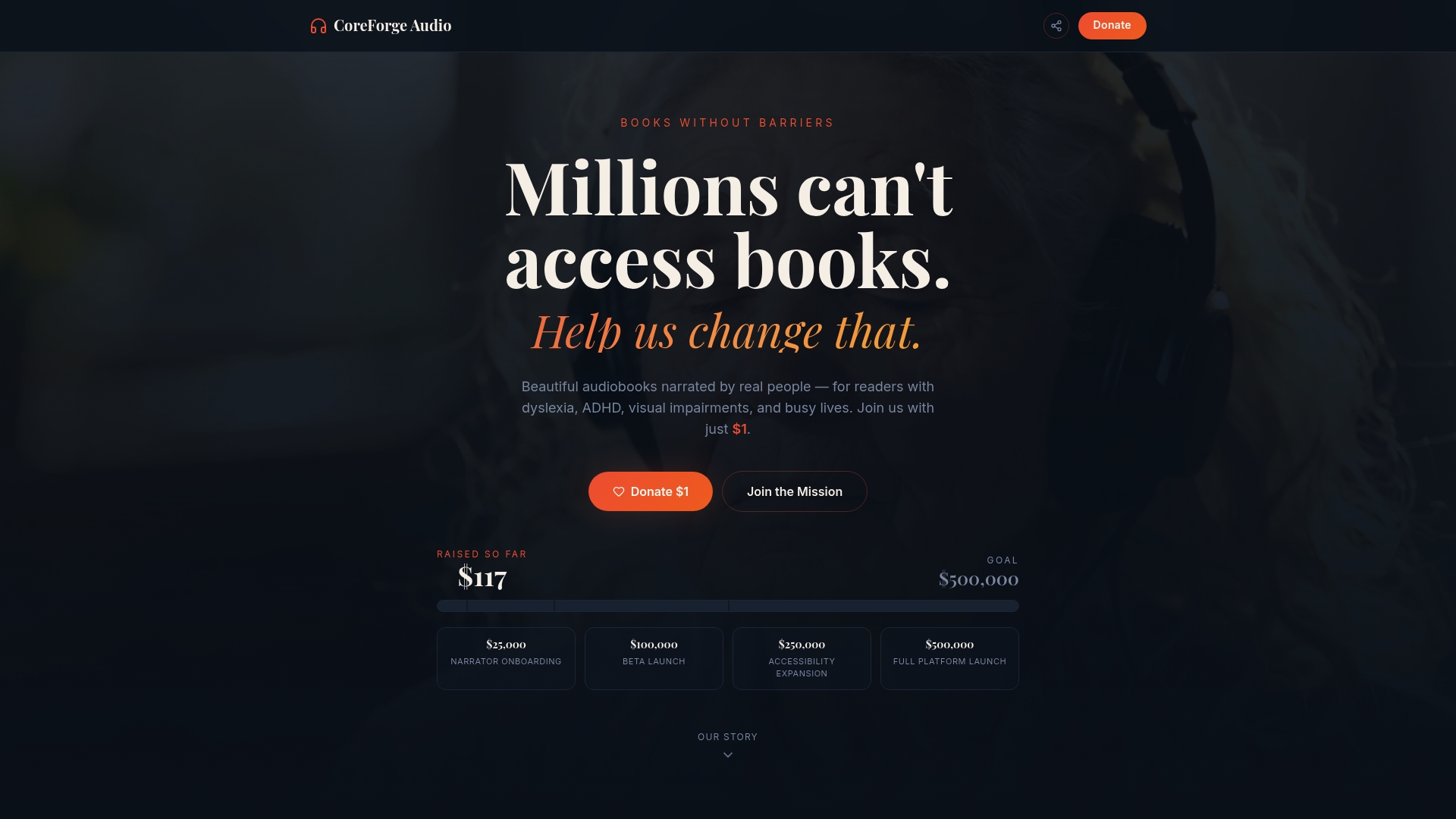
The micro-donation model is transparent: contributions go toward licensing, platform development, and fair narrator compensation. Early supporters receive audiobook credits and early access. Narrators are paid fairly, and the platform's stance on AI is clear: human voices lead, with AI used only as a tool under human oversight. Your data stays yours.
Visit Coreforgeaudio to support the campaign, claim early access, or follow the launch. If you want to go deeper on accessible audio platforms before deciding, the comparison guide on the blog covers the technical details.
Key Takeaways
The strongest accessible audio experience combines human narration, screen-reader compatibility, and transparent eligibility so visually impaired readers can find and use content without friction.
| Point | Details |
|---|---|
| Audio description works as a secondary track | Narration inserts during dialogue pauses to describe visual context, not replace captions. |
| BARD Mobile is the free baseline | NLS-eligible U.S. users get a full audiobook and braille library at no cost, with VoiceOver support. |
| Human narration outperforms AI alone | Hybrid models (AI draft plus human review) are the current standard; pure AI narration lacks editorial judgment. |
| Legal mandates cover broadcast and federal content | WCAG 2.2 Level AA and Section 508 require audio description for federal digital content; FCC rules cover major TV networks. |
| Coreforgeaudio leads on human-narrated audiobooks | The platform is built accessibility-first with dyslexia-friendly fonts, adjustable speed, and fair narrator pay. |