
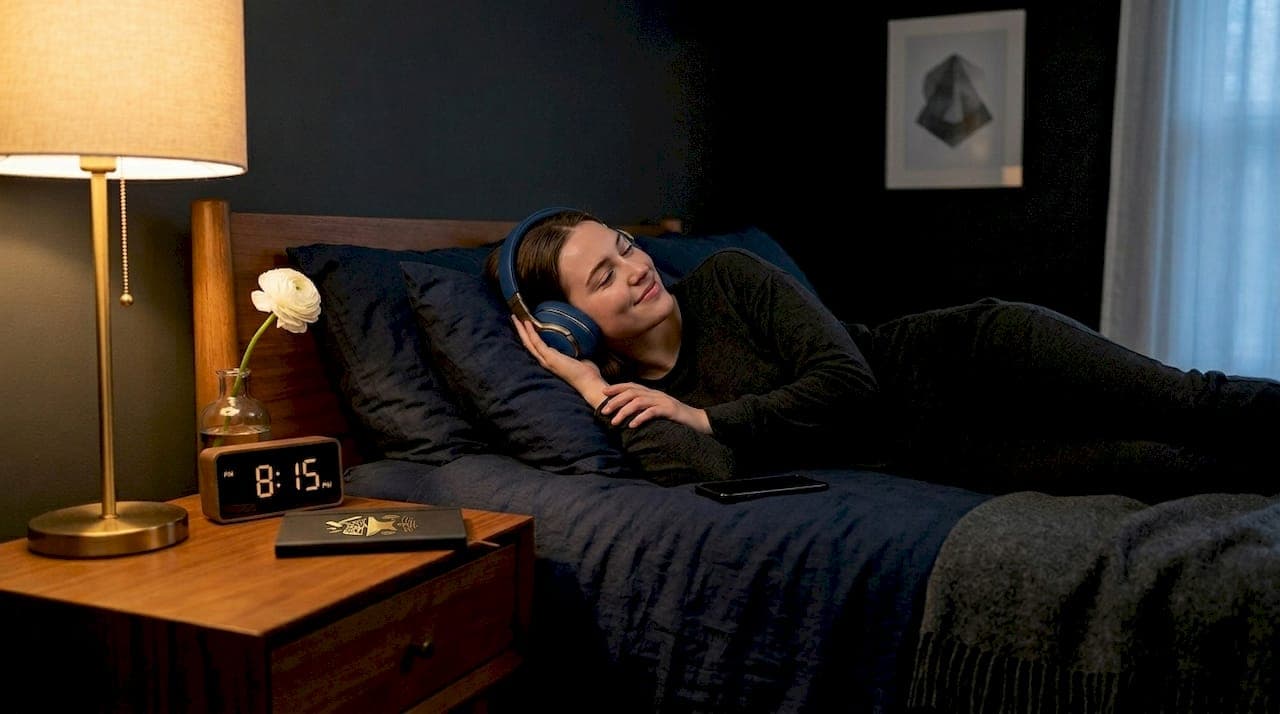
Sleep-friendly audio learning works by replaying sensory cues tied to prior study during deep sleep, strengthening memories without waking the sleeper. This process, formally called Targeted Memory Reactivation (TMR), is the only scientifically validated method connecting audio to memory improvement during sleep. Passive audio exposure all night, the kind popularized by old hypnopedia tapes and late-night infomercials, does not encode new knowledge. What the research actually supports is a two-part system: learn the material while awake, then use carefully timed audio cues during slow-wave sleep to reinforce what you already studied. Understanding how sleep-friendly audio learning works separates real cognitive gains from wishful thinking.
How does targeted memory reactivation work during sleep?
Targeted Memory Reactivation is defined as the deliberate delivery of low-volume sensory cues, typically sounds or scents associated with prior learning, during slow-wave sleep to strengthen memory consolidation. The science behind it is grounded in what neuroscientists already know about the sleeping brain: the hippocampus replays recent experiences during slow-wave sleep, transferring them into long-term storage. TMR simply nudges that process by reintroducing a cue the brain already associates with a specific memory.
Here is how the process unfolds in practice:
- Learn the material while awake. Study a concept, a language vocabulary set, or a skill while a specific sound plays in the background. That sound becomes a memory cue.
- Enter slow-wave sleep. This is the deep, restorative phase of sleep, typically occurring in the first half of the night, where memory consolidation is most active.
- Replay the cue at low volume. The same sound from your study session is played softly during slow-wave sleep. The brain recognizes it and reactivates the associated memory trace.
- Wake up with stronger recall. Studies confirm that TMR cues during sleep improve retention of the paired material compared to sleep without cues.
The critical variables are timing, volume, and sleep phase. Delivering cues during light sleep or at too high a volume causes micro-arousals that disrupt sleep architecture and erase any memory benefit. This is why consumer-grade TMR applications are still limited. Most people cannot reliably detect their own slow-wave sleep without EEG hardware.
Pro Tip: If you want to experiment with TMR at home, use a white noise track or a soft instrumental piece during study, then replay it at very low volume using a sleep-safe speaker placed across the room. The goal is inaudible-but-present, not background music you can clearly hear.
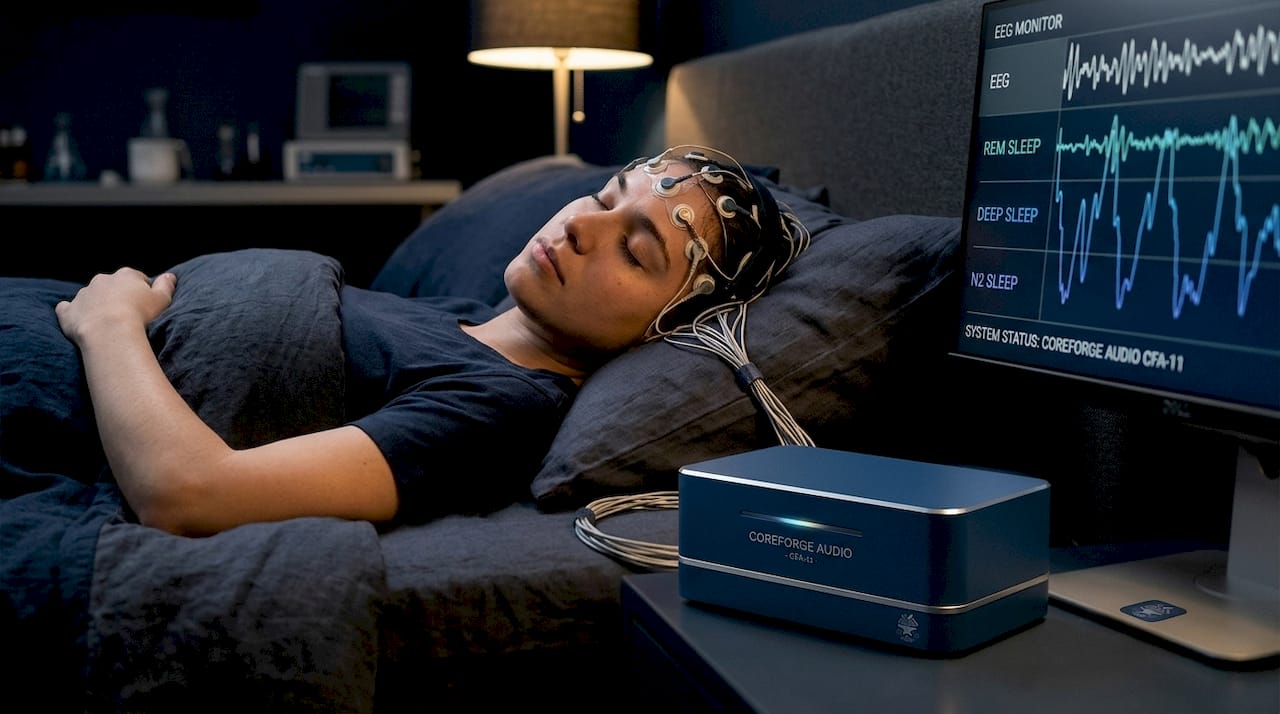
TMR leverages natural sleep memory mechanisms by nudging the brain without waking it, making it a non-invasive method that works with your biology rather than against it. The contrast with passive sleep-learning could not be sharper.
Why passive audio during sleep does not work
Passive sleep-learning, the idea that you can absorb new information simply by playing audio while you sleep, is classified as pseudoscience. Studies from 1956 onward conclude that passive sleep-learning is effectively impossible except under rare alpha wave conditions that barely qualify as sleep. The concept, called hypnopedia, gained cultural traction through Aldous Huxley's Brave New World and a wave of mid-century self-help products. None of it held up under controlled conditions.
The reason is neurological. During sleep, the brain is not in an encoding state. It is in a consolidation state. These are fundamentally different operations.
- Encoding requires conscious attention, working memory, and active processing. It happens when you are awake and engaged.
- Consolidation is the offline process of stabilizing and integrating memories already formed. Sleep is optimized for this, not for taking in new data.
- New audio during sleep is either ignored by the sleeping brain or, if loud enough to register, causes arousal that fragments sleep and harms both memory and health.
- Disrupted sleep architecture from misused audio negates any theoretical benefit and adds a real cost: worse cognitive performance the next day.
The distinction between sleep quality aids, automatic memory consolidation, and deliberate TMR cueing is one most people never learn, which is why the myth of passive sleep-learning persists. Media portrayals, app marketing, and outdated self-help books keep the idea alive. The productivity benefits of audio learning are real and well-documented, but they happen when you are awake and listening actively, not unconscious.
What audio characteristics actually improve sleep quality?
Even if passive learning during sleep is off the table, audio still plays a powerful role in sleep quality, and better sleep directly supports stronger memory consolidation. The question is what kind of audio actually helps.
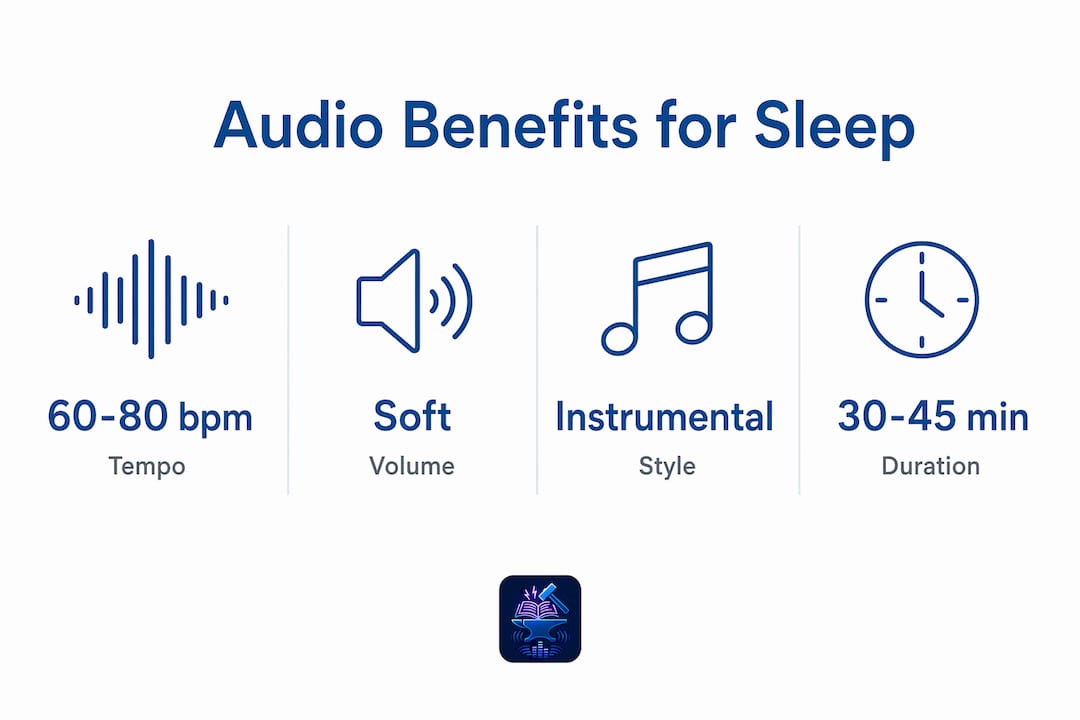
A narrative review published in Frontiers in Sleep found that slow tempo music at 60 to 80 bpm, soft, instrumental, and simply structured, consistently improves sleep onset, efficiency, and total duration. The mechanism is physiological: slow-tempo music synchronizes with the resting heart rate and breathing rhythm, signaling the nervous system to downshift. Lyrics, complex arrangements, and fast tempos do the opposite.
| Audio feature | Why it matters for sleep |
|---|---|
| Tempo: 60 to 80 bpm | Matches resting heart rate, promoting relaxation |
| Soft instrumental texture | Reduces cognitive engagement and mental chatter |
| Simple melodic structure | Prevents the brain from actively tracking musical complexity |
| Consistent volume | Avoids startle responses that fragment sleep stages |
| 30 to 45 minutes of listening | Optimal dosing window before sleep onset |
The dosing recommendation matters. The same review advises 30 to 45 minutes of daily listening at a comfortable volume for best results. More is not better. Extended audio exposure can delay sleep onset if the brain stays engaged with the content.
For older adults, the evidence is especially strong. A meta-analysis in Frontiers in Psychiatry found that music-based interventions improve sleep quality with a PSQI mean difference of 3.37 points, a clinically meaningful improvement. Optimal parameters were 4 to 8 weeks of daily 30 to 45 minute sessions. This population also showed reductions in depression and anxiety, suggesting that sleep audio has cascading mental health benefits beyond rest alone.
Digital mindfulness audio, including guided body scans, breathing exercises, and sleep meditations, also clears the bar. A meta-analysis in npj Digital Medicine found that standalone digital mindfulness programs improve sleep quality with effect sizes around 0.40 after programs averaging 6.4 weeks. Web-based delivery showed stronger effects than app-only formats, likely because content depth and structured programs drive better engagement.
Pro Tip: Build a consistent pre-sleep audio ritual using the same playlist or guided session each night. Repetition trains your nervous system to associate that audio with sleep, accelerating the relaxation response over time.
How to use sleep-friendly learning techniques in your routine
Applying sleep-friendly learning techniques effectively requires separating two goals: improving sleep quality through audio, and using TMR to reinforce prior learning. Both are legitimate. Conflating them leads to disappointment.
Here is a practical framework for combining both approaches:
- Study actively before sleep. Spend 20 to 30 minutes reviewing the material you want to retain. Use spaced repetition tools like Anki, or read through notes while a specific ambient track plays. That track becomes your memory cue.
- Transition to a sleep audio routine. After studying, switch to a dedicated sleep playlist: 60 to 80 bpm instrumental music or a guided mindfulness session. This winds down your nervous system and prepares you for quality slow-wave sleep.
- Set up low-volume cue delivery. If you want to attempt TMR, program a sleep-safe speaker or a pillow speaker to replay your study cue track at very low volume after roughly 90 minutes of sleep, when the first slow-wave cycle typically begins. Apps like Sleep Cycle can help estimate sleep phases, though they are not EEG-precise.
- Keep volume below conversational level. The most common TMR failure is incorrect timing or volume causing sleep disturbances. If you wake up, the volume is too high.
- Evaluate over two to four weeks. Track recall performance on the studied material and subjective sleep quality. Adjust the cue volume, timing, or study method based on results.
The audio format design of your study material also matters. Shorter, focused audio segments covering one concept at a time are easier to pair with a single cue and easier for the brain to reactivate during sleep. Long, dense recordings dilute the cue-memory association.
Long-form audio works well for relaxation and general learning while awake, but for TMR purposes, precision beats volume. The goal is a clean, specific memory trace the brain can reactivate from a single cue.
Pro Tip: Use a single, distinctive ambient track, something like rain on leaves or a specific piano piece, exclusively during study sessions. Never play it at other times. This preserves the cue-memory association and makes TMR more effective when you replay it during sleep.
Key takeaways
Sleep-friendly audio learning works through two distinct mechanisms: TMR reinforces prior learning during slow-wave sleep, while sleep-quality audio improves the consolidation environment for all memories.
| Point | Details |
|---|---|
| TMR is the validated method | Replay low-volume cues during slow-wave sleep to strengthen memories already formed while awake. |
| Passive sleep-learning is disproven | Studies since 1956 confirm the sleeping brain cannot encode new information from audio. |
| Audio tempo and structure matter | Music at 60 to 80 bpm, soft and instrumental, measurably improves sleep onset and duration. |
| Dosing is specific | 30 to 45 minutes of pre-sleep audio daily, sustained over 4 to 8 weeks, produces the strongest results. |
| Volume and timing are critical | Cues delivered too loudly or at the wrong sleep stage cause micro-arousals that erase memory benefits. |
Why I think most sleep-learning content misses the point
I have spent years watching the audio learning space get tangled up in its own hype. Every few months, a new app promises to teach you Spanish while you sleep, and every few months, the science quietly confirms it does not work that way. The frustration is not with the ambition. It is with the refusal to engage with what the research actually says.
TMR is genuinely exciting technology. The idea that you can reinforce a memory by replaying a soft cue during deep sleep, without waking the person, is not science fiction. It is documented in peer-reviewed journals. But the consumer tech that claims to deliver TMR is almost universally imprecise. Without EEG confirmation of sleep stage, you are guessing. And guessing with audio during sleep is how you fragment your rest and wake up feeling worse.
What I find more promising is the simpler half of this equation: using high-quality, well-designed audio to improve sleep itself. Better sleep means better memory consolidation across the board, for everything you learned that day. That is a return on investment that does not require any special hardware. It just requires choosing the right audio and building a consistent routine. The future of sleep-friendly learning is probably a combination of consumer-grade EEG wearables and curated audio content. We are not there yet. Until then, the honest advice is to study well before bed, sleep well with good audio, and let your brain do the rest.
— Sarmed
Discover sleep-friendly audiobooks at Coreforgeaudio
Coreforgeaudio is built for people who learn through listening. Whether you want a calming narrated story to wind down before bed or structured content to study before sleep, the platform's human-narrated audiobooks are designed with accessibility and audio quality at the center. Every title features professional voice actors whose pacing and tone are suited to focused listening and relaxed evenings alike. If you are building a sleep-friendly learning routine, the right audio content is the foundation. Explore the voice actor catalog at Coreforgeaudio and find narration that fits your rhythm.
FAQ
What is targeted memory reactivation?
Targeted Memory Reactivation (TMR) is a technique where low-volume sensory cues linked to prior learning are replayed during slow-wave sleep to strengthen memory consolidation. It is the only scientifically validated audio method for improving memory during sleep.
Can you actually learn new information while sleeping?
No. Passive sleep-learning is not supported by credible research. The sleeping brain consolidates existing memories but cannot encode new information from audio played during sleep.
What type of music is best for sleep?
Music at 60 to 80 bpm, soft, instrumental, and simply structured, is most effective. A narrative review in Frontiers in Sleep recommends 30 to 45 minutes of daily listening at comfortable volume for measurable sleep improvement.
How long does it take for sleep audio to improve sleep quality?
Research on music-based interventions for older adults and digital mindfulness programs both point to 4 to 8 weeks of consistent daily use as the window for significant, measurable improvement.
Is it safe to play audio all night while sleeping?
Playing audio all night risks disrupting sleep architecture through micro-arousals, which reduces sleep quality and cognitive performance. Limit pre-sleep audio to 30 to 45 minutes and use a timer to stop playback after you fall asleep.