
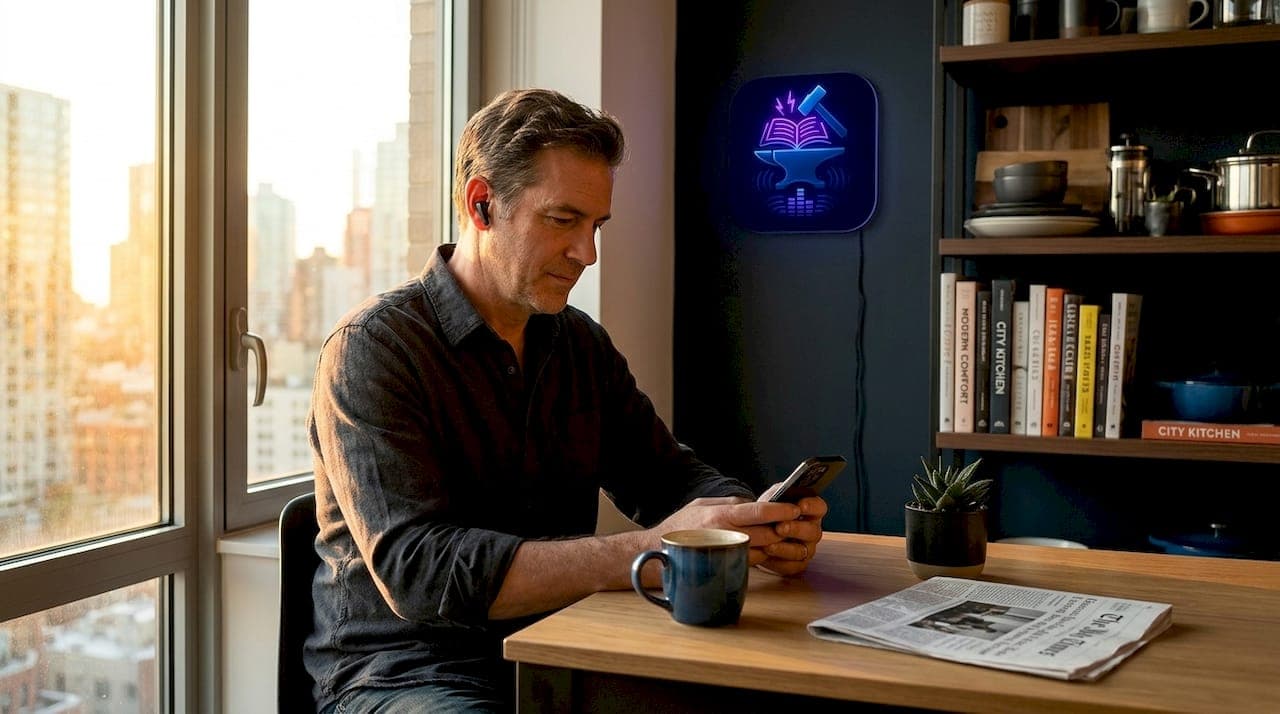
Daily routines enhanced by audio content are defined as structured daily habits where podcasts, audiobooks, or music are deliberately integrated to improve productivity, learning, and relaxation. 80% of Americans age 12+ have listened to a podcast, with 45% tuning in weekly, according to Edison Research's Infinite Dial 2026. That number signals a shift: audio is no longer a niche habit. Platforms like Audible, Spotify, and Learning Ally have made immersive audio formats accessible to virtually everyone, from commuters to students to professionals managing packed schedules. This guide breaks down exactly how to use audio to get more from every part of your day.
1. What are the most effective audio content types for daily routines?
Audio content for productivity falls into four main categories, each suited to different goals and activities.
Podcasts are episodic, host-driven programs that work exceptionally well during multitasking. Their conversational format keeps your attention without demanding visual focus, making them ideal for commutes, workouts, or household chores. Shows like How I Built This on Spotify or Hidden Brain on NPR deliver substantive ideas in digestible segments.
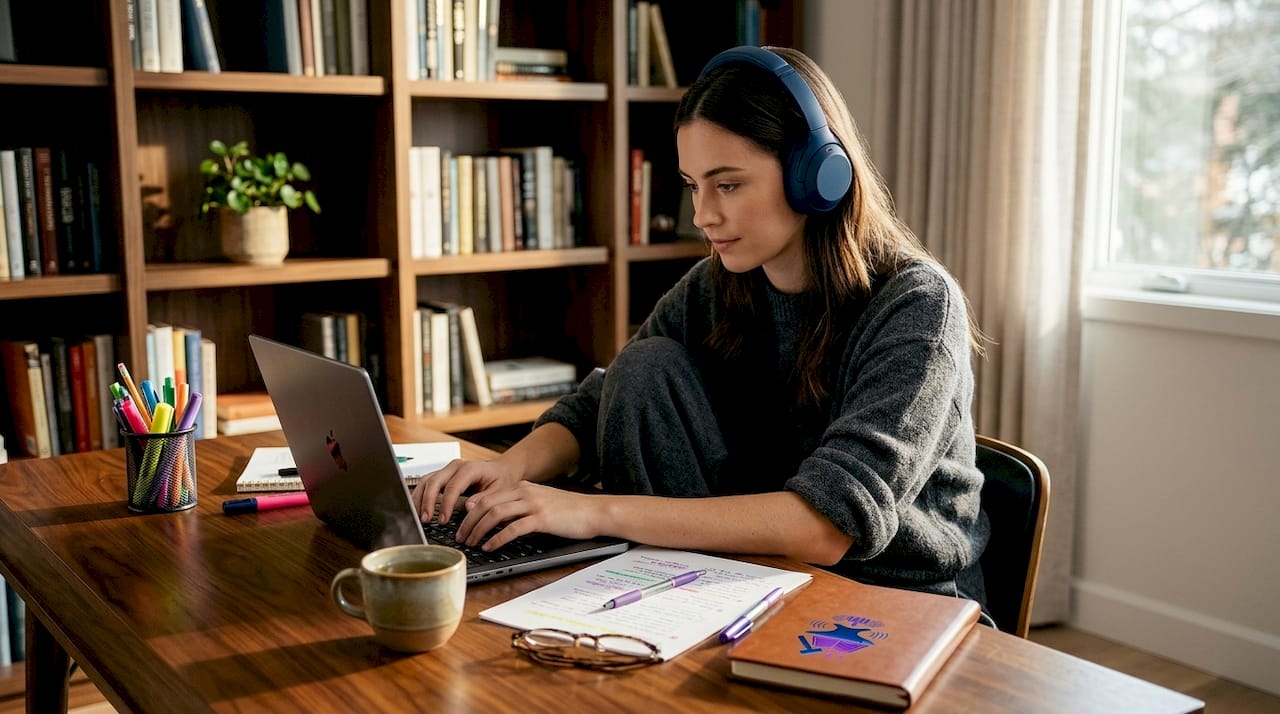
Audiobooks offer immersive, long-form narratives that support deep learning and vocabulary growth. The Harvard Gazette confirms that audiobooks complement print reading rather than replace it, since learning outcomes depend on task design and support, not the delivery format. Audible and Learning Ally both offer extensive libraries with adjustable narration speeds.
Music serves a different function. It regulates mood and structures task timing. Instrumental playlists on Spotify, for example, are widely used as focus timers, with genre shifts signaling transitions between work blocks.
Microlearning audio is the newest format. Short, topic-specific audio clips of five to ten minutes deliver one focused concept per session. Apps like Blinkist and Audible Originals produce content in this format, making it practical for professionals with fragmented schedules.
Pro Tip: Match the audio format to your cognitive load. Save podcasts and audiobooks for low-concentration tasks. Use music or silence for deep focus work.
2. How busy professionals can use audio for productivity
Professionals who integrate audio into their daily habits report the most success when they attach listening to existing, stable tasks rather than carving out new time blocks.
Audio routines align best with well-timed, low-risk multitasking activities, using audio as a task completion cue. This means your commute becomes a professional development session, your lunch walk becomes a leadership podcast, and your evening wind-down becomes an audiobook chapter. The audio signals the start and end of each activity, reinforcing the habit loop.
Daily podcast consumption among U.S. adults rose from 6% in 2015 to 23% in 2025. That growth reflects a deliberate behavioral shift. Professionals are replacing passive media consumption with content that returns value.
Here is a practical framework for building audio into a professional routine:
- Morning commute: Listen to a 20 to 30 minute industry podcast. Shows like The Tim Ferriss Show or Masters of Scale cover strategy and leadership in formats built for commute lengths.
- Midday walk or workout: Switch to an audiobook chapter. Physical movement paired with narrative audio improves both retention and mood.
- Afternoon task transitions: Use a short music playlist as a reset cue between deep work blocks. Five minutes of focused listening resets attention.
- Evening wind-down: Use audio storytelling for relaxation. Fiction audiobooks or narrative nonfiction signal the brain to shift out of work mode.
Pro Tip: Set a specific podcast episode as your "start work" cue each morning. The association between the audio and the task builds a reliable focus trigger within two to three weeks.
3. How students can use audiobooks and podcasts to enhance learning
Students who use audio as part of their study routines gain measurable advantages, but only when the listening is structured. Passive consumption alone does not produce strong results.
An MIT McGovern Institute study published in March 2026 found that students gained vocabulary from audiobooks overall, but struggling readers made significant gains only when audiobooks were paired with explicit one-on-one instruction. This finding matters because it reframes how students should approach audio learning. The audiobook is not the intervention. The scaffolding around it is.
Practical approaches for students include:
- Pre-listen preparation: Review chapter summaries or vocabulary lists before pressing play. This primes comprehension and reduces cognitive overload during listening.
- Active note-taking: Pause every 10 to 15 minutes to write one sentence summarizing what you just heard. This forces retrieval, which strengthens memory.
- Post-listen reflection: After finishing a chapter, write three key points in your own words. Research summarized by The Conversation confirms that post-listen retrieval steps improve retention significantly, since audio is harder to backtrack than print.
- Discussion pairing: Join an audiobook discussion group or use platforms like Goodreads to process content socially. Verbalization deepens comprehension.
For students with dyslexia, ADHD, or visual impairments, audio supplementation in curriculum provides a structured framework for educators and learners to integrate audio without losing instructional rigor.
"Learning outcomes are modality-independent. The key variable is how routines support comprehension through pacing and discussion." — Harvard Gazette, March 2026
4. Comparison of audio formats for different daily activities
Choosing the right audio format for each activity determines whether the habit sticks and delivers results. The table below maps common daily activities to the audio format that fits best, based on engagement level and multitasking compatibility.
| Activity | Best audio format | Why it works |
|---|---|---|
| Morning commute | Podcast | Episodic structure matches commute length; no visual attention needed |
| Exercise or gym | Music or podcast | Music regulates pace; podcasts sustain motivation on longer sessions |
| Household chores | Podcast or audiobook | Low cognitive demand frees attention for narrative or discussion content |
| Deep work or study | Instrumental music | Lyrics compete with reading/writing; instrumental tracks support focus |
| Evening relaxation | Audiobook or audio fiction | Narrative immersion signals mental deceleration and reduces screen time |
| Skill development | Microlearning audio | Short, focused clips deliver one concept without overloading working memory |
80.8% of podcast users listen while doing something else, which confirms that audio content is structurally suited to multitasking. The format you choose should match the attention demand of the task, not just your personal preference. A complex audiobook chapter during a high-stakes commute in heavy traffic is a poor fit. The same chapter during a treadmill session is ideal.
5. Morning routines with audio: building the habit from day one
Morning routines with audio are the easiest entry point because mornings offer predictable, repeatable conditions. The same alarm, the same coffee, the same commute. Predictability is the foundation of habit formation.
Start with a single 20-minute podcast episode tied to one morning activity. Do not try to build a full audio schedule on day one. Attach the listening habit to something you already do without thinking, like brewing coffee or getting dressed. Once that pairing feels automatic, usually within two to three weeks, add a second audio slot.
39% of podcast consumers now say podcasts replace social media scrolling. That replacement behavior is significant. It means the time is already available. You are not adding audio to a full schedule. You are substituting a higher-value activity for a lower-value one.
For morning routines specifically, news briefing podcasts like NPR's Up First (12 minutes) or The Daily from The New York Times (20 minutes) are calibrated to fit pre-work windows. They deliver context without demanding extended attention.
6. Audio storytelling for relaxation and mental recovery
Audio storytelling for relaxation is one of the most underused applications of daily audio habits. Most people associate audio content with productivity. The recovery function is equally important and better supported by research.
Narrative audio, whether fiction audiobooks, story-driven podcasts, or guided audio meditations, activates the default mode network in the brain. This is the same network engaged during rest and creative thinking. Platforms like Calm and Headspace offer guided audio sessions, while Audible's fiction catalog includes thousands of titles narrated by professional voice actors whose pacing and tone are specifically designed to reduce cognitive arousal.
The distinction between passive and active listening matters here. Relaxation audio should be genuinely passive. No note-taking, no pausing to reflect. The goal is mental deceleration, not information acquisition. Reserve that mode for the end of your day, after your learning-focused audio sessions are complete.
Pro Tip: Create a dedicated "wind-down" playlist or audiobook queue that you only access after 8 PM. The time restriction reinforces the association between that content and rest, accelerating the relaxation response.
7. Insider tips for maximizing your audio routine
Most people plateau with audio routines because they treat listening as passive background noise. These strategies move you from passive consumer to active beneficiary.
- Use post-audio journaling. After a podcast or audiobook session, write two sentences: what you learned and how you will use it. This lightweight retrieval step is the single most effective way to convert listening into retained knowledge.
- Set a weekly listening cap. Unlimited consumption leads to diminishing returns. Forty-five to sixty minutes of intentional daily listening outperforms three hours of background audio. Quality of attention matters more than volume.
- Explore video podcasts when context allows. Platforms like YouTube now host full video podcast episodes from shows like Lex Fridman Podcast and Diary of a CEO. The visual layer adds context and improves retention for complex topics.
- Join niche communities. Audiobook clubs on Reddit, Discord servers for specific podcast genres, and Goodreads reading groups transform solo listening into social learning. Discussion is the most powerful retention tool available.
- Rotate formats deliberately. Spending two weeks on audiobooks followed by two weeks on podcasts prevents format fatigue and keeps your attention fresh.
For learners who need differentiated audio approaches, rotating formats also accommodates different processing styles without requiring a complete routine overhaul.
Key takeaways
Daily routines enhanced by audio content work because strategic format selection, paired with post-listening retrieval, converts passive consumption into measurable gains in productivity, learning, and recovery.
| Point | Details |
|---|---|
| Match format to activity | Use podcasts for commutes, music for deep work, and audiobooks for relaxation or skill-building. |
| Scaffold student audio use | Struggling readers need explicit instruction alongside audiobooks to convert listening into vocabulary gains. |
| Attach audio to existing habits | Pair new listening habits with stable daily tasks to build routines without adding time pressure. |
| Retrieve after listening | Write a two-sentence summary after each session to convert audio exposure into retained knowledge. |
| Replace, don't add | Substitute audio for social media scrolling rather than stacking it on top of an already full schedule. |
Why audio routines changed how I think about daily structure
I spent years treating podcasts as background noise. Something to fill silence during a commute or a run. The shift came when I started treating audio the way I treat a meeting: with a defined purpose, a time limit, and a follow-up action.
The first thing I noticed was how much my content selection changed. When you know you have to write two sentences about what you heard, you stop choosing comfortable, familiar shows and start choosing content that actually challenges you. That selection pressure alone improved the quality of my listening by a significant margin.
The second surprise was how well audio works for recovery. I was skeptical about fiction audiobooks as a wind-down tool. I assumed my brain needed silence. What I found instead was that a well-narrated story, especially one with no professional relevance, gave my prefrontal cortex something to follow without demanding any output. It is genuinely restful in a way that scrolling never is.
The one mistake I see constantly is people trying to build a full audio schedule from scratch. Start with one slot. One podcast, one activity, one week. The habit compounds faster than you expect, and the cognitive benefits, better focus, broader vocabulary, lower evening stress, show up within the first month. The research backs this up, but honestly, you will feel it before you read it.
— Sarmed
Build your audio routine with Coreforgeaudio
Coreforgeaudio is built for exactly the kind of intentional audio engagement this article describes. The platform provides human-narrated audiobooks with adjustable narration speeds, dyslexia-friendly fonts, and multilingual support, designed for listeners who need more than a standard streaming service.
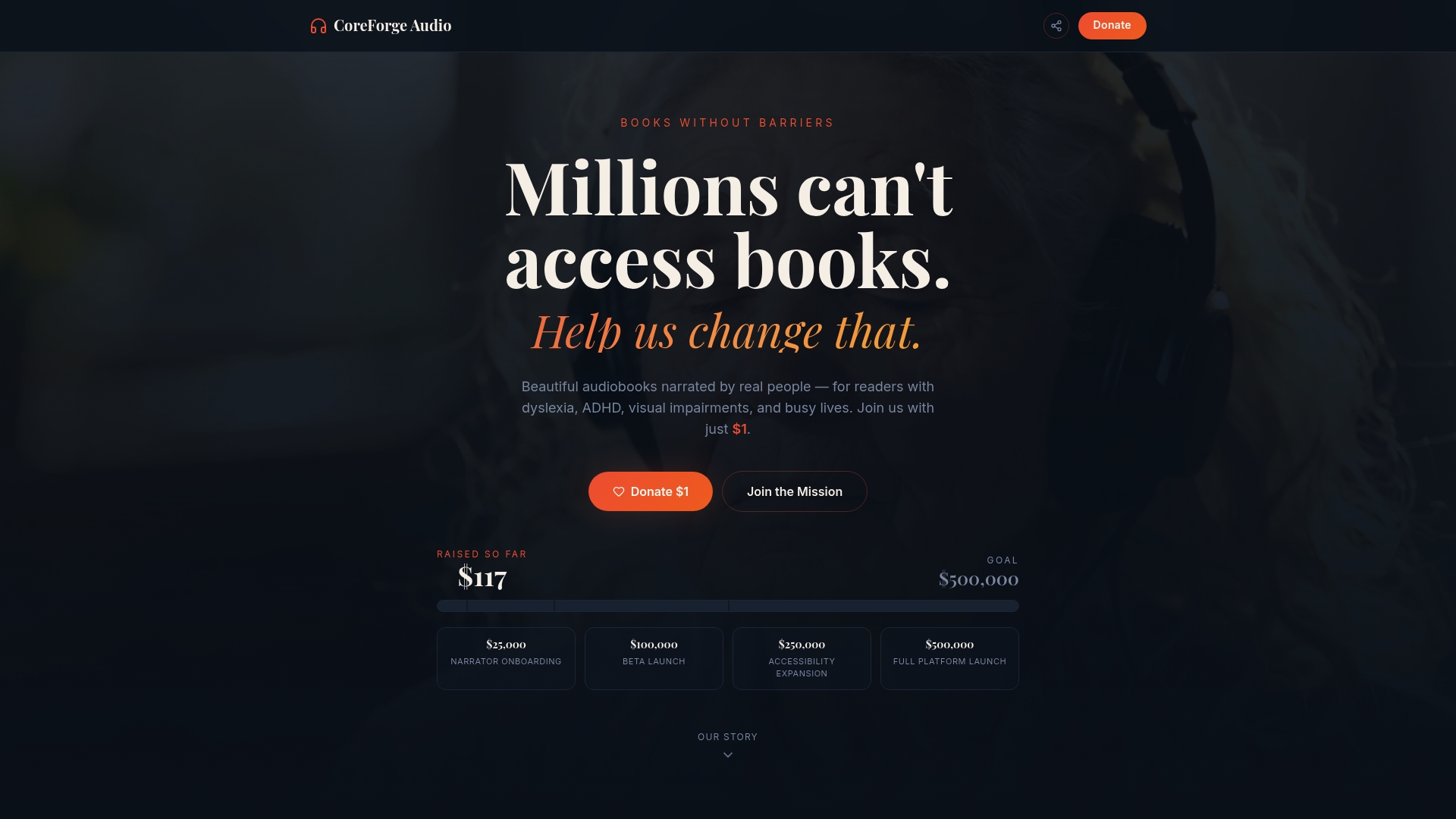
Whether you are a student building a study routine, a professional replacing screen time with purposeful listening, or someone exploring long-form audio for learning, Coreforgeaudio offers a library and a mission aligned with your goals. The platform is actively fundraising to expand its accessible audiobook catalog, and every contribution directly funds licensing, voice actor compensation, and accessibility tools. Visit Coreforgeaudio to explore the library and support the mission.
FAQ
What types of audio content work best for daily routines?
Podcasts work best for commutes and chores, audiobooks for learning and relaxation, and instrumental music for deep focus work. Matching the format to the cognitive demand of the activity determines whether the habit delivers results.
Do audiobooks count as real learning?
Yes. The Harvard Gazette confirms that learning outcomes are modality-independent, meaning audiobooks produce comparable comprehension to print when paired with proper support and active engagement.
How long should I listen each day to see benefits?
Forty-five to sixty minutes of intentional daily listening is more effective than several hours of passive background audio. Focused, purposeful listening with a post-session reflection step produces the strongest results.
Can students with reading difficulties benefit from audiobooks?
Yes, but with a critical condition. The MIT McGovern Institute found that struggling readers made significant vocabulary gains only when audiobooks were paired with explicit one-on-one instruction, not from passive listening alone.
How do I start an audio routine if I have never tried one?
Attach one 20-minute podcast episode to a single daily activity you already do automatically, such as a morning commute or an evening walk. Repeat for two weeks before adding a second audio slot.