
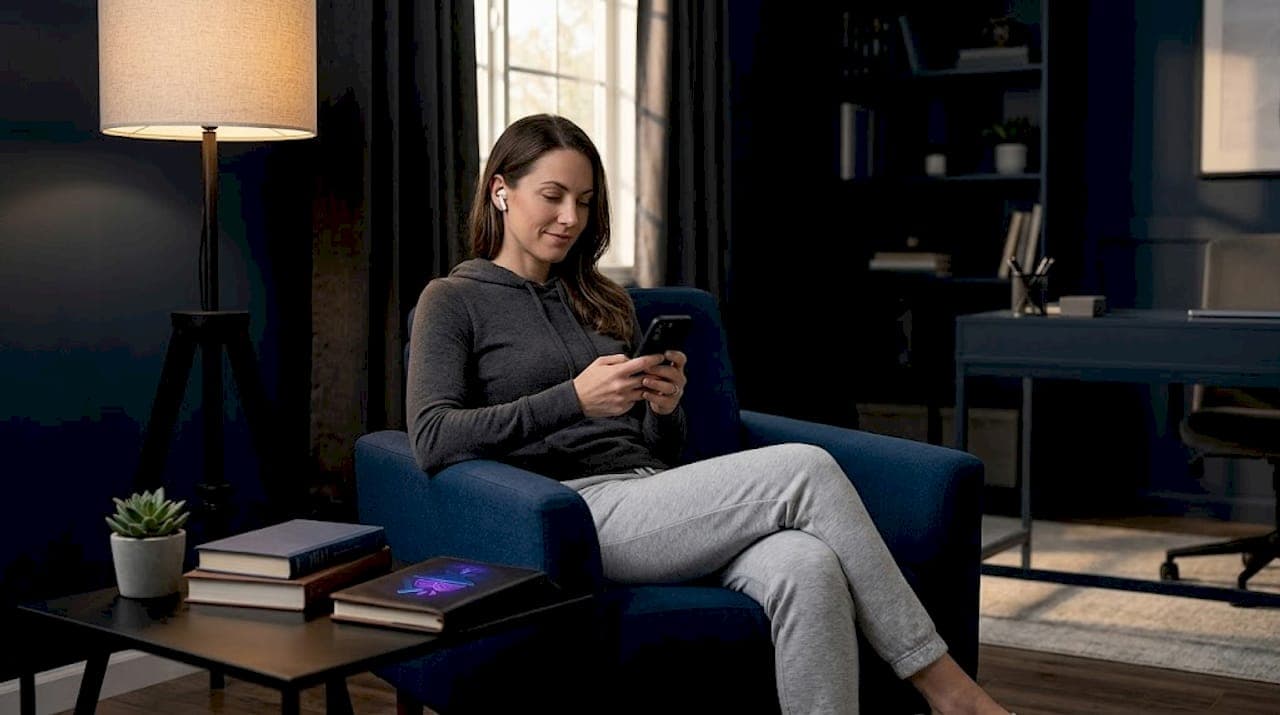
If reading is difficult for you, access to information can feel like it belongs to someone else. Understanding how audio content supports independence changes that picture entirely. Whether you're navigating dyslexia, ADHD, a visual impairment, or simply processing text differently, audio isn't a workaround. It's a full alternative pathway to learning, entertainment, and self-directed living. This article walks through the real benefits, the technology behind them, and practical ways to start using audio as a genuine tool for personal autonomy.
Table of Contents
- Key takeaways
- How audio content supports independence through accessible learning
- Technological advances giving you control over your audio experience
- The psychological and social benefits of using audio for autonomy
- Practical ways to build independence using audio content every day
- Common challenges and how to work through them
- My take on what independence through audio really means
- Start your audio independence journey with Coreforgeaudio
- FAQ
Key takeaways
| Point | Details |
|---|---|
| Audio improves retention | Listening can boost information retention by up to 40% compared to reading text. |
| Technology enables autonomy | Self-tuning and brain-controlled audio tools give users direct control over their listening experience. |
| Psychology matters | Psychological resilience drives over 50% of social well-being gains for people using audio rehabilitation strategies. |
| Multimodal learning works best | Pairing audio with tactile formats like Braille produces the strongest independence outcomes. |
| Community support accelerates progress | Group-based audio rehabilitation builds communication confidence and emotional resilience faster than solo efforts. |
How audio content supports independence through accessible learning
The most significant thing audio does is remove the gate. When text is the only format available, people with reading challenges face a barrier before the content even begins. Audio opens that gate.
Listening to audio can improve information retention by up to 40% compared to reading. That isn't a small margin. It means that for people whose brains process spoken language more efficiently than written text, audio is not just easier. It's genuinely more effective.
Here's where that plays out in real life:
- Audiobooks let you consume full novels, textbooks, and nonfiction at your own pace, without decoding every word on a page.
- Podcasts deliver news, professional development, and educational content in a format that fits your commute, your lunch break, or your morning routine.
- Instructional audio in apps and online courses allows self-paced learning that doesn't require reading comprehension as a prerequisite for understanding.
- Audio-described content extends access to film, TV, and media that would otherwise exclude people with visual impairments.
What makes audio particularly powerful for independence is that it supports differentiated instruction, meaning you can move at your pace, revisit sections, adjust speed, and absorb material in a way that matches how you actually think. No classroom timer. No pressure to keep up with the person next to you.
Pro Tip: If you're new to audiobooks, start with a narrator whose voice you genuinely enjoy. Engagement goes up sharply when the listening experience itself is pleasant, not just tolerable.
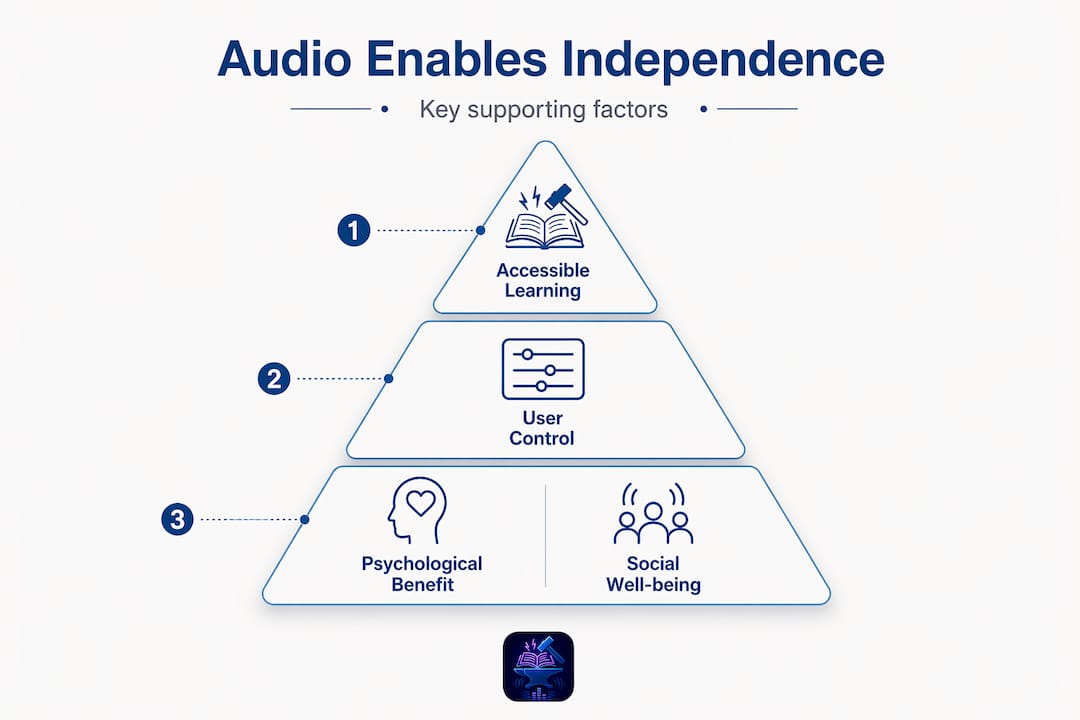
Technological advances giving you control over your audio experience
The shift in audio technology over the last several years has been less about adding features and more about returning control to the user. That distinction matters enormously when independence is the goal.
Self-tuning hearing systems are a strong example. Rather than relying entirely on clinic-calibrated settings, self-tuning hearing aids allow users to adjust their devices across different environments, which increases perceived speech quality in ways that standard settings simply can't match. A clinical appointment happens once every few months. Real life happens constantly. User-controlled tuning closes that gap.
At the frontier of this space, brain-controlled hearing technology can identify and amplify the voice a listener focuses on with 90% accuracy. That's the kind of precision that turns a noisy restaurant from an exhausting social experience into a manageable one.
Beyond hearing devices, three other technologies deserve attention:
- Self-directed auditory rehabilitation programs allow users to train speech recognition skills on their own schedule. Research shows self-directed rehabilitation produces significant, sustained improvements in speech recognition and promotes personal autonomy.
- AI accessibility tools are increasingly useful when they're designed with disability input from the start. AI tools built inclusively improve independent decision-making for users with disabilities in ways that generic tools simply don't.
- Adjustable narration speed in audiobook apps lets you listen faster as your confidence grows, or slow down for dense content. This one feature alone transforms the experience for people with ADHD or auditory processing differences.
The throughline in all of this is user control. Independence through audio isn't passive. The best technologies are the ones designed so you can shape the experience yourself.
The psychological and social benefits of using audio for autonomy
Access to information is practical. But what audio content also does for your sense of self is just as real.

When you can follow a story, finish a book, or understand the news through listening, you're not dependent on someone else to decode the written world for you. That self-trust compounds. Over time, it builds the kind of confidence that extends beyond audio use into other areas of life. As one perspective on independence frames it, true independence involves making value-aligned choices, not just operating without external help. Audio content gives you the material to make informed choices on your own terms.
The social dimension is equally significant. People with reading challenges or hearing difficulties often report feeling cut off from shared cultural conversations. Group-based auditory rehabilitation programs improve autonomy, communication, and positive emotional outcomes by creating peer support networks where people learn together.
"Resilience isn't a trait you either have or you don't. It's something you build through supported practice, and audio technology gives people a concrete way to practice every single day."
Research backs this up directly. Psychological resilience explains over 50% of social well-being improvements in older adults with hearing loss when empowerment strategies and auditory rehabilitation are combined. The emotional and psychological impact of audio independence isn't a side benefit. It's a core outcome.
Pro Tip: If you feel isolated by reading challenges, look for audiobook clubs or audio-based learning communities online. The combination of shared content and social connection accelerates both confidence and skill.
Practical ways to build independence using audio content every day
Knowing audio helps is one thing. Building it into your daily life is another. The goal here is consistency without effort, which means finding setups that work automatically.
Here's a step-by-step approach:
- Choose an accessible audio platform. Look for apps with dyslexia-friendly fonts, adjustable playback speed, bookmarking, and clear navigation. These features aren't extras. They're the difference between an app you use daily and one you abandon after a week.
- Pair audio with another format when possible. Multimodal learning, combining audio with Braille, physical objects, or visual cues, produces stronger independence outcomes than audio alone.
- Use audio for skill-building, not just entertainment. Educational podcasts, audio courses, and narrated how-to content build knowledge the same way reading does. Use this deliberately, not just passively.
- Explore self-directed auditory rehabilitation. If you have a hearing device or auditory processing difficulty, structured self-practice programs complement clinical care and give you a way to progress on your own schedule.
- Personalize your setup. Adjust narration speed, use headphones in noisy environments, set listening reminders, and treat your audio tools the way you would any skill-building practice.
Here's a quick comparison of audio learning against traditional text-based formats, specifically for people with reading challenges:
| Format | Accessibility | Retention potential | Self-pacing | Independence factor |
|---|---|---|---|---|
| Standard text | Low | Moderate | Limited | Low |
| E-books with text-to-speech | Moderate | Moderate | High | Moderate |
| Human-narrated audiobooks | High | High | High | High |
| Audio + multimodal pairing | Very high | Very high | High | Very high |
Human-narrated audio consistently outperforms text-to-speech in engagement and comprehension, especially for people with dyslexia or visual impairments. The voice carries meaning, tone, and pacing that synthesized audio can't fully replicate.
Common challenges and how to work through them
Audio content supports freedom. But getting there isn't always smooth. Here are the real obstacles people face and what actually helps:
- Digital literacy barriers. Learning a new app or platform can feel overwhelming at the start. Look for platforms that offer a guided onboarding, clear menus, and customer support built for users with disabilities.
- Low access to devices and technology. Global hearing aid adoption sits around just 11%, which reflects broader access issues across assistive audio technology. Cost, awareness, and healthcare infrastructure all play a role. Community libraries, nonprofits, and government assistance programs can offset some of these barriers.
- Complicated user interfaces. Not all audio apps are built with accessibility in mind. The accessibility-first design approach that some platforms are now prioritizing makes a measurable difference in real-world usability.
- Motivation dips. Independence is a practice, not a switch you flip. Setting a consistent, low-pressure daily listening goal, even 15 minutes, keeps the habit alive when motivation fluctuates.
- Finding content that fits your interests. Generic libraries won't sustain engagement. Seek out curated collections, narrator previews, and genre-based recommendations to stay connected to what actually interests you.
The most important factor in overcoming these challenges is that the tools you use were designed for people like you. Disability-led technology initiatives produce better outcomes precisely because they start from lived experience, not assumptions.
My take on what independence through audio really means
I've spent considerable time studying how people with reading challenges relate to audio technology, and the pattern that stands out most isn't about the technology at all. It's about permission.
Many people I've encountered treat audio as a crutch rather than a legitimate tool. They apologize for not reading the traditional way. That framing is wrong, and it costs people real progress. Using audio for autonomy isn't a consolation prize. For a large portion of the population, it's the most direct route to full participation in educational and cultural life.
What I've also seen is that the most lasting independence gains come when people stop asking whether audio is "as good as" reading and start asking what audio actually makes possible. The audiobooks as a lifeline framing that platforms like Coreforgeaudio use gets this exactly right. Audio isn't a step down. For many readers, it's the step up.
The technology will keep improving. Brain-controlled hearing systems, AI-personalized content, self-directed rehabilitation programs. These are not distant promises. They're already arriving. The readers who benefit most will be those who start now, build the habit, and learn to trust their own way of accessing the world.
— Sarmed
Start your audio independence journey with Coreforgeaudio
If you're ready to put audio content to work for your independence, Coreforgeaudio is building a platform specifically designed for readers who face barriers with traditional text.
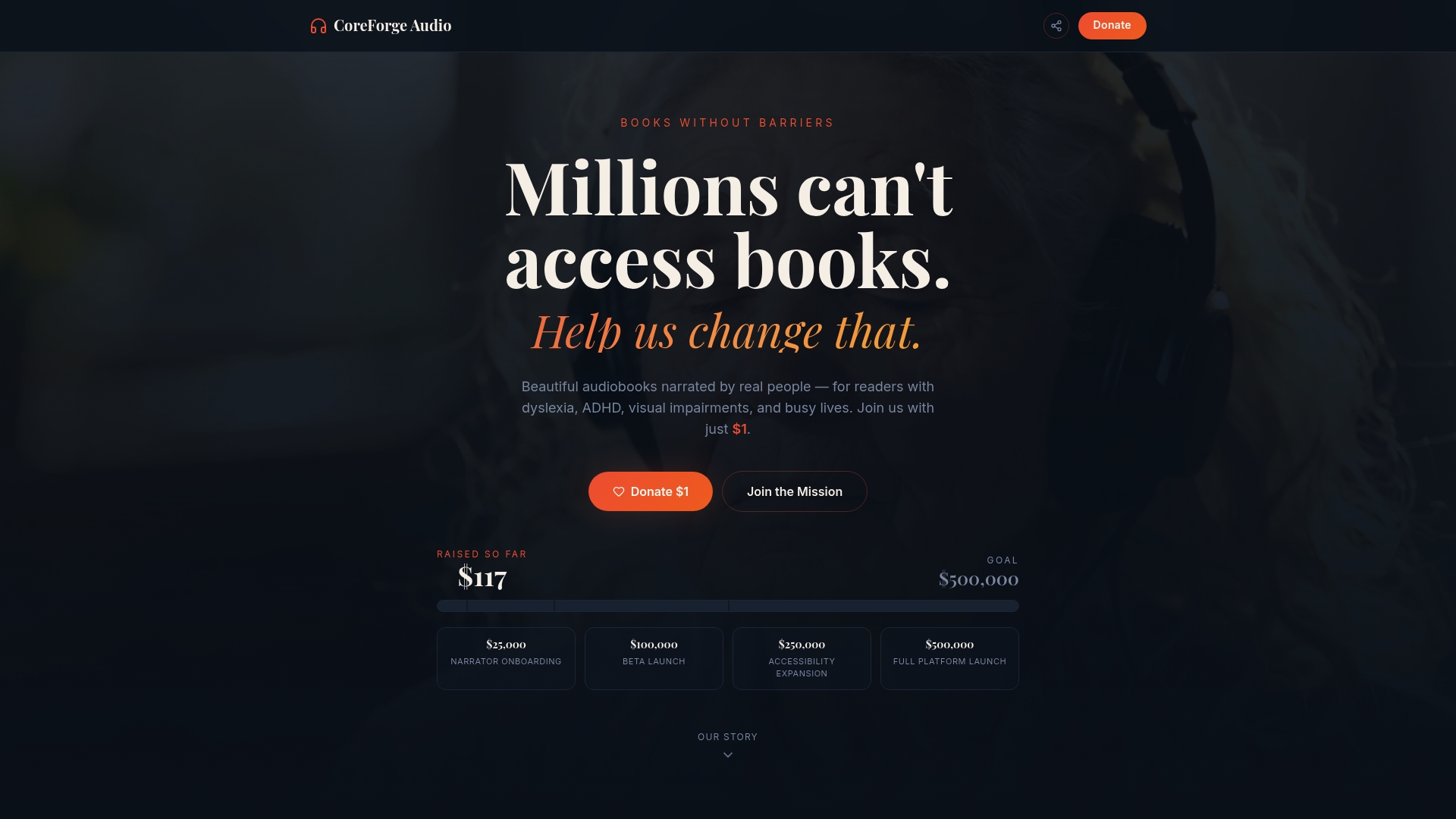
Every feature on the platform is built with readers like you in mind: dyslexia-friendly fonts, adjustable narration speeds, human-narrated audiobooks, and multilingual support. The platform is currently in development and actively fundraising so it can offer these tools broadly, without putting access behind an unaffordable paywall. Explore what Coreforgeaudio is building and support accessible audiobooks for readers who need them most. This is audio support for freedom made real, not just promised.
FAQ
How does audio content help people with reading challenges?
Audio content removes the need to decode written text, allowing people with dyslexia, ADHD, or visual impairments to access information, education, and entertainment through listening. Research shows listening can improve retention by up to 40% compared to reading.
Can audio enhance independence for someone with dyslexia?
Yes. Human-narrated audiobooks and adjustable-speed audio apps let readers with dyslexia engage with content at their own pace without the friction of text decoding. Platforms built with dyslexia-friendly features further support this, as outlined in practical audiobook strategies for dyslexic readers.
What technologies best support audio-based independence?
Self-tuning hearing aids, brain-controlled hearing systems, self-directed auditory rehabilitation programs, and AI-powered accessibility tools all contribute to using audio for autonomy. When these are designed with disability input, they produce measurably better outcomes.
How does audio support freedom beyond just entertainment?
Audio content supports freedom by enabling self-directed learning, skill-building, informed decision-making, and social participation without requiring text literacy. The psychological benefits, including resilience and self-trust, extend well beyond the individual listening session.
How many people actually use hearing aids and audio technology?
Global hearing aid adoption sits at roughly 11%, meaning the majority of people who could benefit from audio-based independence tools are not yet using them. Awareness, cost reduction, and accessible design are the primary levers for closing that gap.