
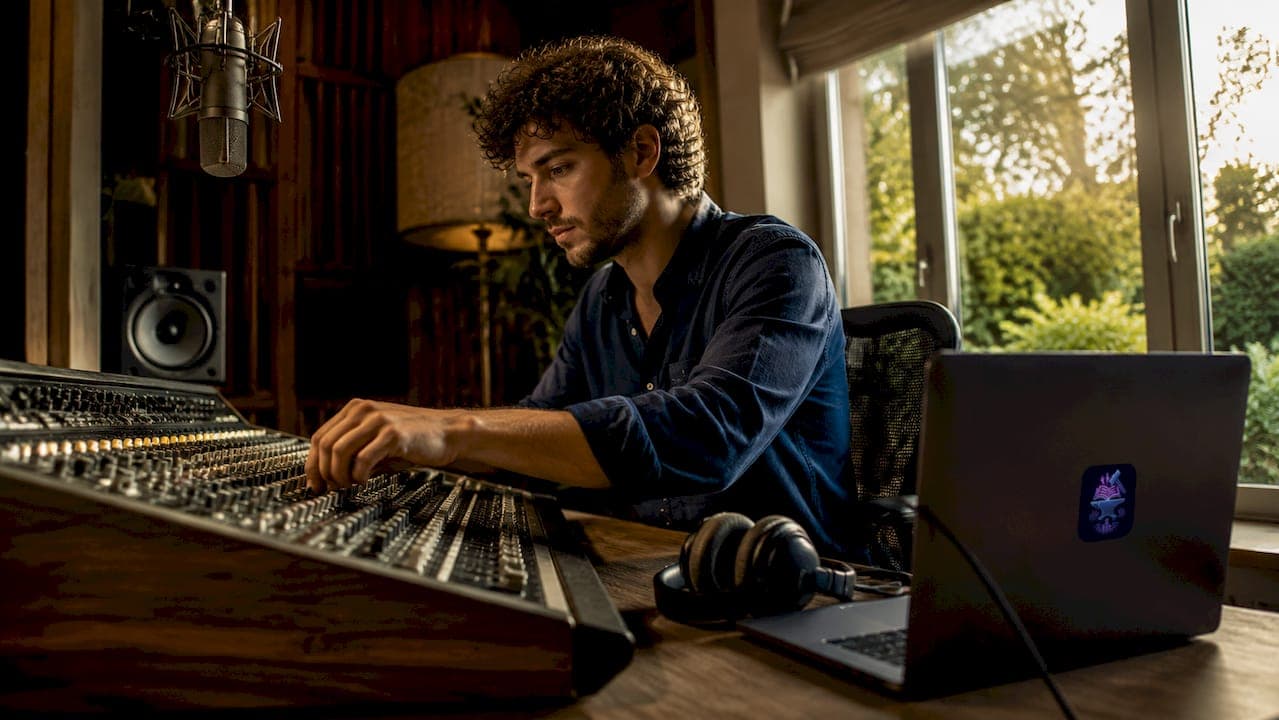
Ambient sound in audiobook production is defined as the deliberate use of environmental audio, such as rain, crowd murmur, or forest noise, to establish a believable sonic world around the narrator's voice. The role of ambient sound in audiobook production goes far beyond decoration. It shapes how listeners process emotion, build mental images, and stay engaged across hours of listening. Productions that treat ambient sound as an afterthought lose listeners. Those that treat it as a craft tool, using techniques like Foley, spatial audio mixing, and Dolby Atmos positioning, create experiences that compete with film. This guide covers the psychology, the technical standards, and the emerging technologies that define professional ambient sound work in 2026.
How does ambient sound enhance storytelling and listener immersion?
Ambient sound activates the limbic system to prime emotional states before the listener consciously processes the narrative. That means a listener hears distant thunder before a villain speaks, and their body is already tense. The narration lands harder because the emotional ground was prepared by sound, not words.
The cognitive benefit is equally significant. Sound effects and ambient noise reduce cognitive load by providing pre-constructed environmental cues, freeing listeners to focus on plot and character. Without those cues, the brain works harder to imagine the setting, which pulls attention away from story. Ambient sound does the heavy lifting so the listener can stay inside the narrative.
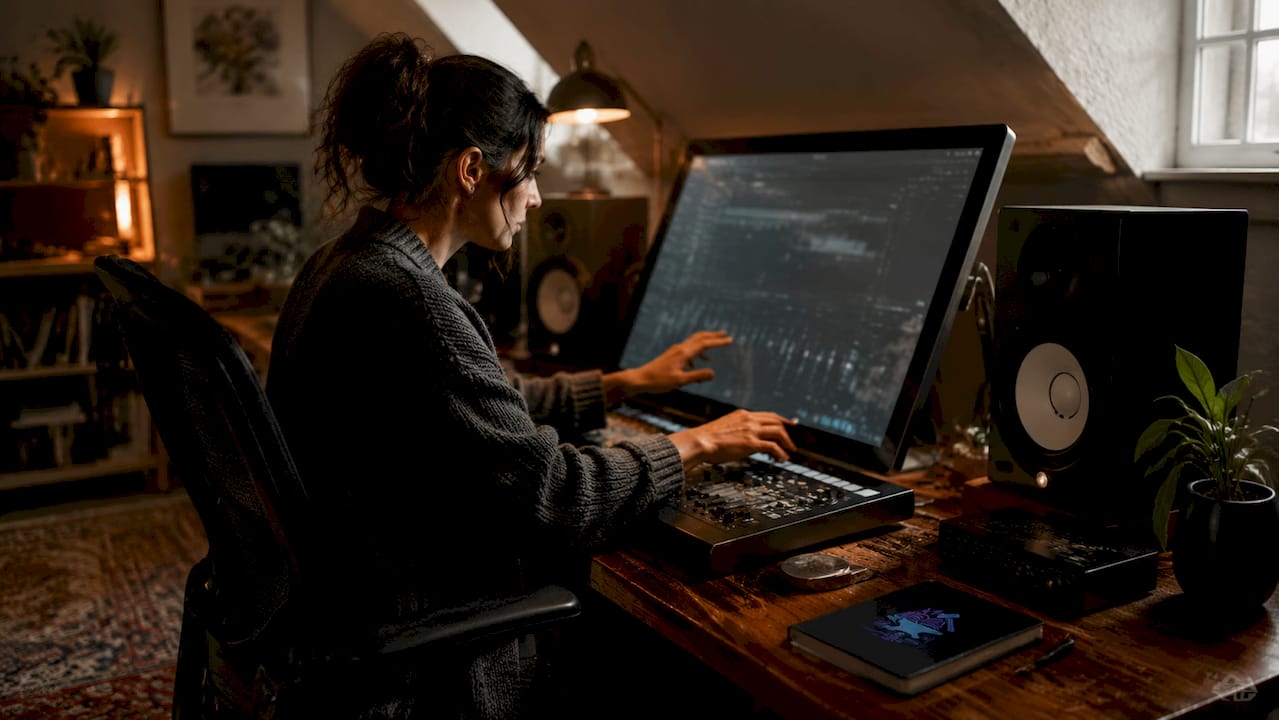
Thriller productions demonstrate this most clearly. A ticking clock, a dripping faucet, or the low hum of a hospital corridor tells the listener where they are and how to feel, instantly. Productions that combine narration with ambient cues report stronger emotional recall from listeners. The sound world becomes inseparable from the story world.
Pro Tip: Lead ambient sound slightly ahead of narration rather than syncing it exactly. Anticipating narration pacing with ambient sound entry creates a more naturalistic sonic world and prevents the jarring effect of sound that feels bolted on.
Key benefits of ambient sound for storytelling include:
- Emotional priming: Sets mood before dialogue begins, so listeners arrive emotionally prepared.
- Scene anchoring: Establishes location instantly without relying on descriptive narration.
- Pacing control: Silence or sparse ambiance signals intimacy; dense soundscapes signal action or chaos.
- Listener retention: A rich sonic environment keeps attention during slower narrative passages.
What are the technical best practices for incorporating ambient sound?
Technical execution separates immersive productions from distracting ones. The single most cited failure in amateur audiobook sound design is ambient sound that competes with speech rather than supporting it.
The W3C sets a clear standard: maintain a minimum 20 dB gap between foreground speech and any continuous background ambient sound. That gap preserves intelligibility for all listeners, including those with hearing loss. Dropping below that threshold does not just inconvenience listeners. It actively excludes them.
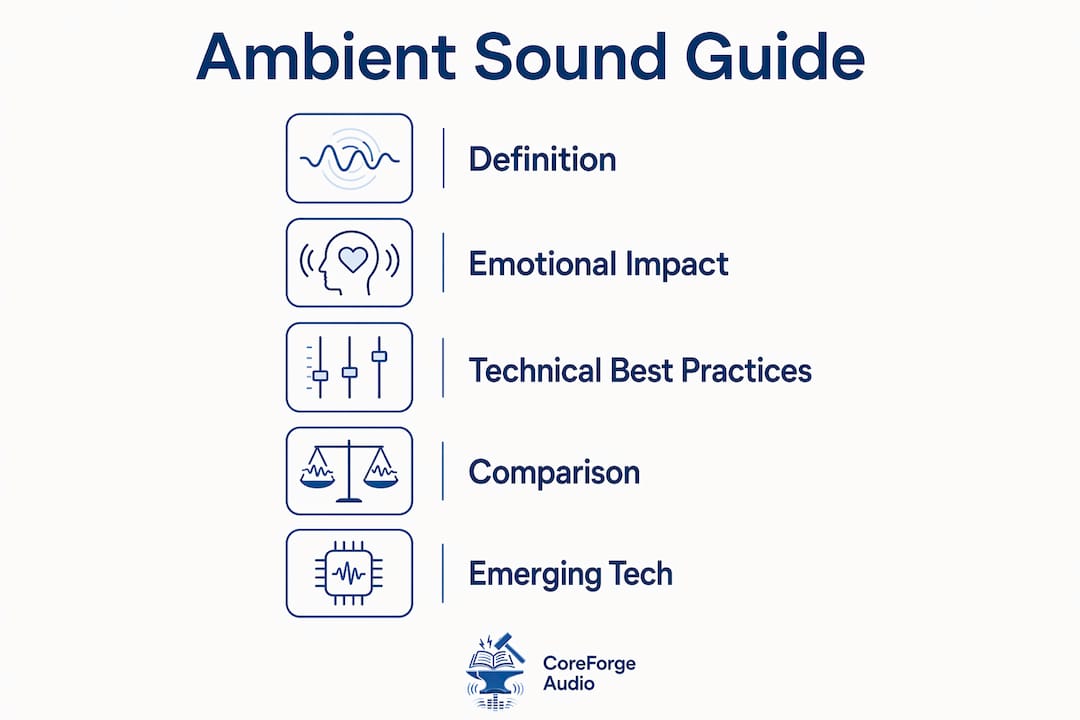
Background noise can reduce comprehension by up to 35% even when speech remains audible. That figure reflects increased cognitive load, not volume. The listener hears the words but spends mental energy filtering noise instead of processing meaning. Broadband noise in the 1kHz–4kHz range is especially damaging because it masks consonants, which carry the most phonetic information in speech.
Follow this sequence when building an ambient sound mix:
- Capture room tone first. Record 15–20 seconds of room tone at the start of every session. This reference clip is the foundation for noise reduction and ensures ambient beds blend naturally with the recording environment.
- Apply noise reduction before layering. Clean the vocal track completely before adding any ambient elements. Mixing onto a dirty track compounds problems.
- Set ambient beds at least 20 dB below speech. Use a reference loudness meter during mixing, not just your ears. Ears fatigue; meters do not.
- Check on consumer headphones. Most audiobook listeners use earbuds or standard headphones, not studio monitors. Mix decisions made on studio speakers often fail on consumer gear.
- Silence ambient sound during interior monologue. Ambient soundscapes should be removed during intimate internal scenes. Sound during a character's private thoughts pulls the listener outward when the story is pulling them inward.
Accessibility is not optional. Productions that meet W3C intelligibility standards serve listeners with dyslexia, ADHD, and visual impairments without sacrificing creative ambition.
How does ambient sound compare with Foley and music in audiobook production?
Ambient sound, Foley, and music beds each serve a distinct function. Treating them as interchangeable is a common mistake that muddies the final mix.
Ambient sound is the continuous environmental layer. It is the rain outside the window, the hum of a city, the silence of a forest at night. It does not draw attention to itself. It simply exists, establishing where the story lives.
Foley is the deliberate recording of specific physical sounds tied to character action: footsteps on gravel, a door creaking open, a glass set down on a table. Foley is event-driven and tied to specific moments in the narration. It adds physical texture and realism to character movement.
Music beds are composed or licensed tracks that carry emotional narrative weight. They signal genre, shift mood, and mark transitions. Unlike ambient sound, music beds are consciously noticed by listeners. That is their purpose.
| Element | Function | When to use | Risk if overused |
|---|---|---|---|
| Ambient sound | Establishes setting and mood continuously | Throughout scenes to ground the listener | Listener fatigue, speech masking |
| Foley | Adds physical realism to specific actions | Tied to character movement or key events | Distracting if not timed precisely |
| Music beds | Carries emotional and genre signals | Scene transitions, emotional peaks | Overpowers narration, feels manipulative |
The Harry Potter full cast audiobook production used a modular taxonomy of sound elements to keep ambient layers, Foley, and music beds consistent across a multi-title series. That system prevented sonic drift between books and gave the production a coherent identity. Long-form series producers should build the same kind of organized sound library before recording begins, not after.
The most effective productions layer all three elements without letting any one dominate. Ambient sound holds the world together. Foley makes characters feel physical. Music marks the emotional beats. When each element knows its role, the listener never notices the craft. They just feel the story.
What emerging technologies are shaping ambient sound in audiobooks?
Spatial audio is the most significant shift in audiobook sound design since stereo mixing. Dolby Atmos and object-based audio formats allow producers to position ambient sounds in precise three-dimensional space around the listener. Rain can fall from above. A crowd can surround the listener from all sides. A whisper can come from directly behind.
Sound designer Sophie Kuebler has demonstrated that precision layering and spatial positioning transform audiobooks into immersive sonic environments that go well beyond traditional narration. Her 3D cinematic audiobook work uses binaural processing and careful phase management to place ambient elements convincingly in three-dimensional space. The technical requirement is exacting. Spatial audio engineering demands precise control of phase relationships to avoid comb filtering and listener disorientation.
AI-generated adaptive soundscapes represent the next frontier. These systems analyze narration text in real time and assign ambient layers, music beds, and sound effects automatically based on scene context. Platforms like AudioProducer.ai have demonstrated automated chapter-to-sound assignment workflows. The practical implication for producers is significant: AI can handle ambient bed selection at scale, freeing sound designers to focus on the moments that require human judgment.
Pro Tip: When working with spatial audio formats, always check your binaural render on at least three different headphone models before final delivery. Binaural processing that sounds convincing on studio headphones can collapse or phase-cancel on consumer earbuds.
The combination of spatial audio and AI-assisted sound assignment is moving audiobook production toward a model closer to film post-production than traditional studio recording. Producers who build their workflows around these tools now will have a structural advantage as listener expectations rise.
Key takeaways
Ambient sound is the foundational layer of immersive audiobook production, and its effectiveness depends equally on creative intent and technical precision.
| Point | Details |
|---|---|
| Emotional priming through sound | Ambient audio activates the limbic system before narration, shaping how listeners feel the story. |
| The 20 dB rule is non-negotiable | W3C standards require a minimum 20 dB gap between speech and ambient beds to protect intelligibility. |
| Room tone is a production asset | Recording 15–20 seconds of room tone at session start is the foundation of clean noise reduction. |
| Silence is a sound design choice | Removing ambient sound during interior monologue scenes deepens character focus and listener immersion. |
| Spatial audio raises the standard | Dolby Atmos and binaural processing now allow precise 3D ambient positioning, setting a new production benchmark. |
Why I think most audiobook producers underuse silence as an ambient tool
Most conversations about ambient sound focus on what to add. The more interesting question is when to take it away. After years of working with audio content, the pattern I keep seeing is producers who build a rich ambient world in act one and then leave it running on autopilot through the entire production. The result is listener fatigue by the midpoint of a long title.
The productions that hold attention across eight or ten hours treat silence as an active element. They pull the ambient bed down or out entirely during a character's most vulnerable moment. That contrast makes the next scene's soundscape hit harder. It is the same principle a film composer uses when they drop the score before the biggest emotional beat.
Balancing creativity with accessibility is where I see the most producers struggle. Meeting the W3C 20 dB standard feels like a constraint until you realize it is actually a design discipline. Working within that gap forces you to be more intentional about every ambient element you choose. The productions that serve listeners with hearing loss or auditory processing differences tend to be cleaner and more focused for every listener.
My practical recommendation for any producer working on a series: build a modular sound library before you record a single chapter. Categorize ambient beds by scene type, emotional register, and intensity level. That system pays for itself by the third title in a series, and it keeps your sonic world consistent in a way that listeners notice even if they cannot name it.
— Sarmed
How Coreforgeaudio supports immersive audiobook production
Coreforgeaudio is built around the belief that high-quality sound and genuine accessibility are not competing goals. The platform prioritizes human narration, fair compensation for voice actors, and production standards that serve listeners with dyslexia, ADHD, and visual impairments without sacrificing the immersive qualities that make audiobooks compelling. For producers and sound designers who want to understand how accessible audio production intersects with creative sound design, Coreforgeaudio offers a clear model. Visit Coreforgeaudio to learn how the platform approaches immersive, inclusive audiobook production.
FAQ
What is ambient sound in audiobook production?
Ambient sound in audiobook production is the continuous environmental audio layer, such as wind, crowd noise, or room tone, that establishes a believable setting around the narrator's voice. It differs from Foley and music in that it runs continuously rather than marking specific events or emotional beats.
How much should ambient sound be lowered below narration?
The W3C recommends a minimum 20 dB gap between foreground speech and any continuous background ambient sound. This standard protects intelligibility for all listeners, including those with hearing loss or auditory processing differences.
Can background noise hurt comprehension even if speech is audible?
Background noise can reduce listener comprehension by up to 35% even when speech remains clearly audible. The reduction comes from increased cognitive load, not volume, as listeners spend mental energy filtering noise instead of processing meaning.
When should ambient sound be removed during a production?
Ambient soundscapes should be silenced during intimate internal monologue scenes or imagined sequences. Sound during a character's private thoughts pulls listener attention outward, which works against the inward focus those scenes require.
What is Dolby Atmos used for in audiobook production?
Dolby Atmos is an object-based spatial audio format that allows producers to position ambient sounds in precise three-dimensional space around the listener. Sound designer Sophie Kuebler has used it to create 3D cinematic audiobooks where environmental sounds surround the listener from above, below, and all sides.